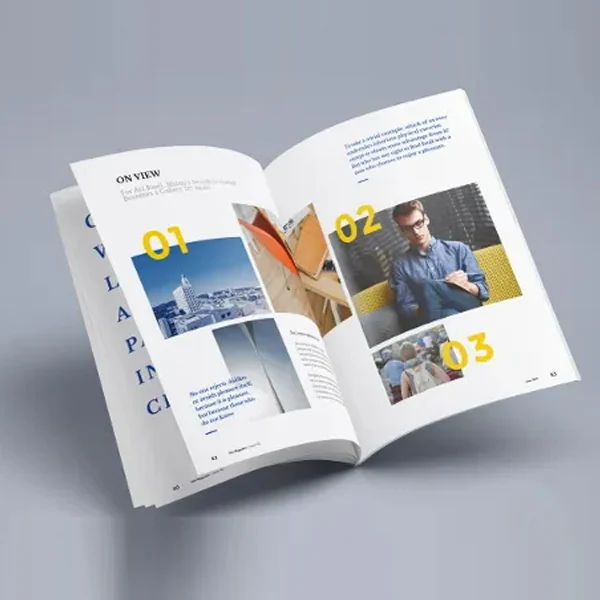

A useful way through
- Number every intended page in reading order, including the cover, inside covers and deliberate blanks. Decide the finished size and binding with the printer. Keep this page plan beside the manuscript rather than discovering the cover count after export.
- For a simple folded, double-sided booklet, count four page faces per physical sheet. A 12-page booklet uses three sheets before folding. Other bindings and production methods have different requirements: agree the actual workflow before rearranging pages yourself.
- Ask whether the printer wants single pages in reading order or an imposed file. Adobe’s Booklet printing can arrange pages on sheets; avoid applying a second imposition to a file the printer has already prepared. Keep the approved input file and print settings identifiable.
- Make a complete numbered paper proof. Fold, collate and read it from front to back, checking orientation, missing pages, blank positions, margins and the binding edge. Mark corrections by final page number, then proof the changed version again before the full run.
Read the map as text
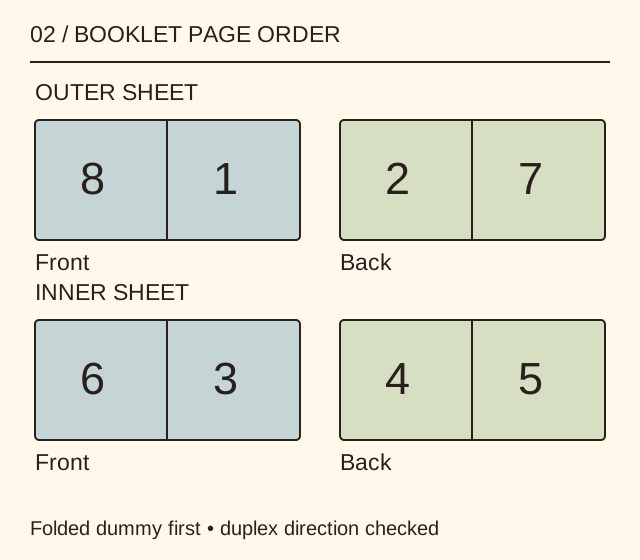
02 / BOOKLET PAGE ORDER · OUTER SHEET · 8 · 1 · Front · 2 · 7 · Back · INNER SHEET · 6 · 3 · Front · 4 · 5 · Back · Folded dummy first • duplex direction checked
- Reading plan
- Physical sheets
- Print input
- Proof
Put it into practice
An illustrative eight-page booklet has two sheets. The outer sheet pairs pages 8|1 on one side and 2|7 on the reverse; the inner sheet pairs 6|3 and 4|5. The correct left/right orientation also depends on binding and duplex handling. A folded numbered dummy confirms the result more reliably than a screen thumbnail.
Illustrative example, not a reported client project or test.
Your take-away checklist
Make a folded booklet proof with the pages in the right order
- □ Reading plan: ____________________
- □ Physical sheets: ____________________
- □ Print input: ____________________
- □ Proof: ____________________
Before you act
Use the actual printer’s specifications for trim, bleed, margins and binding. Do not assume this folded example applies to perfect binding or every printer.
A completed example record
This is the illustrative case above. Download the blank version to record your own task.
- Reading plan
- Pages 1–8, including coversNo invisible extra cover pages
- Physical sheets
- 8 ÷ 4 = 2Simple folded example only
- Print input
- Reading-order PDF v03Printer confirms imposition responsibility
- Proof
- Folded complete copyPages, rotation and blanks checked
A useful correction log
Record page, observed problem, approved correction, file revision and the check performed. Keep a missing page separate from a new content request so the revised sheet count is visible.
Before approving colour and paper
A home-printed dummy can establish sequence and a rough layout. Ask the printer which proof establishes stock, finishing and colour for the actual job. Approval of page order does not approve every production characteristic.
Sources & context
The earlier page, Why is Booklet Printing a Good Idea in Your Marketing Campaign?, was published 2022-01-08 under the Maria Baldwin byline. This guide develops its subject into a new procedure and worked example by MichaelT editorial.