A useful way through
- Choose one bounded piece of work. Define what a useful finished result looks like before splitting it into cards. A card should describe an action and a deliverable, not a broad ambition such as “improve marketing”. Use the tool your team can maintain; no particular app is required.
- Give each card one responsible role, the next action and a checkable finish condition. Link the relevant source or file through an authorised route. Distinguish a planned due date from a promise made by someone else, and do not expose private customer details on a public board.
- Use a small workflow such as Ready, Doing and Review. A blocked item keeps a named blocking question and a person who will resolve it. Moving a card does not itself produce evidence. Keep the actual file, decision or review result linked to the card.
- Review the board at an agreed time. Close completed work against its finish condition; clarify or split cards that remain ambiguous. Record a change in scope when it occurs. The board is a shared operating record, not proof that the team has become more productive.
Read the map as text
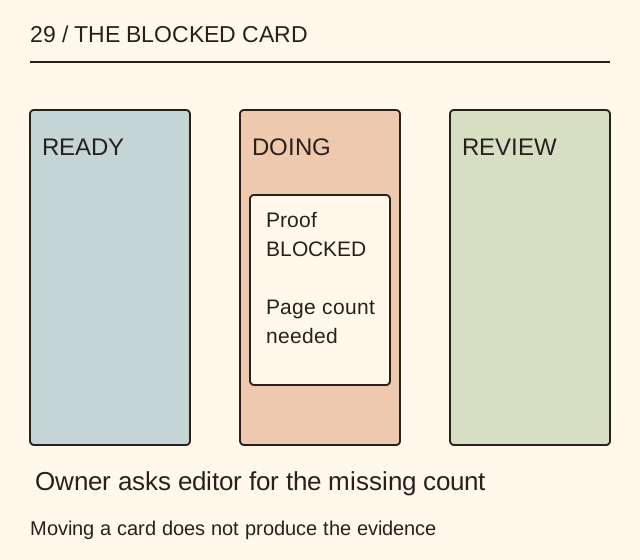
29 / THE BLOCKED CARD · READY · DOING · REVIEW · Proof · BLOCKED · · Page count · needed · Owner asks editor for the missing count · Moving a card does not produce the evidence
- Card
- Owner
- Blocker
- Done
Put it into practice
A fictional booklet job has cards for a page-order dummy, a print proof and approval. The proof card is blocked because the final page count is unknown. Its owner asks the editor for that count; the card remains blocked until the answer arrives. A finished proof is reviewed against the exact approved file version.
Illustrative example, not a reported client project or test.
Your take-away checklist
Make a small task board show the next real action
- □ Card: ____________________
- □ Owner: ____________________
- □ Blocker: ____________________
- □ Done: ____________________
Before you act
This is a lightweight work-planning method, not a recommendation of obsolete apps from the older source or an employee-performance scoring system.
A completed example record
This is the illustrative case above. Download the blank version to record your own task.
- Card
- Make page-order dummyOne concrete deliverable
- Owner
- Production roleOne responsible person assigned privately
- Blocker
- Final page count missingEditor asked; answer pending
- Done
- Dummy checked against approved countEvidence linked, not just status moved
Write a finish sentence
“The numbered dummy has been checked against the approved page count” explains completion. “Worked on booklet” records activity but leaves everyone guessing whether another action is needed.
Review work in progress
When too many cards are open, ask which can actually move next and what needs a decision. Do not invent an ideal universal card limit or promise a productivity percentage from changing columns.
Sources & context
The earlier page, Tools For Job Management, was published 2022-09-06 under the Maria Baldwin byline. This guide develops its subject into a new procedure and worked example by MichaelT editorial.