A useful way through
- Name the product and intended customer task. Make an information matrix with a source for every factual field: identity, material, dimensions, included items, care and relevant limitations. Distinguish an actual specification from an attractive but unverified marketing statement.
- Record the variants and how they differ. A photo of one colour is not evidence that another colour is in stock. Keep price, currency, availability and the time of confirmation connected to the actual item. Leave unknown fields unresolved rather than inventing a plausible offer.
- Prepare the buyer’s next-step information: delivery scope, costs or quotation route, returns information and a working contact. The applicable seller and rules must be established for the real business. A draft page is not permission to take orders or activate a payment provider.
- Review the complete page on a phone and a larger screen. Confirm that the selected variant, price and action remain understandable together. Check image descriptions, links and any variant controls against the source record. Approve the actual rendered version, not just a copy document.
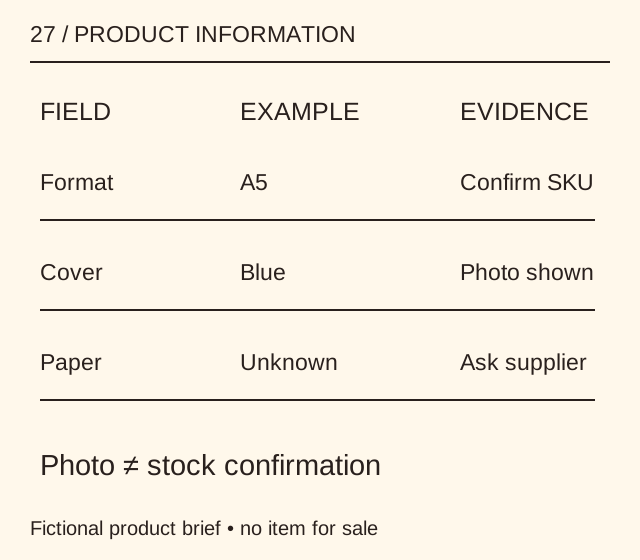
Read the map as text
27 / PRODUCT INFORMATION · FIELD · EXAMPLE · EVIDENCE · Format · A5 · Confirm SKU · Cover · Blue · Photo shown · Paper · Unknown · Ask supplier · Photo ≠ stock confirmation · Fictional product brief • no item for sale
- Identity
- Variant
- Unknown
- Next step
Put it into practice
For a fictional studio notebook, the brief records an A5 format and a photographed cover variant, but the supplier has not confirmed paper weight or stock. Those fields remain “to confirm”. A delivery question goes to the seller’s real contact route. The example is a completed briefing record, not a product for sale on this site.
Illustrative example, not a reported client project or test.
Your take-away checklist
Write a product-page brief from verified buyer questions
- □ Identity: ____________________
- □ Variant: ____________________
- □ Unknown: ____________________
- □ Next step: ____________________
Before you act
This is a content and acceptance brief, not a live offer, stock verification, legal terms generator or payment integration.
A completed example record
This is the illustrative case above. Download the blank version to record your own task.
- Identity
- Studio notebook, A5Confirm actual SKU and dimensions
- Variant
- Blue cover shownStock not inferred from photograph
- Unknown
- Paper weightSupplier answer needed before a claim
- Next step
- Delivery enquiryWorking seller contact and terms required
A useful image set answers questions
Plan an overall view, a relevant detail and a scale or dimension reference where accurate. Do not replace missing evidence with a fabricated product photo. Describe only the actual item shown.
Make changes traceable
Record the source and date of a changed price or specification. When one variant changes, check the selection interface and structured data too. A page should not tell a different story from the current seller record.
Sources & context
The earlier page, Uses Of Ecommerce Website Development, was published 2021-03-18 under the Maria Baldwin byline. This guide develops its subject into a new procedure and worked example by MichaelT editorial.