A useful way through
- Record exactly what the listing calls the object and who is offering it. Separate the name of a design from the claimed manufacturer and the identity of the physical item. Words such as “style”, “inspired” or “replica” matter and should remain visible in your notes.
- Compare the claimed design with the relevant designer, museum or manufacturer source. Herman Miller documents the Eames Lounge Chair and Ottoman as a 1956 design by Charles and Ray Eames. That history does not establish the identity of an unrelated seller’s chair.
- Ask for the exact dimensions, materials, condition, repairs and identifying documentation of the item being offered. Record which answers come from the seller and which are corroborated. Photographs can help frame questions but do not replace an expert authenticity assessment.
- Check fit and the complete purchase terms separately from identity. Measure the room, delivery route and intended position. If provenance or authenticity is material to the decision and remains uncertain, seek appropriate expertise before treating the claim as established.
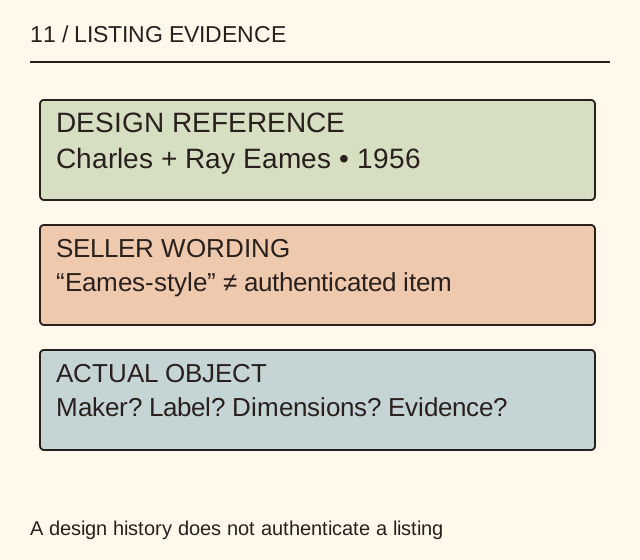
Read the map as text
11 / LISTING EVIDENCE · DESIGN REFERENCE · Charles + Ray Eames • 1956 · SELLER WORDING · “Eames-style” ≠ authenticated item · ACTUAL OBJECT · Maker? Label? Dimensions? Evidence? · A design history does not authenticate a listing
- Listing wording
- Design reference
- Offered item
- Practical fit
Put it into practice
A fictional listing says “Eames-style lounge chair”. The record preserves that wording and marks the manufacturer as unknown. A product-history page about the original design is attached as a comparison source, not as certification of the offered item. Dimensions and condition still need the seller’s own evidence.
Illustrative example, not a reported client project or test.
Your take-away checklist
Read a design-chair listing without guessing its identity
- □ Listing wording: ____________________
- □ Design reference: ____________________
- □ Offered item: ____________________
- □ Practical fit: ____________________
Before you act
This is a listing-review worksheet, not authentication, valuation or a recommendation of a particular seller.
A completed example record
This is the illustrative case above. Download the blank version to record your own task.
- Listing wording
- Eames-stylePreserve the qualifier
- Design reference
- Charles and Ray Eames, 1956Primary manufacturer history
- Offered item
- Manufacturer unconfirmedSeller evidence needed
- Practical fit
- Measured item and routeSeparate from authenticity
A photograph is not a certificate
Ask for the relevant details in context rather than relying on one attractive overview. Keep image filenames and the seller’s explanation with the listing record. Do not infer provenance from a familiar silhouette alone.
Keep the source image accurately labelled
The earlier article linked an ANGIE product image from Keeks Design while discussing Eames. Any use of that image must identify its actual source and avoid presenting it as a verified original Eames chair.
Sources & context
The earlier page, The Chair You Didn’t Realise You Knew, was published 2021-03-16 under the Maria Baldwin byline. This guide develops its subject into a new procedure and worked example by MichaelT editorial.