A useful way through
- Draw the usable floor area and the furniture that will remain. Record the door swings and the route through the room. Decide whether the rug’s purpose is to define seating, sit under a table or provide a small visual anchor.
- Use the actual rug dimensions and the furniture’s operating positions. A dining chair moves beyond the tabletop; a door needs clearance at the floor. Mark the proposed footprint temporarily with a surface-safe method before relying on a styled product photograph.
- Ask the supplier about the exact product, backing, care and any suitable underlay for your floor. Keep material and construction claims specific to the item. A knot count, pattern category or irregularity alone does not establish authenticity or quality.
- Review the complete arrangement and the product’s actual care information. Confirm that routes and moving furniture remain usable, then keep the product record for later care or relocation. Ask an appropriate specialist about valuable or delicate textiles.
Read the map as text
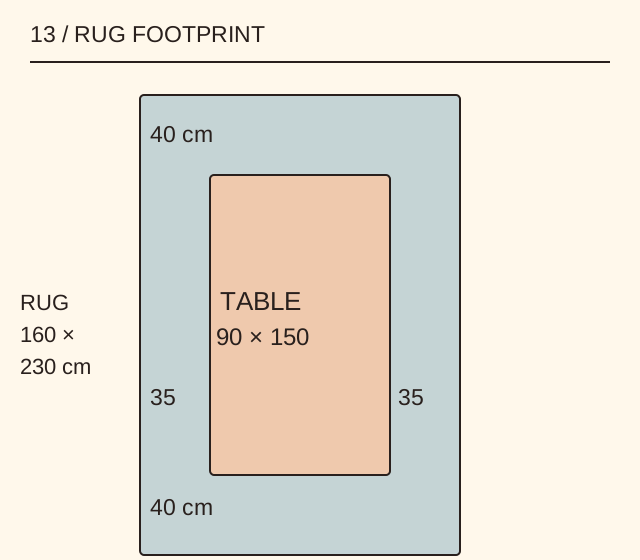
13 / RUG FOOTPRINT · TABLE · 90 × 150 · 40 cm · 35 · 35 · 40 cm · RUG · 160 × · 230 cm
- Rug
- Table
- Nominal margins
- Review
Put it into practice
A fictional 160 × 230 cm rug is compared with a 90 × 150 cm table. Centring leaves 35 cm at each short side and 40 cm at each long end before accounting for chairs. Those margins do not prove enough room for the actual chairs to move. Mark and try the intended arrangement first.
Illustrative example, not a reported client project or test.
Your take-away checklist
Fit a rug to the room’s furniture and moving parts
- □ Rug: ____________________
- □ Table: ____________________
- □ Nominal margins: ____________________
- □ Review: ____________________
Before you act
This is a layout worksheet, not an appraisal, slip-resistance test or textile conservation instruction.
A completed example record
This is the illustrative case above. Download the blank version to record your own task.
- Rug
- 160 × 230 cmActual product dimensions
- Table
- 90 × 150 cmFurniture footprint only
- Nominal margins
- 35 cm and 40 cmChair movement still untested
- Review
- Door, route and moving chairsRecord actual observations
Keep the care label
Record fibre information, supplier instructions and the product code. Do not apply a generic cleaning method to an unidentified or valuable rug. Ask the supplier or a competent textile specialist where the care information is incomplete.
Separate fit from provenance
The older article combined decorating advice with broad claims about handmaking, durability and environmental benefit. A rug can fit the room without those claims being established. Keep identity and condition questions in their own record.
Sources & context
The earlier page, Oriental Rugs – A Beautiful Addition To Your Home, was published 2021-05-05 under the Maria Baldwin byline. This guide develops its subject into a new procedure and worked example by MichaelT editorial.