A useful way through
- List what is already in the room and what the refreshed room needs to do. Give each item a location, condition note and proposed role. Include dimensions so an object is considered for a real position rather than kept without a purpose.
- Compare four routes: keep, repair, relocate or replace. Identify the evidence needed for each decision, such as a repair assessment or a measured alternative position. Keep uncertain condition or safety questions with the appropriate competent person.
- Record the practical costs and responsibilities you actually know. Include transport, storage and the person who will complete the action. Do not assign a carbon saving from the word reused alone; an environmental comparison needs a defined boundary and appropriate evidence.
- Approve the room plan with the retained items identified, then obtain only the missing or unsuitable elements. Record where unwanted usable items can actually be accepted. A proposed donation is not complete until the receiving organisation confirms its requirements and collection route.
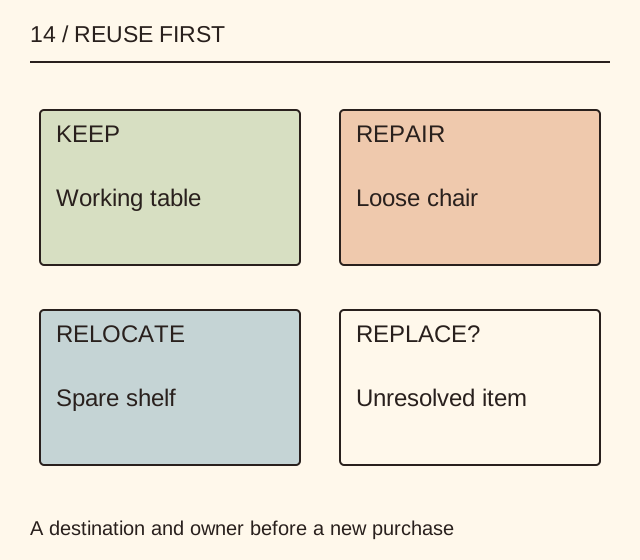
Read the map as text
14 / REUSE FIRST · KEEP · · Working table · REPAIR · · Loose chair · RELOCATE · · Spare shelf · REPLACE? · · Unresolved item · A destination and owner before a new purchase
- Table
- Two chairs
- Cabinet
- New shelf
Put it into practice
In an illustrative studio refresh, one table remains in place, two chairs go for a condition assessment and a cabinet is measured for another room. A replacement shelf remains an open decision until its purpose and usable dimensions are known. The record makes the next actions concrete without inventing a waste or emissions total.
Illustrative example, not a reported client project or test.
Your take-away checklist
Start a room refresh with a reuse inventory
- □ Table: ____________________
- □ Two chairs: ____________________
- □ Cabinet: ____________________
- □ New shelf: ____________________
Before you act
Do not reuse an item whose condition or required safety performance remains unresolved. No lifecycle assessment is reported here.
A completed example record
This is the illustrative case above. Download the blank version to record your own task.
- Table
- KeepFits the approved task and position
- Two chairs
- Assess repairCondition question assigned
- Cabinet
- Check relocationAlternative position measured
- New shelf
- Decision openPurpose and dimensions needed
Use an action record
Item; intended role; condition evidence; decision; owner; destination; next review. Keep a dated photograph where it helps identify an item, with private information removed from view.
Make environmental wording specific
EPA guidance encourages reducing purchases and considering reuse, repair, borrowing and sharing. Use that as a decision framework. Product-specific claims about recycled content, emissions or certification still need their own source and scope.
Sources & context
The earlier page, Design Eco-friendly Interior For Your Home, was published 2021-05-28 under the Maria Baldwin byline. This guide develops its subject into a new procedure and worked example by MichaelT editorial.