
A useful way through
- Identify the exact model or kit and the stage you intend to complete. Read the maker’s current instructions and age or product requirements. Separate the creative painting task from rules, tournament eligibility or claims about which game is most successful.
- List the tools and materials required by the chosen instructions. Record the product names and relevant handling or cleaning information. Start with a bounded session and an appropriate work area rather than buying every possible accessory at once.
- Choose a small palette and label the intended areas on a sketch. Keep product names beside the colours because a screen swatch is not an exact physical match. If you try a finish or technique, record what you actually did on the specific sample.
- Photograph the result with a version note and write one next step. Retain the colour sequence and materials record so another session can continue the project. Distinguish an observed result on your own model from an admired artist’s finished work.
Read the map as text
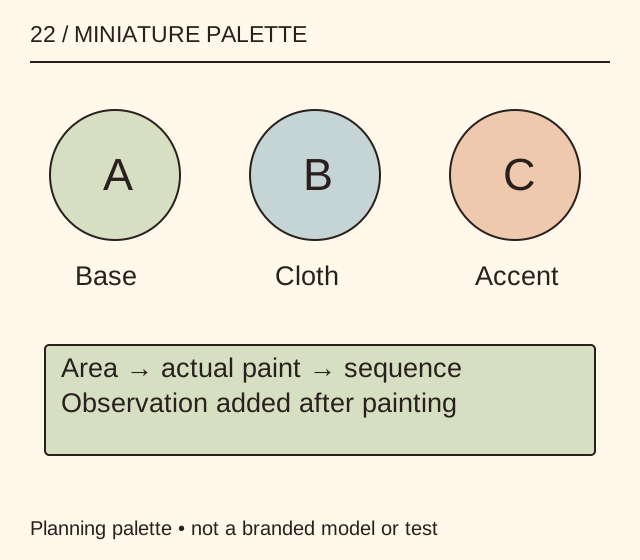
22 / MINIATURE PALETTE · A · Base · B · Cloth · C · Accent · Area → actual paint → sequence · Observation added after painting · Planning palette • not a branded model or test
- Project
- Palette
- Session
- Next step
Put it into practice
For an illustrative model project, the plan names a base area, cloth area and small accent, labelled A, B and C. The session aims to complete one chosen stage. The record notes the actual products and a question for the next session; it does not claim that a particular method or paint has been tested by MichaelT.
Illustrative example, not a reported client project or test.
Your take-away checklist
Plan a first miniature-painting session with a colour record
- □ Project: ____________________
- □ Palette: ____________________
- □ Session: ____________________
- □ Next step: ____________________
Before you act
Follow the actual kit and material instructions for safe handling, ventilation, tools and cleaning. No game rule, competition eligibility or current product range is asserted here.
A completed example record
This is the illustrative case above. Download the blank version to record your own task.
- Project
- One identified modelMaker instructions retained
- Palette
- A base, B cloth, C accentActual product names added by the reader
- Session
- One bounded stageWork and handling setup checked
- Next step
- Photograph + one observationNot a claim about game performance
A project record beats a shopping list
Keep model, stage, product, area, sequence and observation together. A later change becomes understandable when you know which layer or colour preceded it.
Credit the example photograph
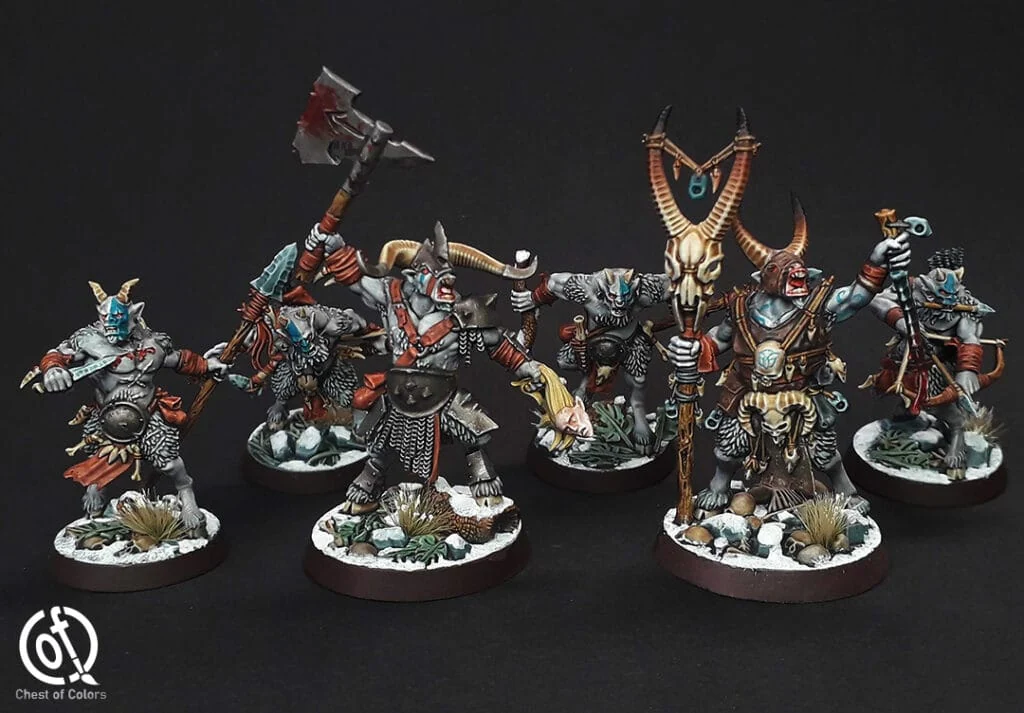
A photograph of another painter’s finished miniatures can illustrate the medium, but it should retain its source and must not become evidence that this worksheet produced that result. The drawing on this page is an original planning schematic.
Sources & context
The earlier page, Test Your Creativity With Warhammer 40K, was published 2021-04-20 under the Maria Baldwin byline. This guide develops its subject into a new procedure and worked example by MichaelT editorial.