A useful way through
- Define the decorative project and the cord specified for it. Record the supplier’s product code and dimensions where relevant. Colour names alone do not identify material, construction or suitability for a purpose.
- Label physical swatches A, B and C and view them together in the light where the object will be used. Record the chosen product codes, not only a screen colour. Check whether the pattern remains understandable when the colours look similar.
- Write a repeat using the labels before making a full object. Keep the pattern and the intended length together. Make a small sample following an appropriate project instruction and record actual material use rather than guessing a universal cord-to-finished-length ratio.
- Approve the sample and retain its labels with the unused cord. If a colour or product changes, compare a new sample with the approved one. Distinguish a decorative choice from the technical specification of the material.
Read the map as text
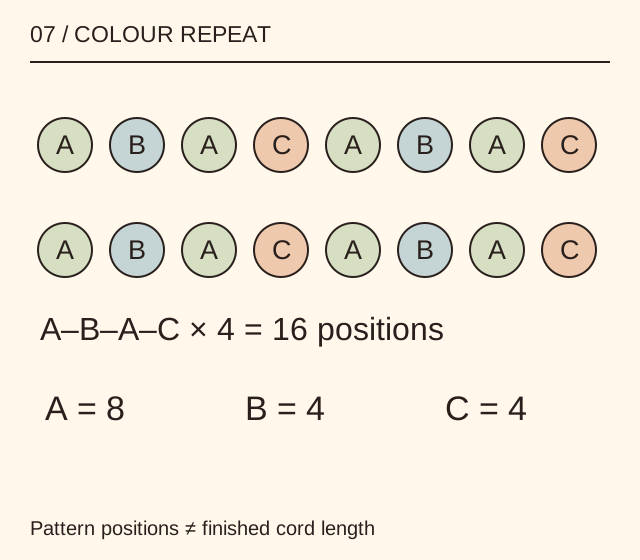
07 / COLOUR REPEAT · A · B · A · C · A · B · A · C · A · B · A · C · A · B · A · C · A–B–A–C × 4 = 16 positions · A = 8 · B = 4 · C = 4 · Pattern positions ≠ finished cord length
- A
- B
- C
- Repeat
Put it into practice
For an illustrative decorative tag, the colour sequence A-B-A-C repeats four times. That creates 16 labelled positions: A appears 8 times, B 4 and C 4. These counts describe the visual repeat; they do not determine the cord length required by a knot or braid.
Illustrative example, not a reported client project or test.
Your take-away checklist
Plan cord colours with a labelled swatch and a repeat
- □ A: ____________________
- □ B: ____________________
- □ C: ____________________
- □ Repeat: ____________________
Before you act
Do not use this decorative exercise to select climbing, rescue, restraint, lifting or other safety-critical equipment. Follow the actual product and project instructions.
A completed example record
This is the illustrative case above. Download the blank version to record your own task.
- A
- Warm grey, supplier code recorded8 positions
- B
- Rust, supplier code recorded4 positions
- C
- Dark blue, supplier code recorded4 positions
- Repeat
- A-B-A-C × 416 visual positions; material use measured separately
Keep a swatch record
Attach a small labelled sample or an accurate reference photograph, supplier code, purchase date and the project it belongs to. Screen colour and a seller’s colour name are useful clues but do not establish a physical match.
Separate colour from function
The old text assigned signalling and load-bearing implications to cord colours. A colour does not establish visibility in a real emergency, material strength or certification. This guide is solely for a decorative pattern record.
Sources & context
The earlier page, How To Choose The Right Paracord Colors?, was published 2022-05-27 under the Maria Baldwin byline. This guide develops its subject into a new procedure and worked example by MichaelT editorial.