A useful way through
- Describe the site you actually run: static files or application, traffic pattern, data held, required software and responsible people. List the work the host must support without turning an unmeasured forecast into a traffic claim. Confirm which parts are already delivered by another provider.
- Ask for the current written scope. Record ownership of updates, certificates, backups, restore work, monitoring and incidents. “Backup included” is incomplete without scope, retention and a usable recovery route. Keep the provider’s promise distinct from a restore you have actually tested.
- Map handover and access. The owner should know which accounts, domain settings and files are necessary to operate the site, with secrets handled through the proper private route. Do not put passwords or private keys in an ordinary handover sheet or public project folder.
- Document an exit path and the full cost. Ask about exporting files and data, termination, renewal, extra usage and migration assistance. Where appropriate, plan a safe representative restore to a separate location. Compare the same responsibilities across suppliers, not only identical storage numbers.
Read the map as text
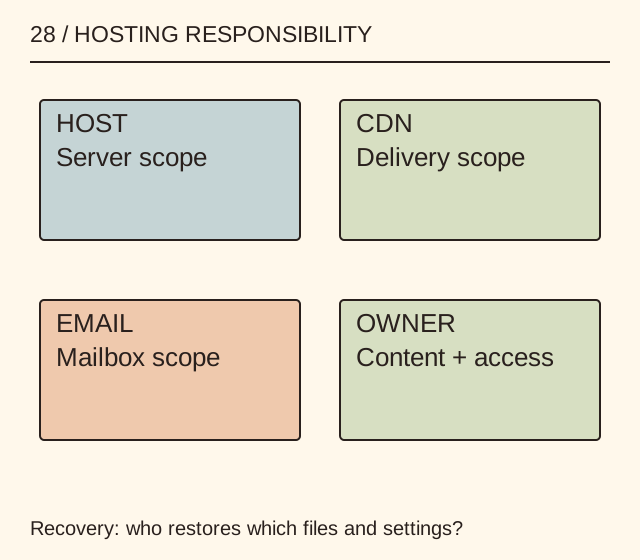
28 / HOSTING RESPONSIBILITY · HOST · Server scope · CDN · Delivery scope · EMAIL · Mailbox scope · OWNER · Content + access · Recovery: who restores which files and settings?
- Site
- Recovery
- Responsibility
- Exit
Put it into practice
An illustrative static journal uses a separate CDN and email service. The host supplies the server, while the owner supplies content releases and keeps a local copy. The enquiry asks whether a server backup includes configuration and who performs restoration. Until answered, the sheet records that responsibility as unresolved rather than “covered”.
Illustrative example, not a reported client project or test.
Your take-away checklist
Choose hosting with a responsibility and exit record
- □ Site: ____________________
- □ Recovery: ____________________
- □ Responsibility: ____________________
- □ Exit: ____________________
Before you act
This is a purchasing and responsibility worksheet. No hosting provider, uptime guarantee, security assessment or DNS change is endorsed or performed here.
A completed example record
This is the illustrative case above. Download the blank version to record your own task.
- Site
- Static journal + separate CDN/emailConfirm actual components
- Recovery
- Backup scope requestedNo successful restore claimed
- Responsibility
- Restore operator unresolvedWritten owner needed
- Exit
- Files + configuration exportTerms and full cost reviewed
Ask a question that can be answered
“Which files and settings are included, what versions are retained, and who restores them?” invites a concrete answer. “Is everything safe?” invites a promise that is too broad to verify.
Keep the account owner visible
Record the responsible role and private access-management route. An agency or supplier can operate a service without becoming the owner of the domain or the only person who can recover it.
Sources & context
The earlier page, Questions You Should Ask Your Web Host Before Signing Up!, was published 2021-09-25 under the Maria Baldwin byline. This guide develops its subject into a new procedure and worked example by MichaelT editorial.