
A useful way through
- Identify the exact blank garment, colour, size range and intended use. Ask the supplier for its size chart and available decoration methods for that product. Separate a desired appearance from a printing-method claim you have not verified.
- Supply approved artwork with its permitted use and the printer’s requested format. Agree the printed dimensions and reference points for placement. A design’s position in a web mock-up is not a measurement on every garment size.
- Review a representative sample or the proof type agreed with the supplier. Check spelling, artwork version, position, colour and the actual garment. Ask what the approval covers and what tolerances, care instructions and limitations apply to the chosen production process.
- Order from a size-and-quantity list tied to that approval. Confirm any method or placement changes across sizes, record the approved sample and inspect delivery against the order. Keep a discrepancy list by item rather than describing an entire batch as simply wrong.
Read the map as text
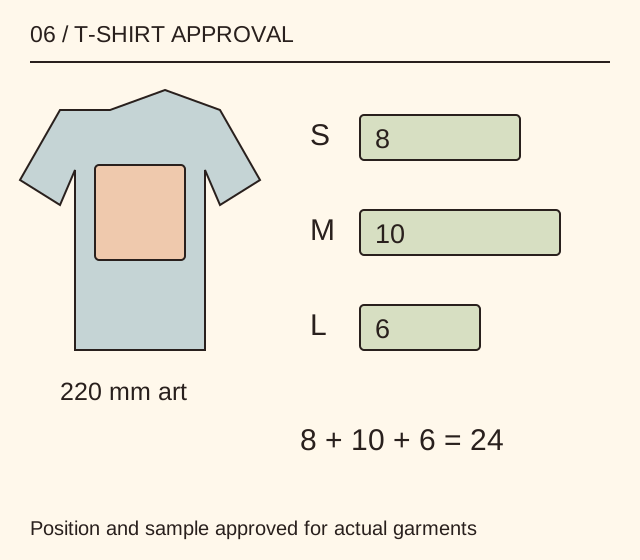
06 / T-SHIRT APPROVAL · 220 mm art · S · 8 · M · 10 · L · 6 · 8 + 10 + 6 = 24 · Position and sample approved for actual garments
- Garment
- Artwork
- Quantities
- Approval
Put it into practice
An illustrative order has 8 small, 10 medium and 6 large garments: 24 in total. The artwork is specified at 220 mm wide with its position defined from an agreed garment reference. If the smallest size requires a different print area, the supplier must confirm a revised version before production; shrinking the file silently changes the approval.
Illustrative example, not a reported client project or test.
Your take-away checklist
Approve a custom T-shirt with a placement and sample record
- □ Garment: ____________________
- □ Artwork: ____________________
- □ Quantities: ____________________
- □ Approval: ____________________
Before you act
Use the printer’s specification and the artwork rights holder’s permission. No print method or garment has been tested by MichaelT in this example.
A completed example record
This is the illustrative case above. Download the blank version to record your own task.
- Garment
- Named blank, colour and chartNo guessed universal S/M/L measurements
- Artwork
- Logo-v04, 220 mm wideRights and supplier format confirmed
- Quantities
- 8 + 10 + 6 = 24Size-level count checked
- Approval
- Sample/proof referencePlacement and production scope recorded
A delivery inspection
Compare a representative item from each agreed variant with the approved record. Record item, observed difference, photograph reference and requested resolution. Use the actual order terms for how to raise an issue.
Keep care instructions
Ask the supplier how the decorated garment should be cared for and pass that information to the recipient. The old article’s broad claims about the durability or price of whole printing methods are not a substitute for product-specific information.
Sources & context
The earlier page, How To Make Custom T-Shirts?, was published 2022-05-26 under the Maria Baldwin byline. This guide develops its subject into a new procedure and worked example by MichaelT editorial.