A useful way through
- Define the collection and the destination. Give each item or sensible group a stable reference, with a description and a condition note made before packing. Keep useful photographs privately with the record. Identify fragile, valuable or unusual items that need specialist advice rather than ordinary packing assumptions.
- Agree who packs and carries the items, and what is included in the service. Ask the actual provider about exclusions, access and the relevant written terms. Do not assume a photograph establishes insurance coverage or that every object can be dismantled safely.
- Assign a box or container reference and record its contents as packed. Keep a separate location for items that travel under another agreed arrangement. Mark the destination and handling information appropriately without displaying unnecessary personal or valuable-item details publicly.
- Reconcile receipt against the inventory. Note which containers and items arrived, visible condition and any unresolved discrepancy. Follow the actual provider’s reporting route and time requirements where relevant. Retain evidence; do not invent a cause for damage you have not established.
Read the map as text
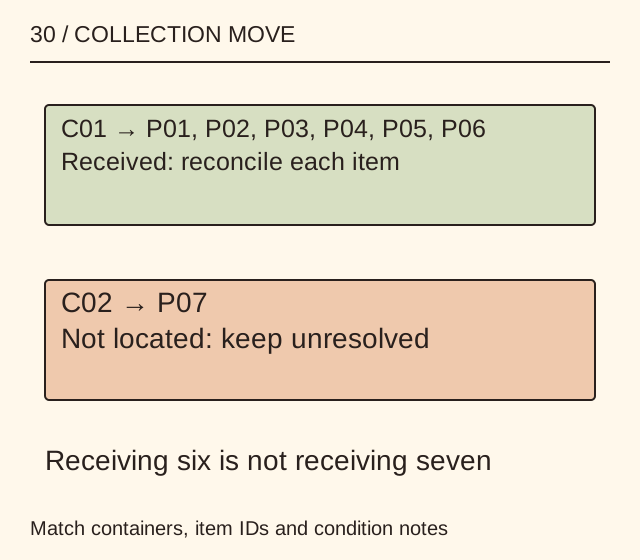
30 / COLLECTION MOVE · C01 → P01, P02, P03, P04, P05, P06 · Received: reconcile each item · C02 → P07 · Not located: keep unresolved · Receiving six is not receiving seven · Match containers, item IDs and condition notes
- Items
- C01
- C02
- Follow-up
Put it into practice
A fictional print collection has items P01–P06 in container C01 and P07 in C02 under a separate agreed arrangement. The receipt check finds C01 but not C02. The record marks P07 unresolved and asks the responsible carrier about C02. It does not state that all seven prints arrived because six were easy to see.
Illustrative example, not a reported client project or test.
Your take-away checklist
Move a personal collection with a box and condition inventory
- □ Items: ____________________
- □ C01: ____________________
- □ C02: ____________________
- □ Follow-up: ____________________
Before you act
This is a recordkeeping procedure, not insurance advice, a valuation or a technical packing method for fragile or high-value objects.
A completed example record
This is the illustrative case above. Download the blank version to record your own task.
- Items
- P01–P07Pre-pack condition notes retained
- C01
- P01–P06Receipt checked individually
- C02
- P07Location unresolved at this step
- Follow-up
- Carrier enquiry + recordNo unsupported damage or insurance conclusion
Keep the box map with the item list
An inventory without container references makes an arrival check slower. A box label without contents makes the collection harder to reconcile. The two records should use the same stable identifiers.
Know when to stop
For artworks, instruments or sensitive materials, ask the appropriate conservator, maker or specialist mover. This procedure tracks identity and responsibility; it does not specify conservation packing or environmental limits.
Sources & context
The earlier page, Finding the Right Removals Company, was published 2021-10-25 under the Maria Baldwin byline. This guide develops its subject into a new procedure and worked example by MichaelT editorial.