A useful way through
- Define the finished kit and the quantity required. List each component, its unit and the number needed per kit. Keep packaging and instructions in the list when they are part of the delivered object. Similar component names need distinct identifiers.
- Calculate the requirement for each component by multiplying kits by units per kit. Count usable stock separately from damaged, reserved or unverified items. The limiting component determines how many complete kits the current stock can make.
- Build one complete sample in the proposed sequence. Check identity, count, orientation and instructions, then record the approved version. Assign any inspection or specialist requirement to the responsible person; a complete count does not certify product performance.
- During packing, keep completed, incomplete and rejected kits separate and reconcile the totals. Record substitutions only when approved. At handover, provide the batch version, quantity and exceptions so a receiver can verify what arrived rather than reconstructing the process.
Read the map as text
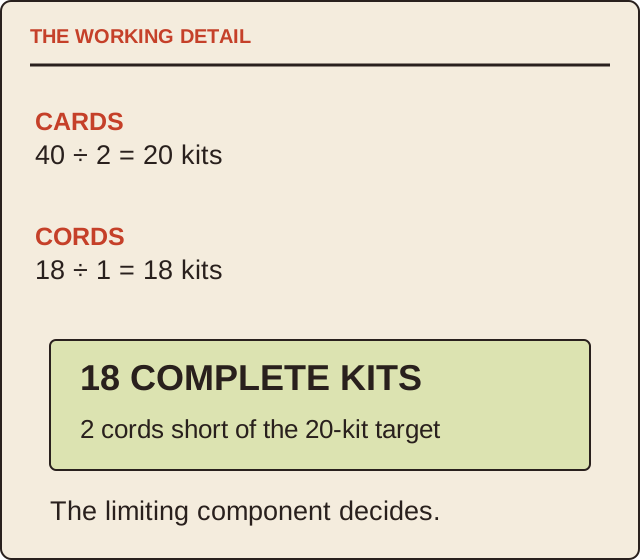
THE WORKING DETAIL · CARDS · 40 ÷ 2 = 20 kits · CORDS · 18 ÷ 1 = 18 kits · 18 COMPLETE KITS · 2 cords short of the 20-kit target · The limiting component decides.
- Target
- Cards
- Cords
- Complete
Put it into practice
For 20 fictional kits, each needs two cards and one cord. Forty cards and 18 usable cords can make only 18 complete kits: min(40 ÷ 2, 18 ÷ 1) = 18. The plan records a shortage of two cords. It does not ship two incomplete kits under the label “20 complete”.
Illustrative example, not a reported client project or test.
Your take-away checklist
Reconcile a small kit before packing the whole batch
- □ Target: ____________________
- □ Cards: ____________________
- □ Cords: ____________________
- □ Complete: ____________________
Before you act
The example is an arithmetic and packing procedure, not a manufacturing quality certification or a claim about a fulfilment provider.
A worked record
Use the example to see the decisions, then download a blank record for your own task.
- Target
- 20 kitsSame approved version
- Cards
- 2 each → 40 needed40 usable
- Cords
- 1 each → 20 needed18 usable: shortage 2
- Complete
- 18 kits possibleLimiting component
A receiving check
Ask the receiver to compare kit version, quantity, package identifiers and exceptions with the handover. If a component is substituted, preserve both the approval and the revised bill of materials. Otherwise an apparently balanced stock total can hide the wrong object.
Keep the units visible
A pack of ten components is not ten packs. Write component unit, pack size and conversion explicitly where needed. Reconcile usable individual units before multiplying the kit count; this is where many small-batch errors begin.
Sources & context
The earlier topic was published 2022-05-25 under the Maria Baldwin byline. The present procedure, examples and diagrams are new work by MichaelT editorial; they do not attribute a new test or professional assessment to the earlier author.