A useful way through
- Give each distinct item a stable identifier and unit. Decide whether you count individual sheets, packs or another consistent unit. Record the storage location. Two similar products with different specifications should not silently share one stock line.
- Log movements as they happen: date, item, quantity, receipt or issue, reason and person responsible. Keep a reservation separate from a physical issue until the item actually leaves the counted stock. Record returns and damaged items explicitly.
- Reconcile a physical count with the movement record. Expected stock is opening stock plus receipts minus issues, adjusted for documented returns or other movements. Investigate differences and record an authorised correction; do not overwrite the opening quantity simply to make the discrepancy disappear.
- Review availability and purchasing separately. Subtract valid reservations from the relevant usable stock before committing it to another job. Check supplier lead time, actual usage and the project pipeline before setting a reorder rule. An arbitrary minimum does not guarantee demand or prevent every shortage.
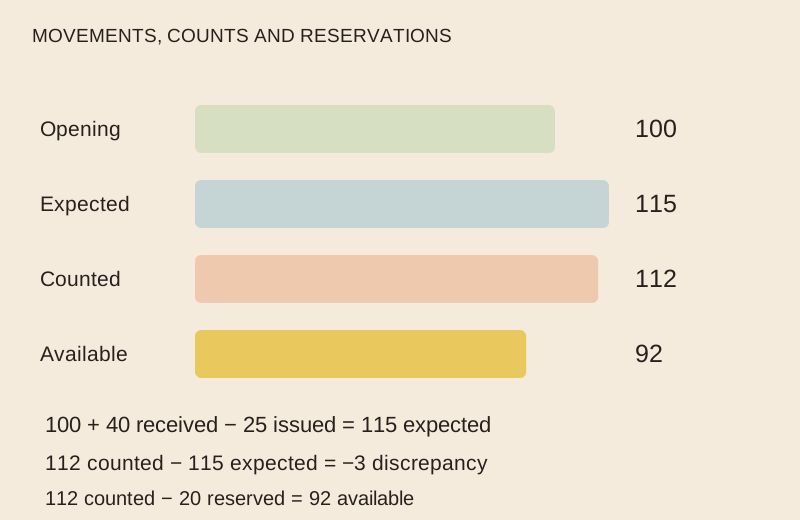
Read the map as text
MOVEMENTS, COUNTS AND RESERVATIONS · Opening · 100 · Expected · 115 · Counted · 112 · Available · 92 · 100 + 40 received − 25 issued = 115 expected · 112 counted − 115 expected = −3 discrepancy · 112 counted − 20 reserved = 92 available
- Item and storage location
- Receipts and issues
- Physical count and discrepancy
- Reservations and reorder decision
Put it into practice
A fictional paper studio starts with 100 sheets, receives 40 and issues 25: expected physical stock is 115. The count finds 112, so the discrepancy is −3. If 20 usable sheets are reserved, available unreserved stock is 92 after the count is confirmed. Investigate the missing three; do not describe 115 as a verified count.
Illustrative example, not a reported client project or test.
Your take-away checklist
Keep a small studio inventory you can reconcile
- □ Item and storage location: ____________________
- □ Receipts and issues: ____________________
- □ Physical count and discrepancy: ____________________
- □ Reservations and reorder decision: ____________________
Before you act
This is a basic operating record, not an accounting valuation or a tax inventory method. Perishable, regulated or safety-critical items need their own controls. Keep customer data out of a public stock sheet.
A movement row
Date; item ID; unit; location; movement type; quantity; job or document reference; responsible person. Use separate fields for a physical movement and a reservation so totals remain understandable.
A discrepancy note
Expected amount; counted amount; difference; recount result; evidence checked; approved adjustment; owner; follow-up. If the reason is unknown, record that rather than inventing a lost sale or a supplier fault.
Sources & context
The earlier What Are The Best Ways To Manage Your Inventory? page was dated 2022-07-21. Its subject is developed here as a new procedure, with the original byline retained separately. This edition does not carry forward the page’s supplier recommendations or unsupported outcome claims.