A useful way through
- Choose the task the display should support: understanding an item, comparing variants or finding assistance. Observe the actual approach and available space with the responsible shop team. Keep access and safety decisions within the venue’s requirements.
- Identify the real product or sample and the facts that must accompany it. Check price basis, variant, availability wording and any offer conditions with the responsible owner. Do not use a decorative sample to imply that a different product or price is on offer.
- Make a full-size temporary layout using the intended sign size and object footprint. Review the reading order and whether the next action is understandable. Ask what happens when an item sells out or the price changes so the display does not become a stale promise.
- Check the actual setup from the approach and at the point of use. Record observed issues and revise them. If you later measure performance, define the period and method; an attractive display alone does not establish increased footfall, attention or sales.
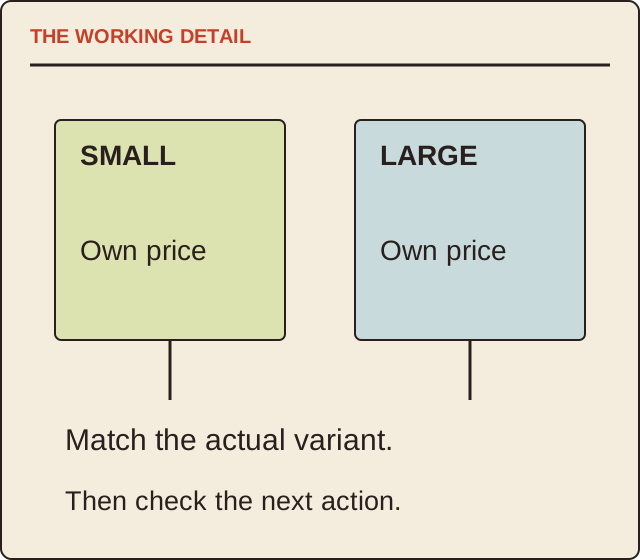
Read the map as text
THE WORKING DETAIL · SMALL · LARGE · Own price · Own price · Match the actual variant. · Then check the next action.
- Task
- Object
- Information
- Next step
Put it into practice
A fictional shelf display presents two sizes, but one price label could be read as covering both. The team adds an explicit size-to-price pairing and checks the full-size mock-up again. This resolves an information ambiguity; it does not prove that the revision increased sales.
Illustrative example, not a reported client project or test.
Your take-away checklist
Review a shop display from the visitor’s point of view
- □ Task: ____________________
- □ Object: ____________________
- □ Information: ____________________
- □ Next step: ____________________
Before you act
The venue must approve access, safety and actual offer wording. No shop performance is reported here.
A worked record
Use the example to see the decisions, then download a blank record for your own task.
- Task
- Compare two sizesOne clear reader question
- Object
- Actual variant shownNo misleading sample
- Information
- Size paired with priceConfirm current facts
- Next step
- Find stock or assistanceReview actual route
A display change record
Record display ID, date, item variant, current fact source, photograph and issue found. Keep a review owner for price or availability changes. Without that owner, a carefully designed sign can become inaccurate after the first stock update.
Keep the test small and observable
Ask a colleague unfamiliar with the layout to identify which price belongs to which size. Record the answer and any prompt you supplied. This is a practical clarity check, not a representative consumer study or a commercial result.
Sources & context
The earlier topic was published 2021-02-23 under the Maria Baldwin byline. The present procedure, examples and diagrams are new work by MichaelT editorial; they do not attribute a new test or professional assessment to the earlier author.