

A useful way through
- Decide whether the gift is per person, household, table or another clearly defined unit. Agree who receives one and how extras are handled. A guest total alone does not specify the number of gifts.
- Choose an item around the actual event and recipients. Check its dimensions, what is supplied and whether assembly or personalisation is involved. If it is food or another item with suitability requirements, obtain the relevant information from the supplier rather than guessing.
- Make a sample pack with its label and any instructions. Record the item version, packing materials and the time or equipment actually needed. Check spelling and the distribution method before ordering a large personalised batch.
- Keep a packing and handover count. Separate completed packs, spare components and items still awaiting approval. Assign who brings them, where they will be stored and what happens to unused gifts after the event.
Read the map as text
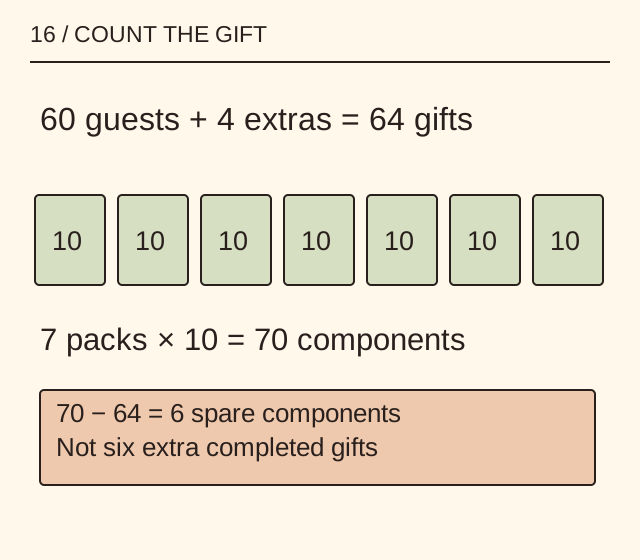
16 / COUNT THE GIFT · 60 guests + 4 extras = 64 gifts · 10 · 10 · 10 · 10 · 10 · 10 · 10 · 7 packs × 10 = 70 components · 70 − 64 = 6 spare components · Not six extra completed gifts
- Planned gifts
- Purchase unit
- Packing units
- Handover
Put it into practice
An illustrative event gives one bookmark to each of 60 attendees and deliberately orders 4 additional bookmarks. The plan needs 64 bookmarks and, if every one is packed, 64 labels and sleeves. If the supplier sells bookmarks in packs of 10, seven packs provide 70; six components remain outside the 64 completed gifts.
Illustrative example, not a reported client project or test.
Your take-away checklist
Plan guest favours by the unit you are giving
- □ Planned gifts: ____________________
- □ Purchase unit: ____________________
- □ Packing units: ____________________
- □ Handover: ____________________
Before you act
Use the actual supplier’s information for suitability, contents and any personalised-order terms. No gift is universally appropriate for every guest.
A completed example record
This is the illustrative case above. Download the blank version to record your own task.
- Planned gifts
- 60 recipients + 4 extras = 64Per-person unit agreed
- Purchase unit
- Packs of 107 packs supply 70 bookmarks
- Packing units
- 64 labels and sleevesSix spare bookmarks remain separate
- Handover
- 64 completed packsCounted, labelled and assigned
Keep the spare decision explicit
Choose extras for a stated reason and quantity. This example’s four extras are an editorial planning choice, not an industry allowance. Keep spare components apart from completed packs so both can be counted.
A useful packing label
Item; version; quantity in this box; destination; responsible person. Avoid putting a complete guest list or unnecessary personal information on an externally visible box.
Sources & context
The earlier page, What Are Wedding Favours?, was published 2022-06-11 under the Maria Baldwin byline. This guide develops its subject into a new procedure and worked example by MichaelT editorial.