A useful way through
- Define one comparable task: for example, wiping the same ordinary non-food-contact work surface after a craft session. Do not compare one paper sheet with one cloth as though their completed work and usable life were identical. Keep food hygiene and hazardous contamination outside this simple exercise.
- Record the products and how much each task uses. For a reusable cloth, record actual reuse, washing and drying arrangements according to its instructions. Do not assume it lasts forever, is always washed in an already-running load or has no production impact.
- When reading an environmental comparison, look for its boundaries: raw materials, making, transport, use and end of life. UNEP recommends a lifecycle approach. Ask which impacts were measured and whether the study’s assumptions match your situation; one material name does not settle all impacts.
- Use the record to change a practical habit and identify evidence still missing. Without comparable lifecycle data, describe the observed material use rather than calculating an invented carbon saving. Recheck when the task, product or washing routine changes.
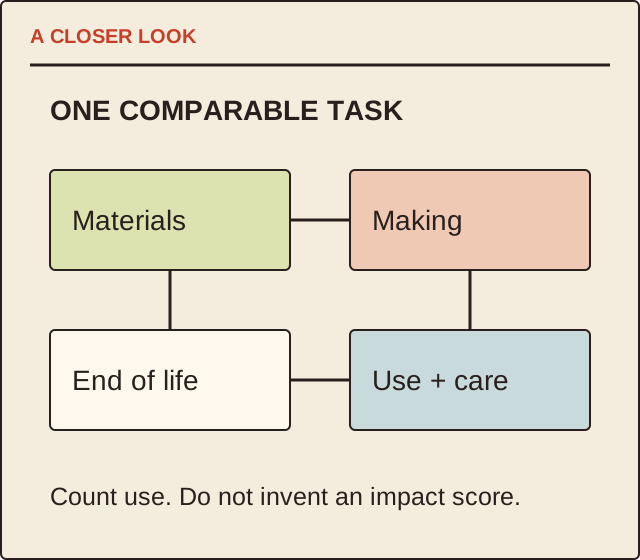
Read the map as text
A CLOSER LOOK · ONE COMPARABLE TASK · Materials · Making · Use + care · End of life · Count use. Do not invent an impact score.
- Task
- Paper observation
- Cloth observation
- Impact conclusion
Put it into practice
An illustrative craft room records eight routine wipe-downs. It uses twelve paper sheets in one observation period; in another it records one reusable cloth and two washes. These are activity records, not equivalent environmental scores. The team still needs the products’ lifetimes and appropriate lifecycle evidence before claiming which option has a lower overall impact.
Illustrative example, not a reported client project or test.
Your take-away checklist
Compare paper towels and reusable cloths without inventing a green winner
- □ Task: ____________________
- □ Paper observation: ____________________
- □ Cloth observation: ____________________
- □ Impact conclusion: ____________________
Before you act
This is an evidence-reading and material-use exercise, not a hygiene protocol or a product lifecycle assessment.
A worked record
Start with the example, then keep your own observations and confirmed information in the blank record.
- Task
- Routine craft-table wipe-downSame defined work
- Paper observation
- 12 sheets across 8 tasksIllustrative, not a real test
- Cloth observation
- 1 cloth + 2 washesRecord care and eventual replacement
- Impact conclusion
- Not establishedComparable lifecycle evidence missing
Read the unit before the headline
“Per sheet”, “per kilogram” and “per completed cleaning task” answer different questions. Check how a study makes products comparable and which assumptions it uses about durability and cleaning. A result from one electricity mix or use pattern should not silently become a universal claim.
Make a modest improvement you can describe
A useful record might show that supplies are being used for the intended task or that a cloth is being discarded before its documented useful life. Describe that change accurately. Do not repeat the old article’s unsupported daily waste quantities, methane claims or sweeping material rankings.
Sources & context
The earlier topic was published 2021-12-24 under the Maria Baldwin byline. The present procedure and illustrative record are by MichaelT editorial.
Source information checked 17 October 2026. Use the current requirements relevant to your situation.