A useful way through
- Start with the bags you already have and inspect them according to their care instructions. Record the usable ones and where they normally wait. Buying more bags does not solve a routine in which the existing bags stay at home.
- Plan one ordinary shopping load using the actual bags, product dimensions and your own comfortable carrying arrangement. Respect each bag’s stated capacity and condition. Do not infer a safe carrying weight from volume or from a staged photograph.
- Assign a clean storage and return point that fits your journey. Follow product care and the relevant food-handling advice for the items you carry. Keep damaged or unsuitable bags out of the planned set instead of counting every bag in a cupboard as ready to use.
- After a few trips, record forgotten bags, unnecessary extra bags and practical fit problems. Change one part of the routine and observe again. Count actual trips and care activity without claiming a carbon saving or a universal number of reuses needed to break even.
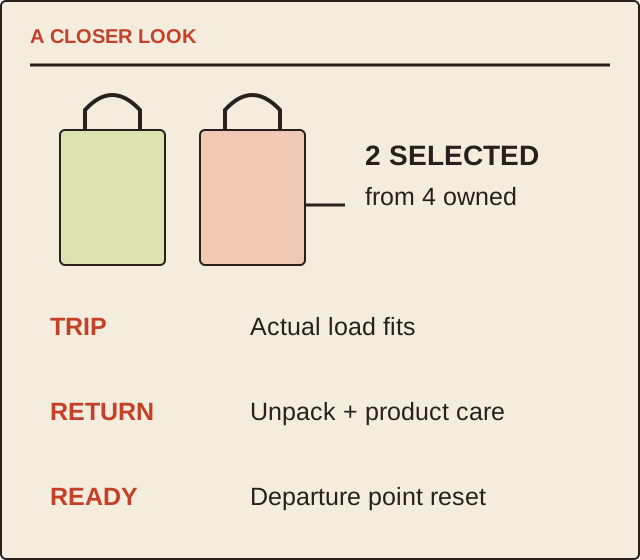
Read the map as text
A CLOSER LOOK · 2 SELECTED · from 4 owned · TRIP · Actual load fits · RETURN · Unpack + product care · READY · Departure point reset
- Inventory
- Load
- Return point
- Observation
Put it into practice
A fictional shopper owns four bags but normally needs two for a small trip. The plan is to return two suitable bags to the departure shelf after unpacking, with the other two kept as spares. A trip record notes “bags available at departure: 2” and any extra bag used. It makes no claim about measured environmental impact.
Illustrative example, not a reported client project or test.
Your take-away checklist
Make reusable shopping bags part of the actual journey
- □ Inventory: ____________________
- □ Load: ____________________
- □ Return point: ____________________
- □ Observation: ____________________
Before you act
This is a shopping-routine template, not a safe-load certification or food-hygiene protocol.
A worked record
Start with the example, then keep your own observations and confirmed information in the blank record.
- Inventory
- 4 owned; 2 selected for routineInspect condition and instructions
- Load
- One normal shopping tripCheck fit and carrying arrangement
- Return point
- Departure shelfReset after unpacking and care
- Observation
- Extra bags and forgotten tripsRecord what actually happened
A useful trial does not need a purchase
Use a normal trip to discover whether handles, opening size and storage fit your needs. A bag that suits a car boot may be awkward on a walking route. Keep the observation specific rather than declaring the same product ideal for every household.
Keep reuse and impact separate
Repeated use is an activity you can record. A lifecycle impact comparison also needs production, care, transport and disposal assumptions. UNEP’s lifecycle approach is useful context, but it does not provide a single break-even count for every bag. Avoid adding an unsupported environmental badge to the record.
Sources & context
The earlier topic was published 2021-10-27 under the Maria Baldwin byline. The present procedure and illustrative record are by MichaelT editorial.
Source information checked 17 October 2026. Use the current requirements relevant to your situation.