A useful way through
- Give a new idea a short name and date. Note whether it began with words, rhythm, harmony, melody or an image.
- Capture one small unit in a form you can retrieve: a voice memo, a written line or a simple description. Do not upload another person’s private recording without permission.
- Choose one constraint for the next version, such as fewer words or a contrasting rhythm. Keep the original alongside the variation.
- Return later and record what changed. Decide whether to continue, combine or set aside the fragment, using a version label instead of overwriting it.
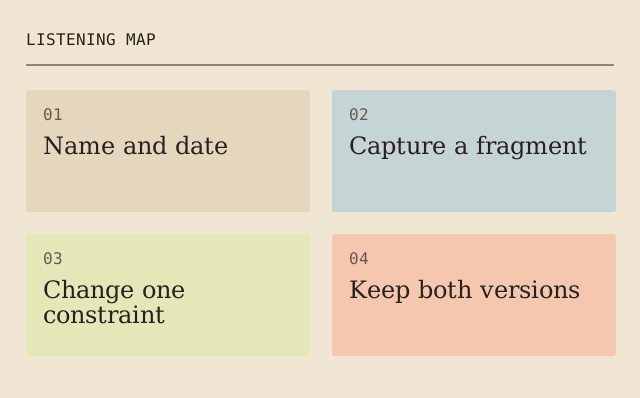
Read the map as text
LISTENING MAP · 01 · Name and date · 02 · Capture a fragment · 03 · Change one · constraint · 04 · Keep both versions
- Name and date
- Capture a fragment
- Change one constraint
- Keep both versions
Put it into practice
“Window / version 1 / spoken rhythm” is easier to find later than a folder of files all named “new idea”. A second version can change the rhythm while retaining the first, so the comparison remains possible.
Illustrative example, not a reported client project or test.
Your take-away checklist
Build a songwriting notebook you can return to
- □ Name and date: ____________________
- □ Capture a fragment: ____________________
- □ Change one constraint: ____________________
- □ Keep both versions: ____________________
Before you act
Use the linked artist, publisher or presenter for exact credits and current availability. These listening and planning exercises are editorial additions, not quotations from a lesson by Michael Thurber.
Sources & context
The learning section of Michael Thurber’s artist site groups songwriting and composition separately from production, theory and bass. This notebook procedure is a new editorial exercise inspired by that distinction; it does not promise the outcome of a lesson or offer enrolment.