A useful way through
- Choose a recording in which the low part is easy to hear, using a comfortable listening level. Write the recording title and credited artist.
- Listen only to the low part for a short section. Mark rests as well as sounds; the spaces can make the pattern easier to follow.
- Listen again with the full texture. Describe whether other parts move with it, against it or around it.
- Repeat with a contrasting passage. Write one change you can hear rather than assigning a fixed role to the instrument throughout the piece.
Read the map as text
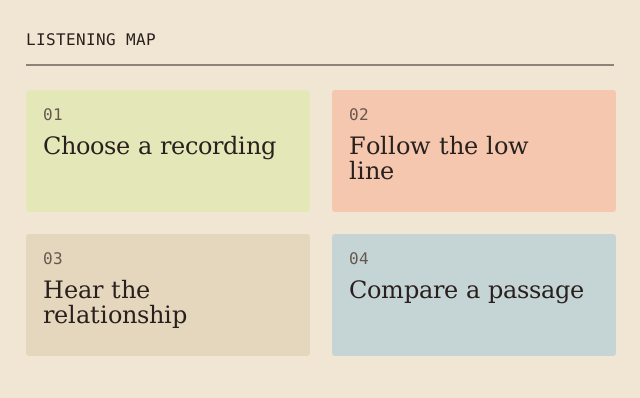
LISTENING MAP · 01 · Choose a recording · 02 · Follow the low · line · 03 · Hear the · relationship · 04 · Compare a passage
- Choose a recording
- Follow the low line
- Hear the relationship
- Compare a passage
Put it into practice
A bass part may repeat at the beginning and move more freely later. A useful note records that change. “The bass always supplies rhythm” would miss what happened in that passage.
Illustrative example, not a reported client project or test.
Your take-away checklist
Hear what a bass line is doing
- □ Choose a recording: ____________________
- □ Follow the low line: ____________________
- □ Hear the relationship: ____________________
- □ Compare a passage: ____________________
Before you act
Use the linked artist, publisher or presenter for exact credits and current availability. These listening and planning exercises are editorial additions, not quotations from a lesson by Michael Thurber.
Sources & context
Michael Thurber’s own artist site documents work as a composer, producer and multi-instrumentalist. NS Design’s artist profile also identifies his bass instruments. This exercise is an editorial listening activity; it is not a transcription or a lesson written by Thurber.