A useful way through
- List the actual calling tasks and people responsible: incoming enquiries, outgoing calls, transfers, messages and any accessibility needs. Ask the provider to identify the exact proposed service and equipment rather than relying on the broad term VoIP.
- Draw the intended call flow in ordinary language. Include business hours, unanswered calls, busy lines and the route to a person or message. Ask what happens when internet or power is unavailable and how emergency calling is handled for the service and location.
- Confirm number-transfer eligibility, charges, dependencies and timing directly with the providers. Keep the current service until the responsible owner has an agreed migration and fallback plan. Do not infer a transfer date or emergency-location behaviour from an advertisement.
- Use an authorised test plan with non-emergency calls to verify the agreed flows and record the result. Check the actual user task as well as sound quality. Keep a failed transfer or incorrect message visible as an unresolved item before acceptance.
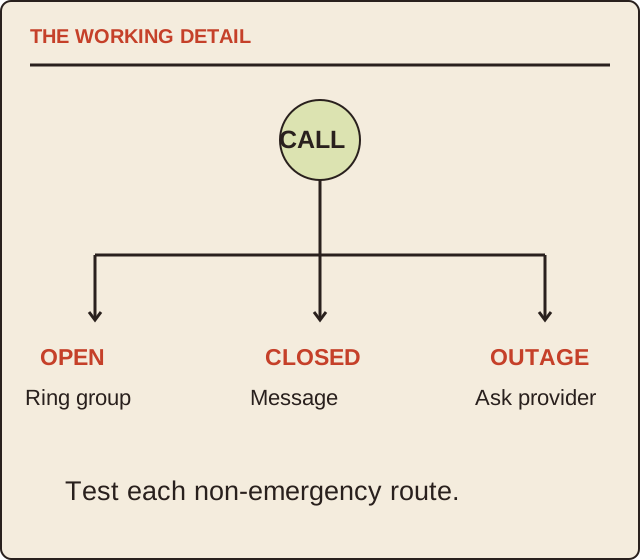
Read the map as text
THE WORKING DETAIL · CALL · OPEN · Ring group · CLOSED · Message · OUTAGE · Ask provider · Test each non-emergency route.
- Open hours
- No answer
- Outage
- Transfer
Put it into practice
A fictional studio wants enquiries to ring two colleagues, then reach a message outside working hours. A test reaches the correct message but never rings the second colleague. The call-flow record marks that branch failed; one completed call does not mean the whole service has passed. Emergency functionality is confirmed with the provider, not tested by calling emergency services.
Illustrative example, not a reported client project or test.
Your take-away checklist
Test a business calling proposal with a call-flow sheet
- □ Open hours: ____________________
- □ No answer: ____________________
- □ Outage: ____________________
- □ Transfer: ____________________
Before you act
No calling service is activated here. Provider-specific emergency, transfer and continuity requirements need direct confirmation.
A worked record
Use the example to see the decisions, then download a blank record for your own task.
- Open hours
- Ring agreed colleaguesTest each branch
- No answer
- Agreed message routeCheck timing with provider
- Outage
- Provider-confirmed fallbackDo not assume continuity
- Transfer
- Existing number and dependenciesConfirm before migration
Write the expected result first
Use scenario, starting condition, number called, expected route, actual route and time. Keep test numbers and personal contacts out of a public report. This makes the acceptance discussion concrete without exposing your phone system.
Ask about continuing responsibilities
Who changes opening hours, adds a user, updates recorded messages or handles a fault? Keep those roles and the exit process with the proposal. A successful installation day does not answer how the service will be maintained.
Sources & context
The earlier topic was published 2021-03-27 under the Maria Baldwin byline. The present procedure, examples and diagrams are new work by MichaelT editorial; they do not attribute a new test or professional assessment to the earlier author.