A useful way through
- Write the user problem and the minimum outcome in plain language. Separate essential requirements from ideas that can wait.
- Break delivery into observable milestones. Give each milestone an owner, dependency and acceptance check.
- Record access, security, data migration and support responsibilities before implementation. Keep real credentials out of planning documents.
- Run acceptance checks with representative users and agree an operational handover. Record unresolved issues explicitly rather than calling the project finished.
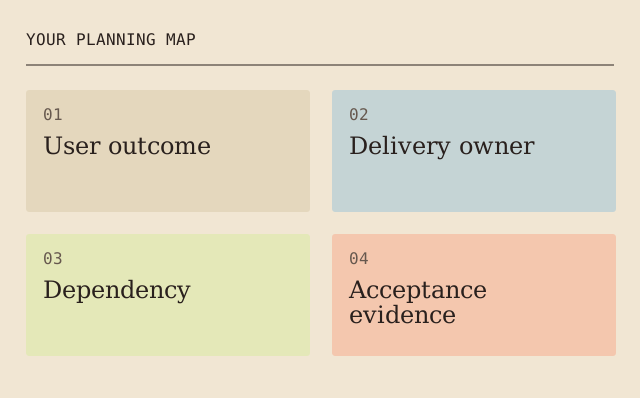
Read the map as text
YOUR PLANNING MAP · 01 · User outcome · 02 · Delivery owner · 03 · Dependency · 04 · Acceptance · evidence
- User outcome
- Delivery owner
- Dependency
- Acceptance evidence
Put it into practice
“Launch a booking tool” is vague. “Staff can create, change and cancel a test booking, and receive the correct confirmation” is an acceptance check someone can actually perform.
Illustrative example, not a reported client project or test.
Your take-away checklist
Turn an IT project into a usable delivery plan
- □ User outcome: ____________________
- □ Delivery owner: ____________________
- □ Dependency: ____________________
- □ Acceptance evidence: ____________________
- □ Support and rollback responsibility: ____________________
Before you act
A successful demonstration with sample data is not evidence that production migration, access control or recovery has been checked.
Sources & context
This guide develops the subject of Information Technology Project Management, published 2021-11-23. The original capture is linked below. The new checklist is a planning procedure; product specifications, contracts and local requirements must be checked for the actual situation.
The starting point: Information Technology Project Management
The page was credited to Maria Baldwin and dated 2021-11-23. The present procedure and example are by MichaelT editorial.
So what is a project? A project is a time-limited effort of specified scope, beginning and end (usually limited in time and often limited by funding or results) undertaken to achieve a unique goal usually lead to meaningful change or added value.