A useful way through
- Choose the actual page format and confirm whether you are using preprinted stock or printing the whole design from a template. Obtain the printer’s relevant specifications. Avoid a workflow that prints a second logo over an already printed letterhead.
- Place realistic letter content into the template, including a long recipient name, a multi-line address and enough body text to reach a continuation page. Check header, footer and body boundaries. Required business details depend on the actual organisation and jurisdiction; obtain approved wording rather than inventing it.
- Export and print a complete representative letter through the intended process. Check alignment, page breaks, continuation-page treatment and legibility. A blank stationery mock-up does not prove that a real letter will avoid the design or fit an envelope.
- Approve the template revision and keep its instructions with the file. Ask someone else to produce a letter from it and review that output. When contact details or production method changes, proof the changed version rather than assuming the old approval covers it.
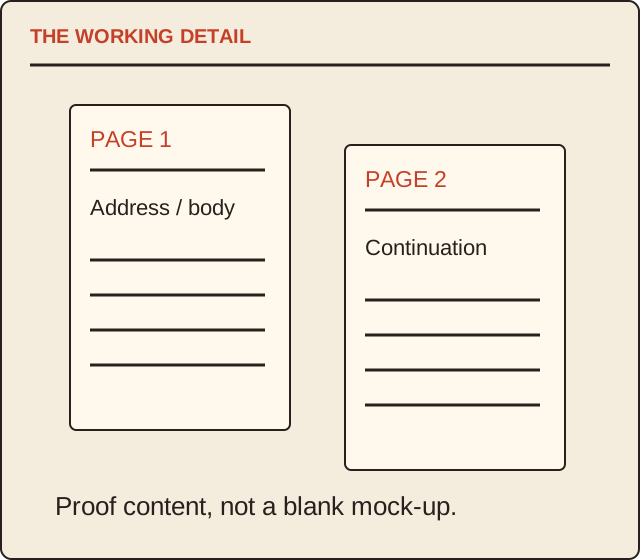
Read the map as text
THE WORKING DETAIL · PAGE 1 · Address / body · PAGE 2 · Continuation · Proof content, not a blank mock-up.
- Workflow
- Stress content
- Proof
- Revision
Put it into practice
A fictional template reserves 35 mm at the top for identity information, but a long address block pushes the first paragraph into that area. The team revises the layout and tests a two-page letter. The measured example is a template problem, not a universal rule that every organisation should use a 35 mm margin.
Illustrative example, not a reported client project or test.
Your take-away checklist
Proof a letterhead with the text that will actually be printed
- □ Workflow: ____________________
- □ Stress content: ____________________
- □ Proof: ____________________
- □ Revision: ____________________
Before you act
This is a document-proof procedure, not advice on legally required company disclosures or universal letter etiquette.
A worked record
Use the example to see the decisions, then download a blank record for your own task.
- Workflow
- Preprinted or full-template printChoose one deliberately
- Stress content
- Long address + two pagesCheck real body text
- Proof
- Actual output pathAlignment and continuation
- Revision
- Letterhead L04Approved wording and instructions
A proof checklist
Check sender details, recipient block, date, subject, body, signature, footer, continuation and envelope fold where applicable. Confirm the actual text with the responsible organisation. A beautiful paper sample cannot establish that the address or legal wording is correct.
Keep the editable source useful
Use clear placeholder fields and a short instruction sheet. Do not leave a previous customer’s name in the master. Preserve the approved font and asset permissions so the next person can produce a consistent letter without rebuilding the design.
Sources & context
The earlier topic was published 2021-08-18 under the Maria Baldwin byline. The present procedure, examples and diagrams are new work by MichaelT editorial; they do not attribute a new test or professional assessment to the earlier author.