A useful way through
- Read the land manager’s current route, weather and closure information. Choose an activity within the group’s actual skills and ability. A familiar-looking landscape or an old photograph does not establish current access, difficulty or conditions.
- Use the National Park Service’s Ten Essentials as categories to adapt, not a promise that one fixed shopping list suits every trip. Read the complete guidance and the actual park’s requirements. Identify necessary skills and working equipment rather than buying items you cannot use.
- Write the intended route, timing, group details and change arrangements in a trip plan. NPS recommends sharing it with a trusted contact who is not on the trip. Agree the appropriate action if you do not return as planned; do not invent a universal emergency number or response deadline.
- Before departure, recheck conditions, equipment and readiness. Choose the agreed safer alternative or postpone if the plan no longer fits. Keep the trusted contact informed of changes and completion. A phone or a printed checklist is not a substitute for the necessary outdoor skills.
Read the map as text
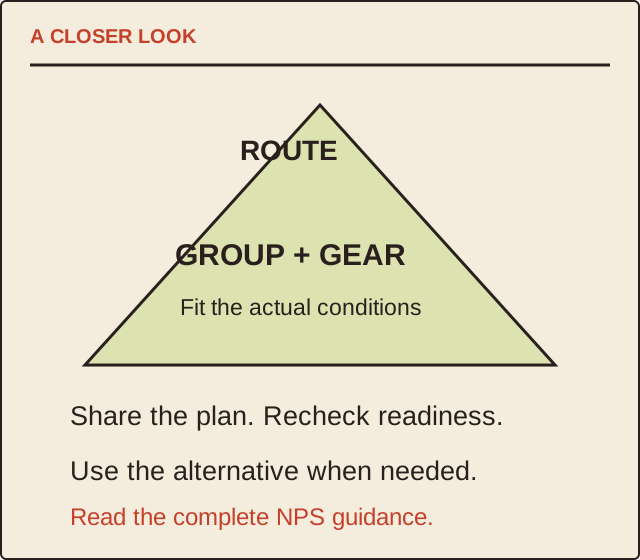
A CLOSER LOOK · ROUTE · GROUP + GEAR · Fit the actual conditions · Share the plan. Recheck readiness. · Use the alternative when needed. · Read the complete NPS guidance.
- Route
- Preparation
- Shared plan
- Departure
Put it into practice
An illustrative group finds that the planned route is closed on the land manager’s current notice. It switches to a previously checked visitor-centre activity and tells its trusted contact. The equipment record is updated for the new activity. The example does not claim a real route is open, a mobile signal is available or a particular person is fit for the hike.
Illustrative example, not a reported client project or test.
Your take-away checklist
Build a day-hike packing list from the actual route
- □ Route: ____________________
- □ Preparation: ____________________
- □ Shared plan: ____________________
- □ Departure: ____________________
Before you act
Read the complete land-manager guidance and obtain appropriate training. This page is not a navigation course, emergency protocol or assurance that a route is safe.
A worked record
Start with the example, then keep your own observations and confirmed information in the blank record.
- Route
- Current land-manager informationCheck closures and conditions
- Preparation
- Trip-specific essentials and skillsRead the full guidance
- Shared plan
- Trusted contact off the tripAgree change and return process
- Departure
- Recheck; use alternative if neededTell the contact about changes
A packing row needs a reason
For each item, record the condition or task it addresses, who carries it and whether they know how to use it. Check the actual park’s instructions and the full NPS guidance. This turns a collection of products into a preparation conversation without reducing outdoor safety to a minimalist list.
Keep the plan usable offline
NPS notes that a phone is not a substitute for the essentials and recommends a backup paper map. Download permitted information before travelling, but do not assume a file provides navigation skill. Multi-day or remote travel needs additional planning beyond this day-trip worksheet.
Sources & context
The earlier topic was published 2020-12-17 under the Maria Baldwin byline. The present procedure and illustrative record are by MichaelT editorial.
- National Park Service: trip planning guide, updated August 2026 ↗
- National Park Service: Ten Essentials ↗
Source information checked 17 October 2026. Use the current requirements relevant to your situation.