A useful way through
- Write the date, passenger count, pickup points and destination. Distinguish the requested arrival time from the departure time. Ask the operator to plan feasible driving, access and stopping arrangements under the requirements that apply to the trip.
- Confirm luggage, accessibility needs and any assistance arrangements directly with passengers and the operator through an appropriate private channel. A seat count does not establish luggage capacity or an accessible boarding arrangement. Keep only the passenger information genuinely needed for the journey.
- Ask for an itemised proposal naming the vehicle category, included hours or distance, waiting arrangements, parking responsibilities and what happens if the programme changes. Confirm the actual meeting point and contact method rather than relying on a landmark name alone.
- Prepare a concise day sheet with the confirmed operator contact, pickup instructions and return time. Nominate someone to reconcile the group at each departure without publishing the passenger list. Review the final route and service details with the operator before sharing the sheet.
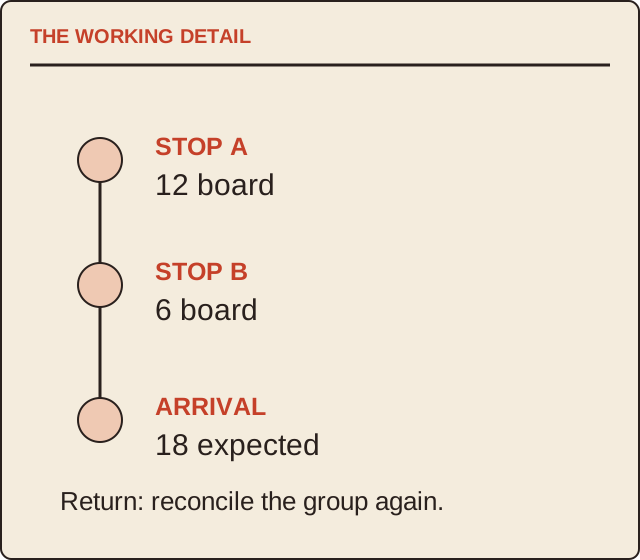
Read the map as text
THE WORKING DETAIL · STOP A · 12 board · STOP B · 6 board · ARRIVAL · 18 expected · Return: reconcile the group again.
- Stop A
- Stop B
- Arrival
- Return
Put it into practice
A fictional group has 18 passengers, but only 12 are boarding at the first stop. The sheet records 12 expected at A and six at B, not 18 missing at A. The organiser confirms the return meeting point separately from the outbound drop-off. No driving duration is invented: the operator supplies and confirms the feasible schedule.
Illustrative example, not a reported client project or test.
Your take-away checklist
Brief a group coach trip with a pickup and return record
- □ Stop A: ____________________
- □ Stop B: ____________________
- □ Arrival: ____________________
- □ Return: ____________________
Before you act
The operator must confirm routing, vehicle suitability, accessibility and applicable transport requirements. This is an organiser’s brief, not a transport safety certification.
A worked record
Use the example to see the decisions, then download a blank record for your own task.
- Stop A
- 12 expected passengersPrivate reconciliation
- Stop B
- 6 additional passengersConfirmed location
- Arrival
- Required at destinationOperator plans feasible departure
- Return
- Separate meeting instructionsContact and change process
Keep a route version
Name the day sheet revision and distribute a corrected version when a pickup changes. Mark who has confirmed it. Sending a new chat message without a replacement sheet can leave passengers and operator following different plans.
Compare the complete service
Waiting time, luggage, assistance, parking and changes may matter more than the vehicle photograph. Keep unresolved items visible in the quote comparison. A low headline rate does not describe the whole journey.
Sources & context
The earlier topic was published 2021-02-13 under the Maria Baldwin byline. The present procedure, examples and diagrams are new work by MichaelT editorial; they do not attribute a new test or professional assessment to the earlier author.