.jpg)
A useful way through
- Read the current rules for the exact campsite and surrounding area, then ask the operator about unclear boundaries. Permission at a campsite does not automatically extend to nearby trails, buildings or transport. Keep the rule source and information date with the plan.
- Discuss the particular dog’s suitability and care needs with the appropriate professional where needed. Plan water, food, rest and weather arrangements using actual advice rather than assigning a carrying load or treatment from a generic article. Choose another plan if the conditions do not suit the dog.
- Make a site-specific packing list and responsibility record. Include the permitted restraint arrangement, waste supplies and the operator’s contact. The US National Park Service’s B.A.R.K. principles include collecting waste, leashing, respecting wildlife and knowing where pets may go; individual parks set their own details.
- On arrival, confirm the permitted areas and respond to actual conditions. Keep the dog supervised and follow the site’s rules. Do not improvise an unattended arrangement to fit a sightseeing plan. Record a fallback if an activity cannot include the dog.
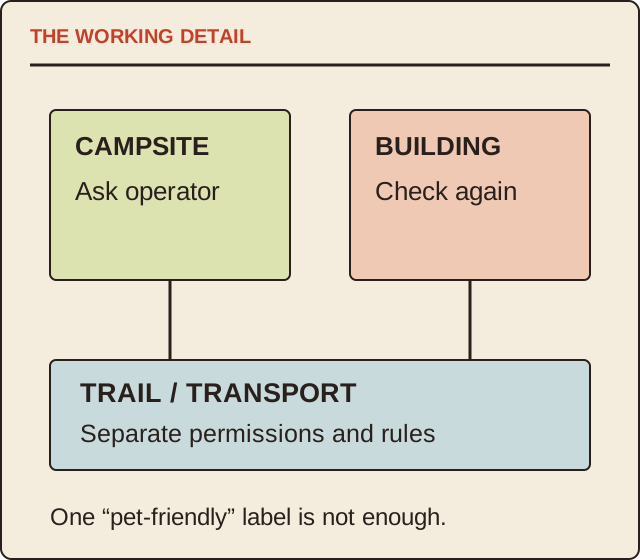
Read the map as text
THE WORKING DETAIL · CAMPSITE · Ask operator · BUILDING · Check again · TRAIL / TRANSPORT · Separate permissions and rules · One “pet-friendly” label is not enough.
- Pitch
- Paths
- Care
- Fallback
Put it into practice
A fictional booking permits a dog at the tent pitch but the nearby visitor centre does not allow pets inside. The group rearranges its visit so someone remains with the dog in a permitted setting. “Pet-friendly campsite” was not treated as permission for every stop, and no claim is made that the dog can safely carry a loaded pack.
Illustrative example, not a reported client project or test.
Your take-away checklist
Check a campsite’s dog rules before packing
- □ Pitch: ____________________
- □ Paths: ____________________
- □ Care: ____________________
- □ Fallback: ____________________
Before you act
Follow local rules and veterinary advice for the individual dog. The NPS example is not a substitute for another campsite’s requirements.
A worked record
Use the example to see the decisions, then download a blank record for your own task.
- Pitch
- Dog permitted by operatorCheck booking conditions
- Paths
- Exact areas confirmedDo not extend permission
- Care
- Individual needs and weatherUse appropriate advice
- Fallback
- Supervised alternativeNo improvised unattended plan
Ask one precise question
“Which paths and facilities may our dog use during these dates, and what restraint, waste and supervision rules apply?” Save the answer. A broad pet-friendly badge is less useful than a clear boundary around the places you intend to visit.
What not to copy from a generic checklist
The older article suggested a loaded dog bag and broad weather assumptions without assessing an individual animal. This guide does not supply carrying weights, medical advice or a universal temperature threshold. Those decisions need the right professional and actual conditions.
Sources & context
The earlier topic was published 2021-11-08 under the Maria Baldwin byline. The present procedure, examples and diagrams are new work by MichaelT editorial; they do not attribute a new test or professional assessment to the earlier author.
Source information checked 17 October 2026; use the actual current requirements for your situation.