

A useful way through
- Copy the recommendation exactly, including its claimed author. Search the publisher or a library catalogue for the title and author together. Keep a possible match separate from a confirmed record; a plausible cover in a search result is not enough.
- Compare the edition, language, format and identifier with the copy you can obtain. A revised edition and a different book with a similar title should not silently share one reading record. The Library of Congress supports searches by title, author and identifiers such as ISBN.
- Write one question you want the reading to answer. Read the contents and a representative passage before committing to the whole book. Record the page or chapter that actually addresses the question, alongside a short paraphrase rather than an untraceable quotation.
- After a manageable reading session, distinguish the author’s argument, the evidence offered and your own proposed application. Write a small next action and what would make you revise it. Keep unresolved bibliographic details visible instead of filling them from memory.
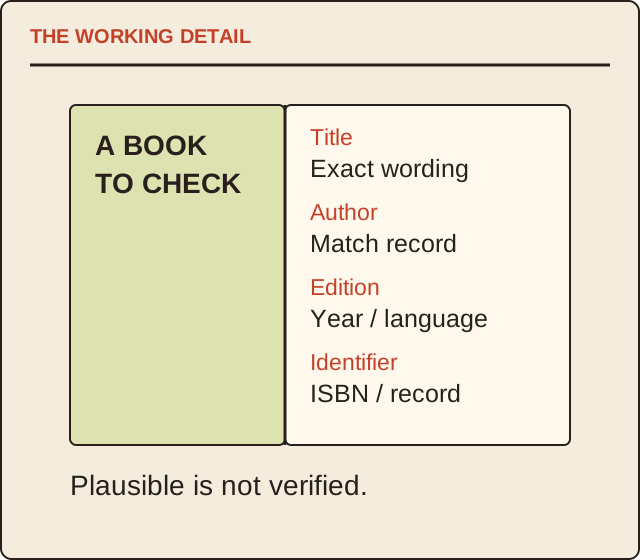
Read the map as text
THE WORKING DETAIL · A BOOK · TO CHECK · Title · Exact wording · Author · Match record · Edition · Year / language · Identifier · ISBN / record · Plausible is not verified.
- Recommendation
- Verified edition
- Reading question
- Next action
Put it into practice
A fictional recommendation gives a familiar title but an author who does not match the publisher record. The reader does not add it to a professional reading list. They mark “identity unresolved”, ask the recommender for a publisher link, and continue with a separately verified edition. A useful reading plan begins with a real book, not an attractive invented citation.
Illustrative example, not a reported client project or test.
Your take-away checklist
Check a book recommendation before building a reading plan
- □ Recommendation: ____________________
- □ Verified edition: ____________________
- □ Reading question: ____________________
- □ Next action: ____________________
Before you act
This is a source-checking and reading procedure, not a recommendation of unverified titles or a qualification for social-work practice.
A worked record
Use the example to see the decisions, then download a blank record for your own task.
- Recommendation
- Title and author as suppliedPreserve the original wording
- Verified edition
- Publisher + year + identifierConfirm against the actual copy
- Reading question
- What decision might this inform?Choose a specific chapter
- Next action
- One bounded applicationRecord evidence and uncertainty
A reading note you can revisit
Use six lines: exact edition; question; chapter and pages; argument; supporting evidence; possible application. An interesting passage does not establish that its advice transfers to a different profession or setting. Keep the conditions of the original argument beside your note.
Why this page replaces the earlier list
The earlier article supplied book-and-author pairings without reliable bibliographic support. Those recommendations are not repeated here. The procedure is useful for any reading list: verify identity first, then judge relevance and the quality of the argument.
Sources & context
The earlier topic was published 2022-06-21 under the Maria Baldwin byline. The present procedure, examples and diagrams are new work by MichaelT editorial; they do not attribute a new test or professional assessment to the earlier author.
Source information checked 17 October 2026; use the actual current requirements for your situation.