
A useful way through
- List what you actually want to play and where people will sit. Separate music listening, films, games and accessibility needs. Identify existing equipment you intend to keep so a proposal can work from the real room and devices.
- Make a connection inventory from the exact device manuals. Record model, relevant input/output and the required function. Similar connector shapes do not establish that every requested feature is supported. Ask the installer to confirm the complete proposed signal path.
- Walk through normal use: choosing a source, changing volume, using captions where relevant and switching off. Agree who will use the controls and where the instructions will be kept. Include the route, ventilation and installation constraints in the professional brief.
- Review the delivered system with a short acceptance sequence and the actual manuals. Record which functions were demonstrated and any unresolved issue. Keep a labelled connection record and the relevant settings information for a later equipment change.
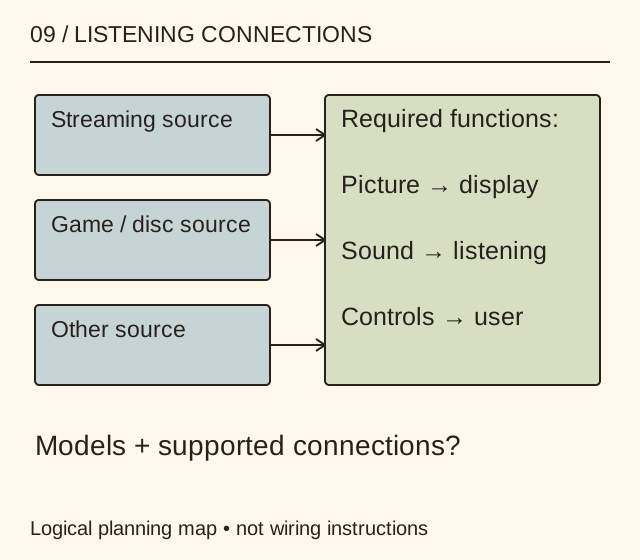
Read the map as text
09 / LISTENING CONNECTIONS · Streaming source · Game / disc source · Other source · Required functions: · · Picture → display · · Sound → listening · · Controls → user · Models + supported connections? · Logical planning map • not wiring instructions
- Use A
- Use B
- Control
- Handover
Put it into practice
An illustrative brief keeps a television and two powered speakers, then adds a music source. The installer is asked to show the route for television sound and for music, and to demonstrate source switching. The sketch is a logical connection plan; it is not a wiring specification or a claim that particular models are compatible.
Illustrative example, not a reported client project or test.
Your take-away checklist
Brief a home listening and viewing setup around real connections
- □ Use A: ____________________
- □ Use B: ____________________
- □ Control: ____________________
- □ Handover: ____________________
Before you act
No device combination or acoustic performance is certified here. Electrical work, mounting and technical compatibility need the appropriate professional and exact manufacturer documentation.
A completed example record
This is the illustrative case above. Download the blank version to record your own task.
- Use A
- Television soundDemonstrate agreed source and volume route
- Use B
- Music sourceConfirm actual compatible connection
- Control
- Named everyday sequenceUser can repeat the demonstrated steps
- Handover
- Device list + connection recordUnresolved functions remain listed
Write acceptance tasks in ordinary language
“Play the agreed source through the intended speakers” is more useful than “premium audio”. Record the source and test conditions, and ask the installer to explain a failure rather than hiding it in an automatic fallback.
Keep installation responsibilities clear
Ask who handles mounting, cable routes and electrical requirements. A neat diagram cannot establish safe support, ventilation or fire performance. Preserve the actual product instructions and competent installer’s handover.
Sources & context
The earlier page, Customized Home Theater Installation, was published 2021-08-04 under the Maria Baldwin byline. This guide develops its subject into a new procedure and worked example by MichaelT editorial.