A useful way through
- Record the listing’s exact wording and identify the seller and, where documented, the maker. Ask which details are known about the garment’s origin and technique. A decorative motif or country label does not establish a particular community, workshop or handmade process.
- Request relevant photographs and measurements for the actual item. Include the inside, seams and embroidery detail where useful. Keep a seller’s description separate from independently supported information; a familiar visual style is not authentication.
- Compare the garment dimensions with an appropriate garment you own, using the same measurement method. Check fibre, construction, trims and the actual care instructions. Do not assume every embroidered dress has the same fabric, quality, fit or washing needs.
- Review the price basis, delivery and return terms for the exact offer. Retain any documented maker credit and reuse permissions for photographs. If provenance matters to the purchase and remains unclear, ask for better evidence rather than filling the gap with a cultural story.
Read the map as text
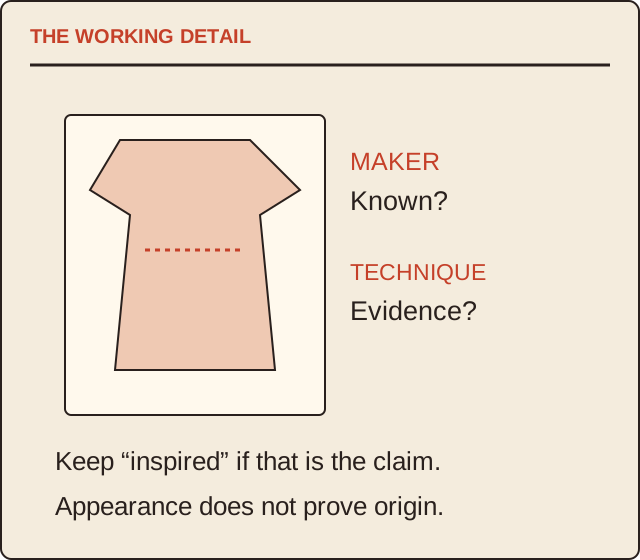
THE WORKING DETAIL · MAKER · Known? · TECHNIQUE · Evidence? · Keep “inspired” if that is the claim. · Appearance does not prove origin.
- Wording
- Maker
- Fit
- Care
Put it into practice
A fictional listing describes a dress as “Mexican-inspired” but does not name a maker or place of production. The buyer preserves that qualifier and asks for the garment’s actual information. They do not replace it with “traditional handmade dress from a named community” simply because the embroidery resembles another picture.
Illustrative example, not a reported client project or test.
Your take-away checklist
Read an embroidered garment listing without inventing its origin
- □ Wording: ____________________
- □ Maker: ____________________
- □ Fit: ____________________
- □ Care: ____________________
Before you act
This is a listing-review method, not textile authentication, valuation or a claim about a particular cultural origin.
A worked record
Use the example to see the decisions, then download a blank record for your own task.
- Wording
- Mexican-inspired in the exampleKeep the qualifier
- Maker
- Unknown until documentedNo invented attribution
- Fit
- Actual garment measurementsSame measuring method
- Care
- Label and constructionNo universal washing claim
Ask about the object, not a stereotype
Who made this particular garment? Which process is documented? Are the photographs of the offered item? A respectful listing is precise about what is known. It does not assume all garments associated with a country have the same quality or price.
Preserve a useful product record
Keep listing date, maker evidence, dimensions, materials, care and terms. If a seller corrects a detail, retain the updated version. The record helps you compare the item without inventing provenance or repeating an old article’s unsupported price range.
Sources & context
The earlier topic was published 2022-04-28 under the Maria Baldwin byline. The present procedure, examples and diagrams are new work by MichaelT editorial; they do not attribute a new test or professional assessment to the earlier author.