A useful way through
- Write the task and the existing fitting’s permitted lamp specifications. Check the actual instructions for base, dimensions, supply, dimming and enclosure compatibility. This label-reading exercise does not tell you how to alter a fitting or work on electrical wiring.
- Compare brightness in lumens and electrical power in watts. The US Federal Trade Commission explains that wattage is not a reliable brightness comparison across lamp technologies. Copy the numbers from the exact product label rather than using a marketing phrase such as powerful.
- Compare light appearance separately. Note the label’s colour-temperature information and any relevant manufacturer details. A warmer or cooler appearance does not mean the lamp produces more lumens, and an ordinary white lamp is not interchangeable with a specialist plant-growing or signalling light.
- Before buying several units, resolve the fitting and control questions and assess an appropriate sample in the intended setting. Retain the product code and label. Keep a sample observation separate from the manufacturer’s rated output and from an instrument measurement you have not performed.
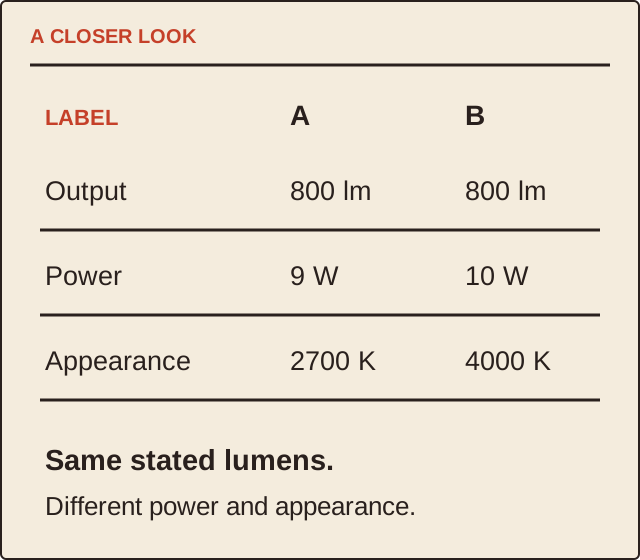
Read the map as text
A CLOSER LOOK · LABEL · A · B · Output · 800 lm · 800 lm · Power · 9 W · 10 W · Appearance · 2700 K · 4000 K · Same stated lumens. · Different power and appearance.
- Brightness
- Power
- Appearance
- Compatibility
Put it into practice
Two fictional labels both state 800 lumens. Lamp A states 9 W and 2700 K; lamp B states 10 W and 4000 K. Their stated light output matches, while power and appearance differ. The buyer still checks the fitting and dimmer. These illustrative labels are not actual product recommendations or a guarantee of equal illumination on a desk.
Illustrative example, not a reported client project or test.
Your take-away checklist
Read an LED lamp label: lumens, watts and light appearance
- □ Brightness: ____________________
- □ Power: ____________________
- □ Appearance: ____________________
- □ Compatibility: ____________________
Before you act
Follow fitting and lamp instructions; electrical compatibility and installation questions belong with a qualified professional.
A worked record
Start with the example, then keep your own observations and confirmed information in the blank record.
- Brightness
- 800 lm on both sample labelsCompare stated output
- Power
- A: 9 W; B: 10 WNot the brightness unit
- Appearance
- A: 2700 K; B: 4000 KSeparate from lumens
- Compatibility
- Actual fitting and controlsResolve before ordering
What the US Lighting Facts label adds
The FTC describes a package label showing brightness, estimated yearly energy cost, expected life, light appearance and wattage, with mercury information where relevant. Cost and life are estimates with assumptions. Read those assumptions before using the figures in a budget; other markets have their own labels.
Keep the room brief alongside the label
A matching lumen number alone cannot settle glare, placement, the shade or the light reaching the task. Take the label comparison back to the room’s actual requirements. Do not turn a grow-light photograph or a lamp colour into an unsupported claim about plant growth, sleep or health.
Sources & context
The earlier topic was published 2021-01-04 under the Maria Baldwin byline. The present procedure and illustrative record are by MichaelT editorial.
Source information checked 17 October 2026. Use the current requirements relevant to your situation.