A useful way through
- List the real activities and their positions: reading at a chair, preparing work at a table, moving through the room or looking at a picture. Include the people who use the space. Start from those tasks rather than choosing a decorative fitting first.
- Observe the room at the times you actually use it. Mark windows, existing light sources and the viewing direction. Note an unwanted reflection, a dark task surface or a light blocked by furniture. Keep a dated observation separate from a prediction about a new product.
- Prepare a brief with annotated photographs or a simple plan. State the problem and the required everyday task without prescribing wiring or a universal brightness number. Ask the relevant professional about suitable options, controls, compatibility and the actual constraints.
- Review the proposed solution against the named tasks. Where a safe, representative demonstration is available, view it from the intended positions and check reflections and control use. Electrical installation and technical safety checks belong to the appropriate qualified person.
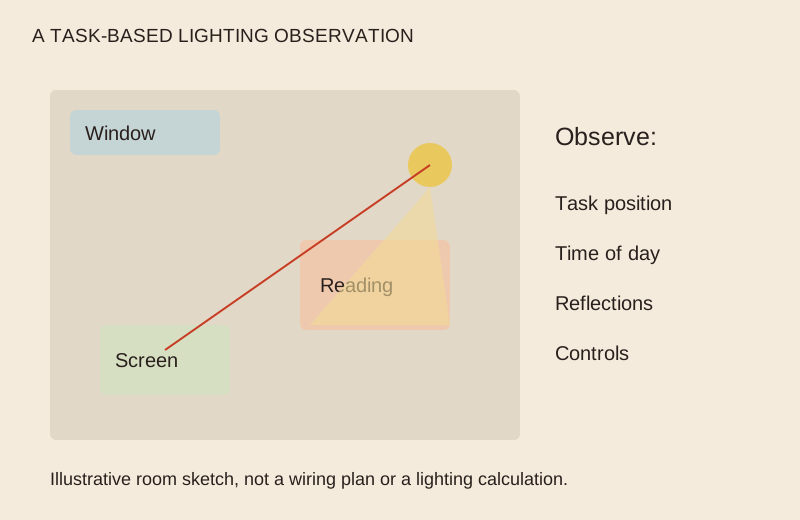
Read the map as text
A TASK-BASED LIGHTING OBSERVATION · Window · Reading · Screen · Observe: · Task position · Time of day · Reflections · Controls · Illustrative room sketch, not a wiring plan or a lighting calculation.
- Task and viewing position
- Daylight and evening notes
- Reflection or obstruction
- Question for the lighting professional
Put it into practice
A fictional reading corner works in daylight but an existing lamp reflects in a nearby screen at night. The brief records the chair position, screen direction and evening observation. The designer considers the actual arrangement and proposes a solution to review. The example does not establish a universal lamp position, lux target or electrical specification.
Illustrative example, not a reported client project or test.
Your take-away checklist
Write a lighting brief from the tasks in the room
- □ Task and viewing position: ____________________
- □ Daylight and evening notes: ____________________
- □ Reflection or obstruction: ____________________
- □ Question for the lighting professional: ____________________
Before you act
Do not alter wiring, overload sockets or improvise light supports. Follow manufacturer instructions and local electrical requirements. A room photograph cannot establish electrical safety or a person’s visual needs.
Use a scene record
Scene or task; time; position; current light source; observed difficulty; proposed change; person responsible for technical advice; review result. Repeat the same task when comparing the proposal.
Ask what the product specification means here
Check the exact model, controls, installation needs and compatibility with the proposed setup. Distinguish the appearance of a fitting from how the room will perform. An attractive staged image is not a measurement of your room.
Sources & context
The earlier The Way to Fill up Home With Appropriate House Lighting Setup page was dated 2021-03-26. Its subject is developed here as a new procedure, with the original byline retained separately. This edition does not carry forward the page’s supplier recommendations or unsupported outcome claims.