

A useful way through
- Write the audience, communication task and agreed output. Name the formats, quantities and approval owner. A campaign, a logo and a media placement are different deliverables; the agency’s service list does not establish which you have ordered.
- Separate creative production, paid placement, management and reporting in the quotation. Record any third-party charges, assumptions and currency. Ask who controls accounts and unused media funds rather than assuming every quoted amount becomes advertising exposure.
- Specify the asset handover: final and editable files where agreed, format, versions, usage permissions and the approval process. Keep the ownership and licence terms attached to the actual work. A beautiful mockup does not show that all images or fonts can be used for the intended placement.
- Agree the reporting definitions and period. Distinguish spending, delivered impressions, clicks and actual enquiries with their sources and limitations. Review completed work against the approved scope; do not turn a media plan or a forecast into a real sales result.
Read the map as text
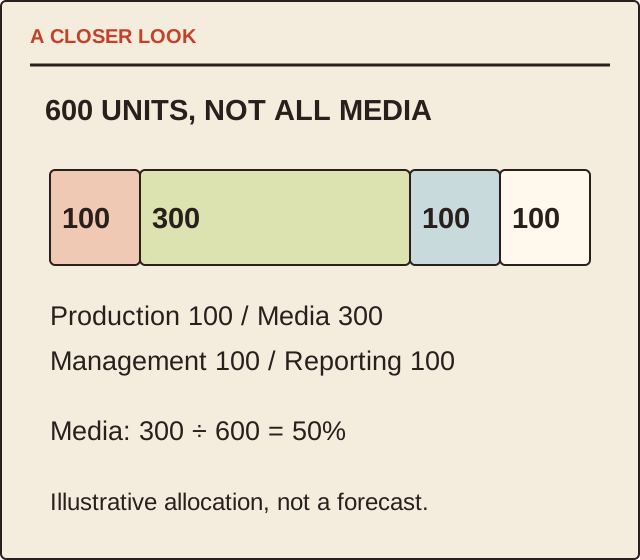
A CLOSER LOOK · 600 UNITS, NOT ALL MEDIA · 100 · 300 · 100 · 100 · Production 100 / Media 300 · Management 100 / Reporting 100 · Media: 300 ÷ 600 = 50% · Illustrative allocation, not a forecast.
- Production
- Media
- Management
- Reporting
Put it into practice
A fictional 600-unit budget contains 100 for production, 300 for media, 100 for management and 100 for reporting. Media therefore represents 300 ÷ 600 = 50% of the total. The record does not promise impressions, clicks or sales. A second quotation is compared only after its inclusions and treatment of third-party costs are made equivalent.
Illustrative example, not a reported client project or test.
Your take-away checklist
Separate an advertising quote into production, media and reporting
- □ Production: ____________________
- □ Media: ____________________
- □ Management: ____________________
- □ Reporting: ____________________
Before you act
The budget is an arithmetic example, not a rate card, contract interpretation or forecast of advertising performance.
A worked record
Start with the example, then keep your own observations and confirmed information in the blank record.
- Production
- 100 illustrative unitsAssets and approvals specified
- Media
- 300 illustrative unitsPlacement spend, not total fee
- Management
- 100 illustrative unitsNamed responsibility
- Reporting
- 100 illustrative unitsDefinitions, source and period
Ask who receives the usable files
A screenshot of an approved design is not the same as a production-ready file. Specify destinations and handover formats early, together with the agreed rights. Link the asset register to the campaign revision so a later team does not accidentally publish an unapproved draft.
Make the comparison auditable
For each line, record quantity, unit, included revisions, tax treatment where relevant and the provider’s confirmation. Keep optional work separate. The 600-unit example uses invented planning amounts solely to explain allocation, not market prices or evidence of MichaelT campaign performance.
Sources & context
The earlier topic was published 2021-10-21 under the Maria Baldwin byline. The present procedure and illustrative record are by MichaelT editorial.