A useful way through
- Choose the actual announcement or project the kit serves. Write a short description using facts the responsible people have approved. Record names, roles, dates and the source for any claim. An older biography does not establish a current role or booking.
- Select photographs with documented permission for the intended press use. Keep the photographer credit, subject, caption and specific usage conditions attached to each file. A downloadable image is not automatically available for unlimited promotional reuse.
- Prepare a small manifest linking the approved description and each image to a version. Identify a public media contact and a route for corrections or additional permissions. Do not include private contact details, unpublished personal information or unapproved endorsements.
- Open the final package as a recipient would. Check filenames, readable captions, working links and the match between each photograph and its credit. Send the current version through the authorised route and keep a record; publication by an independent outlet remains that outlet’s decision.
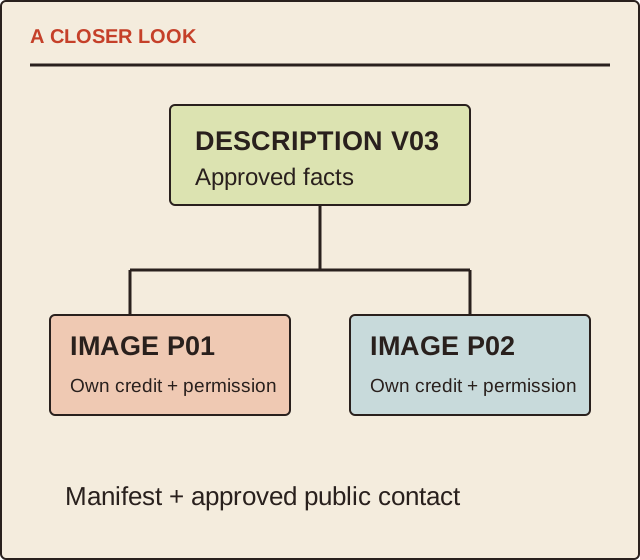
Read the map as text
A CLOSER LOOK · DESCRIPTION V03 · Approved facts · IMAGE P01 · Own credit + permission · IMAGE P02 · Own credit + permission · Manifest + approved public contact
- Description
- Portrait
- Performance
- Contact
Put it into practice
A fictional music project prepares a 70-word approved description, a portrait and a live-performance photograph. The two images have different photographers and usage conditions, so each retains a separate credit record. The manifest identifies description version 03. The kit does not claim that a journalist has used it or that the artists endorse a new project they have not approved.
Illustrative example, not a reported client project or test.
Your take-away checklist
Prepare a press kit that keeps facts and image permissions together
- □ Description: ____________________
- □ Portrait: ____________________
- □ Performance: ____________________
- □ Contact: ____________________
Before you act
Obtain actual approvals and permissions. The fictional package is not a representation that a named artist has approved a current campaign.
A worked record
Start with the example, then keep your own observations and confirmed information in the blank record.
- Description
- Approved version 03Names, dates and claims checked
- Portrait
- Image P01 + its creditSpecific permission retained
- Performance
- Image P02 + separate creditNot the same rights as P01
- Contact
- Approved public media routeWorking link and correction process
A caption is useful metadata
Write who or what is shown, the supported context and the photographer credit. Do not guess a venue or a date from a filename. Keep alt text concise and descriptive for the page where the image is used; a rights statement belongs alongside the image record, not hidden inside alt text.
Keep a lightweight change log
If a date or role changes, update the description and manifest together and identify the new version. Preserve the earlier version in your working records so collaborators can understand the correction. A press kit organises verified material; it is not evidence of media coverage, popularity or a guaranteed response.
Sources & context
The earlier topic was published 2022-02-10 under the Maria Baldwin byline. The present procedure and illustrative record are by MichaelT editorial.