A useful way through
- Describe the change you want in ordinary language and the current situation you actually know. Separate a measured baseline from a guess. Choose a decision horizon that fits the work; a list of aspirations with no owner is not yet a usable plan.
- Name one priority and an explicit trade-off. Write what will receive time and what will wait. Check the available people, materials and budget with those responsible rather than assigning imaginary capacity or treating every project as the first priority.
- Choose evidence that would help you judge the change. Define the measure, period and source before setting a target. If no baseline exists, the first action may be a bounded observation. An activity count and a useful outcome should remain distinct.
- Assign the first action, owner and review date. At the review, compare what happened with the starting assumptions and decide to continue, change or stop. Keep the reason in the plan so the next meeting does not recreate the same decision.
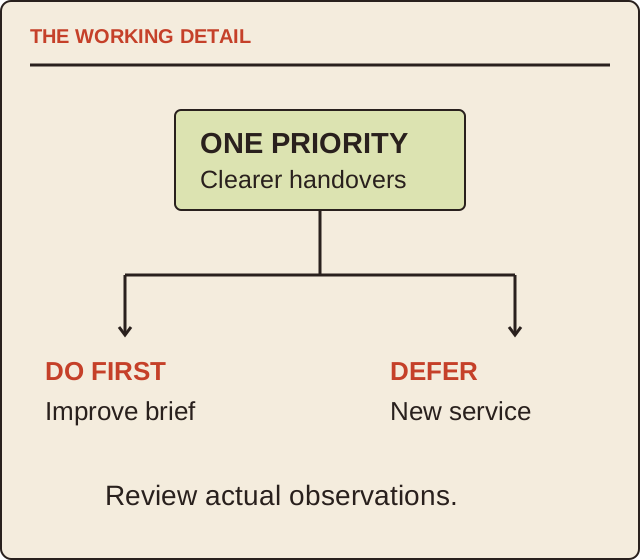
Read the map as text
THE WORKING DETAIL · ONE PRIORITY · Clearer handovers · DO FIRST · Improve brief · DEFER · New service · Review actual observations.
- Outcome
- Priority
- Evidence
- Review
Put it into practice
A fictional studio wants fewer handover questions. It chooses to improve the project brief before adding a new service. For two weeks it records which brief fields collaborators have to ask about, then reviews those observations. The plan promises neither revenue growth nor a particular reduction: it names a practical question, an observation method and a decision date.
Illustrative example, not a reported client project or test.
Your take-away checklist
Turn a strategic intention into a one-page decision plan
- □ Outcome: ____________________
- □ Priority: ____________________
- □ Evidence: ____________________
- □ Review: ____________________
Before you act
The example is an editorial planning exercise, not evidence of a studio’s results or financial advice.
A worked record
Use the example to see the decisions, then download a blank record for your own task.
- Outcome
- Clearer creative handoversDescribe the actual friction
- Priority
- Improve the brief firstNew service work waits
- Evidence
- Unanswered fields over two weeksObservation, not a success claim
- Review
- Named owner and dateContinue / change / stop
A plan is not the task board
The plan explains which outcome matters and why resources go there. The task board records individual actions. Link them by a priority identifier so an efficiently completed task is not automatically mistaken for useful strategic progress.
When the baseline is missing
Write the limitation and collect a proportionate observation before inventing a target. Keep the same definition and period when comparing later. A changed measurement method may explain a changed number; record it alongside the result.
Sources & context
The earlier topic was published 2021-03-08 under the Maria Baldwin byline. The present procedure, examples and diagrams are new work by MichaelT editorial; they do not attribute a new test or professional assessment to the earlier author.