A useful way through
- List the services you actually need: mail receipt, forwarding, meeting space or call handling. Identify the exact provider and location. A prestigious-looking address does not establish permission to use it for every registration, disclosure or business purpose; obtain appropriate advice where needed.
- Ask how each item moves through the service. For mail, confirm accepted item types, notification, storage, collection and forwarding. For calls, agree the script, routing and message information. Keep personal or confidential information within an authorised process.
- Request a complete cost schedule covering membership, handling, forwarding, room use and relevant extras. Confirm service hours, access, identification requirements and cancellation directly. Do not assume a monthly headline rate includes every activity or location.
- Walk through a normal item, an exception and termination. Who handles an uncollectable parcel, a wrong addressee or mail arriving after the contract ends? Record the provider’s answers and the exit owner before deciding whether the service fits.
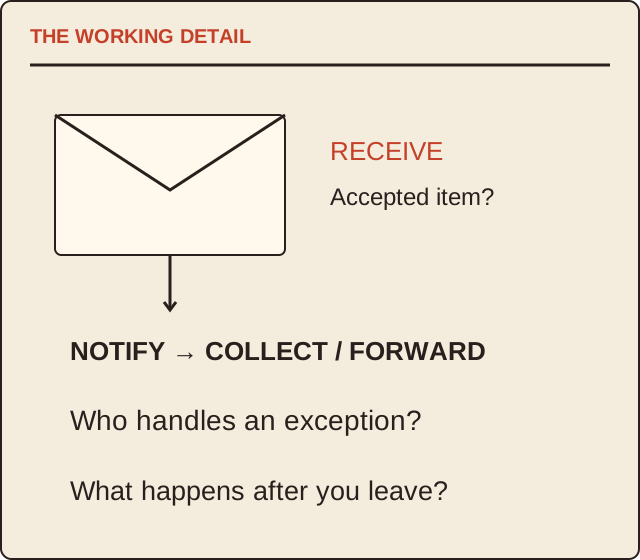
Read the map as text
THE WORKING DETAIL · RECEIVE · Accepted item? · NOTIFY → COLLECT / FORWARD · Who handles an exception? · What happens after you leave?
- Need
- Item journey
- Cost
- Exit
Put it into practice
A fictional studio receives three letters and one parcel in a month. The proposal includes letter notification but charges separately for parcel handling and forwarding. The comparison records those services individually. It does not call the provider inexpensive before the actual expected activity and charges have been reconciled.
Illustrative example, not a reported client project or test.
Your take-away checklist
Brief a virtual office around mail and caller handovers
- □ Need: ____________________
- □ Item journey: ____________________
- □ Cost: ____________________
- □ Exit: ____________________
Before you act
This is a service-comparison brief, not legal advice on registered addresses, tax presence or company formation.
A worked record
Use the example to see the decisions, then download a blank record for your own task.
- Need
- Mail notification and forwardingExact service location
- Item journey
- Receive → notify → collect/sendWho owns each handover?
- Cost
- Base + actual activitiesRead the full schedule
- Exit
- Later mail and address changesConfirm process before joining
A useful service map
Use item type, accepted or excluded, notification method, hold period, action owner and charge. Mark unknowns. The map reveals whether the service suits your actual workflow without making assumptions about legal address eligibility.
Test with an ordinary example
Ask the provider to describe the complete journey of a normal letter and a parcel it cannot accept. A clear exception process is as useful as a reassuring reception photograph. Keep the answer with the current service terms.
Sources & context
The earlier topic was published 2022-01-13 under the Maria Baldwin byline. The present procedure, examples and diagrams are new work by MichaelT editorial; they do not attribute a new test or professional assessment to the earlier author.