A useful way through
- Discuss the learner’s needs and priorities with them and the relevant responsible adults. Write a short list covering learning, access, travel and day-to-day support. Keep sensitive information private and seek appropriate specialist advice where it is needed.
- Use current official school and education-authority information to check programme, admissions and support questions. Rules and provision vary by jurisdiction and school. A directory, parent anecdote or old article does not establish current eligibility or guarantee a future education outcome.
- Prepare a visit sheet with questions that ask for concrete examples: a typical day, how a question reaches a teacher and what happens when support is needed. Invite the learner to add their own questions. Keep promises, observed details and unanswered items separate.
- After the visit, compare the same needs across the options using actual evidence. Recheck important statements with the school before a decision. Do not turn popularity, one extreme opinion or a glossy photograph into a universal score for school quality.
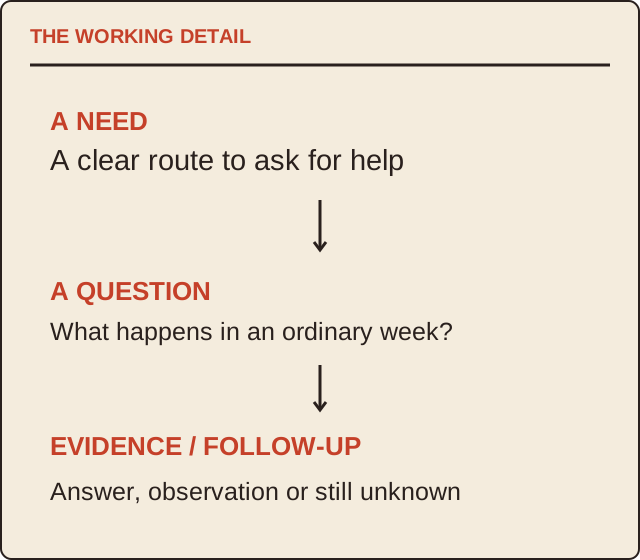
Read the map as text
THE WORKING DETAIL · A NEED · A clear route to ask for help · A QUESTION · What happens in an ordinary week? · EVIDENCE / FOLLOW-UP · Answer, observation or still unknown
- Need
- Source
- Visit
- Decision
Put it into practice
A fictional family’s priority is a workable journey and a clear route for asking for help. One school describes a contact process, while the other leaves it unanswered at the visit. The family asks for clarification rather than assigning a low score to an unknown. The comparison does not predict grades or university admission.
Illustrative example, not a reported client project or test.
Your take-away checklist
Prepare a school visit with questions your child can use
- □ Need: ____________________
- □ Source: ____________________
- □ Visit: ____________________
- □ Decision: ____________________
Before you act
Confirm current admissions and support directly with schools and the relevant education authority. No school or educational outcome is assessed here.
A worked record
Use the example to see the decisions, then download a blank record for your own task.
- Need
- Journey and support routeLearner contributes
- Source
- Current school informationCheck actual jurisdiction
- Visit
- Question and concrete answerSeparate observation from promise
- Decision
- Same needs across optionsUnknown is not a score
A useful visit question
“If a learner is stuck with a piece of work, what would they do during an ordinary week, and who would respond?” A specific process is easier to compare than a general statement that every pupil is supported.
Keep opinions in proportion
Other families’ experiences can suggest questions, but may concern different dates, staff or needs. Record their context and verify relevant facts. This procedure does not provide a league table or endorse a particular school.
Sources & context
The earlier topic was published 2021-08-05 under the Maria Baldwin byline. The present procedure, examples and diagrams are new work by MichaelT editorial; they do not attribute a new test or professional assessment to the earlier author.