A useful way through
- Open the album through an official artist or music-service link and choose one track. Write down the title shown by the service so the note can be revisited.
- Divide a page into two lanes, violin and bass. Write brief descriptions of what each seems to be doing: sustaining, repeating, moving or resting.
- Mark a point where the texture changes. Replay that section and check whether the change is in one part or their relationship.
- Finish with one question for the next listen. Avoid turning an uncertain identification into a fact about the score.
Read the map as text
LISTENING MAP · 01 · Choose a passage · 02 · Two instrument · lanes · 03 · Check the change · 04 · One next question
- Choose a passage
- Two instrument lanes
- Check the change
- One next question
Put it into practice
For a short passage, your lanes might say “violin: a moving figure; bass: a repeated anchor”. On replay, the bass may turn out to be moving too. Correcting the note is part of the exercise, not a failed test.
Illustrative example, not a reported client project or test.
Your take-away checklist
Invention: a two-line listening notebook
- □ Choose a passage: ____________________
- □ Two instrument lanes: ____________________
- □ Check the change: ____________________
- □ One next question: ____________________
Before you act
Use the linked artist, publisher or presenter for exact credits and current availability. These listening and planning exercises are editorial additions, not quotations from a lesson by Michael Thurber.
Sources & context
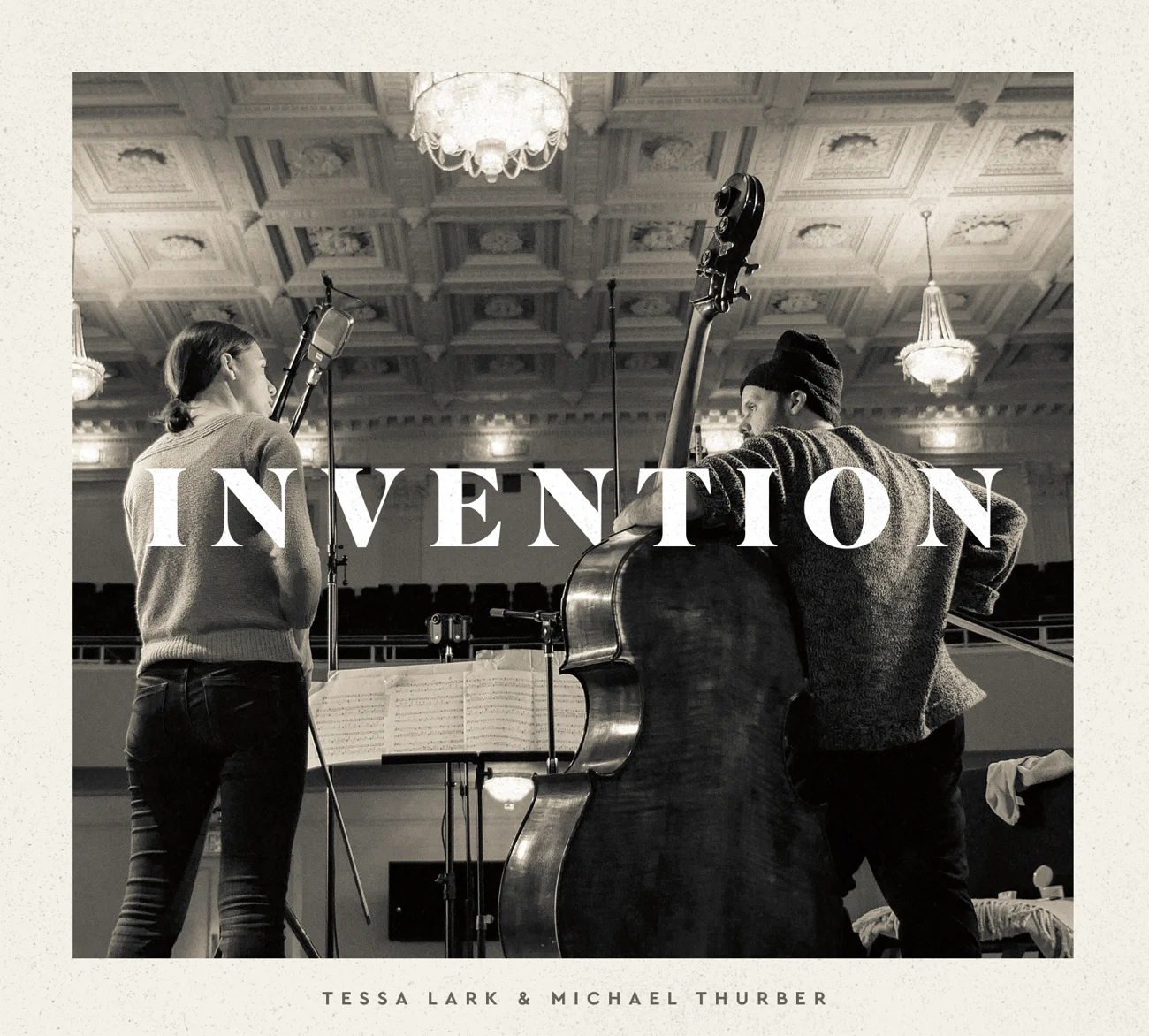
The duo’s own site describes their collaboration beginning in 2016. The 2024 Philharmonic Society programme identifies Invention as a 2019 album. The original cover is reproduced from Michael Thurber’s music page; it is not a photograph of a new session.