A useful way through
- Identify the exact variety and whether its label describes a bush or cordon plant. Record the intended container, bed or greenhouse. The RHS distinguishes growth types and their different training needs; a generic tomato label is not enough for every care decision.
- Read the seed or plant supplier’s instructions alongside reputable guidance relevant to your climate. Note light, shelter, space and planting conditions. An RHS calendar is UK guidance, not a universal planting date for every hemisphere or elevation.
- Record the actual growing medium and any reliable test result with its method and date. Do not add lime, fertiliser or another amendment solely because an old article states a universal pH target. Ask a qualified local adviser about a specific soil problem and follow product instructions.
- Keep a dated observation log for the same plant: location, care action and visible change. Separate an observation from its possible cause. If growth is poor, the log helps formulate a question; it does not prove that one soil adjustment cures pests, disease and low yield.
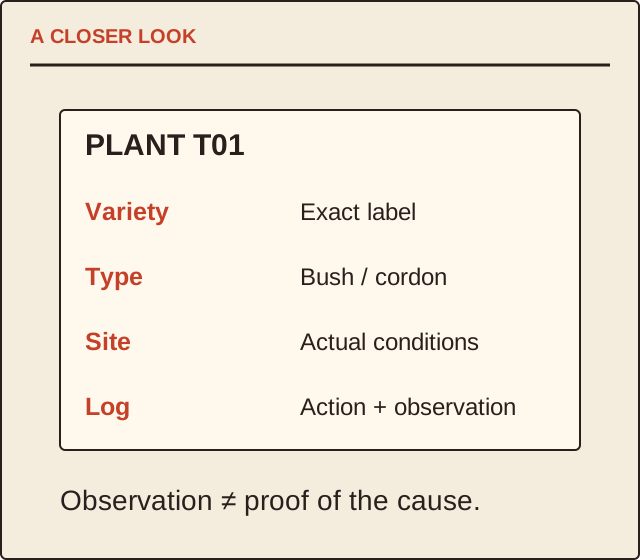
Read the map as text
A CLOSER LOOK · PLANT T01 · Variety · Exact label · Type · Bush / cordon · Site · Actual conditions · Log · Action + observation · Observation ≠ proof of the cause.
- Plant
- Growth type
- Site
- Observation
Put it into practice
An illustrative record identifies plant T01 as a labelled bush variety in a patio container. The owner records its product instructions and the actual site before asking about watering. They do not copy a cordon-pruning routine or claim that a soil additive will guarantee fruit. The record’s “first fruit observed” field remains blank until there is a real observation.
Illustrative example, not a reported client project or test.
Your take-away checklist
Start a tomato-growing record with the variety and actual site
- □ Plant: ____________________
- □ Growth type: ____________________
- □ Site: ____________________
- □ Observation: ____________________
Before you act
This is an observation template, not pesticide, soil-treatment or disease-diagnosis advice. No harvest or growing trial is claimed.
A worked record
Start with the example, then keep your own observations and confirmed information in the blank record.
- Plant
- T01; exact named varietyRetain supplier label
- Growth type
- Bush in this exampleDo not copy a cordon routine
- Site
- Actual container and positionRecord conditions, not a stock photo
- Observation
- Dated care and visible changeNo invented yield or diagnosis
Use the guidance at the right scale
The RHS guide is useful for distinguishing plant types and identifying care questions. Its timing and conditions need local interpretation. Check the named variety’s spacing and support instructions rather than applying one measurement to every tomato plant.
A log is not an experiment result
Changing several things at once makes a later improvement difficult to attribute. Record what changed and what remained unknown. One plant and one season do not establish a universal best soil. Avoid describing an attractive lawn photograph as evidence of a tomato trial.
Sources & context
The earlier topic was published 2021-04-07 under the Maria Baldwin byline. The present procedure and illustrative record are by MichaelT editorial.
Source information checked 17 October 2026. Use the current requirements relevant to your situation.