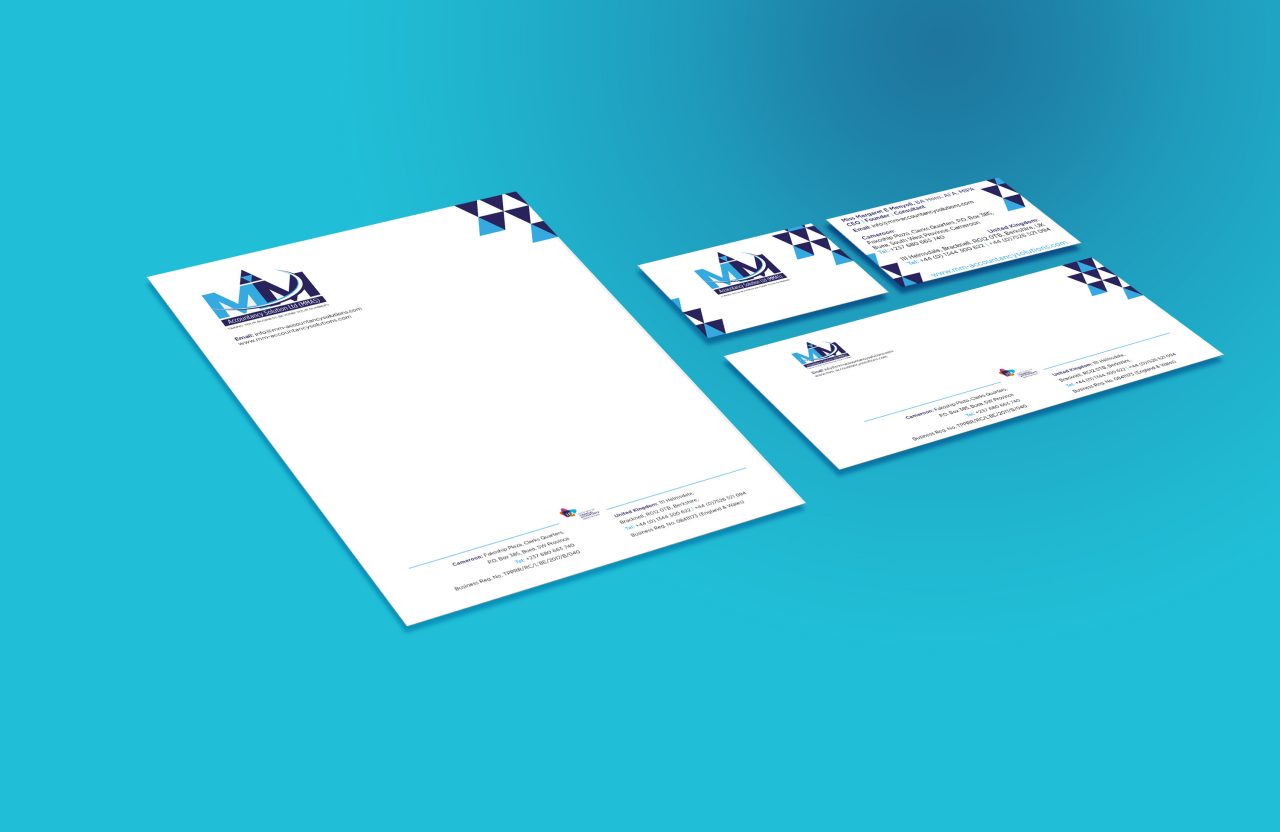

Follow the task
Inventory the actual items
List each object, its finished dimensions and its purpose. A card helps someone make contact; a letterhead supports a document; an envelope must carry its contents and address. Do not assume one aspect ratio or margin works on all three.
Choose the shared facts
Create one approved source for name, contact details and the identity artwork. Mark which facts belong on which item. Verify phone numbers, spelling and destinations using your actual current information; do not fill empty space with invented certifications or partner logos.
Proof real content at real size
Place a long recipient name, a full letter page and the actual folded contents in the respective mock-ups. Ask the printer for its product-specific template and production requirements. Keep a visual check separate from the printer’s technical approval.
Approve the set by version
Use a small matrix of item code, artwork version, proof and approver. Check that a correction to the shared contact information reaches every relevant file. Lock the approved set for ordering; a later edit becomes another version rather than an unrecorded replacement.
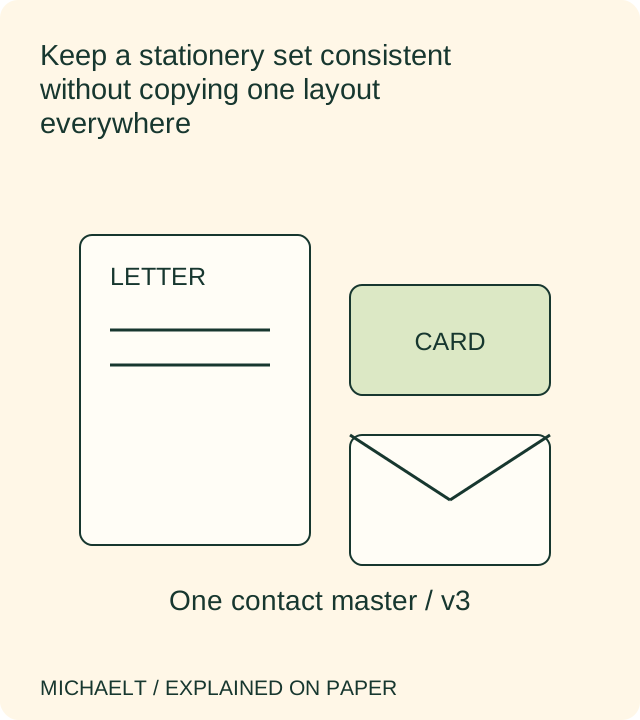
Read the diagram as text
A shared contact master links three different item-specific proofs.
- Item and finished size
- C1 / L1 / E1
- Shared content version
- Contact master v3
- Item-specific proof
- Card readable; letter and folded contents checked
- Approval record
- All three proofs reference v3
A worked example
A fictional set contains card C1, letterhead L1 and envelope E1. A contact correction appears in C1 v3 but L1 remains v2. The set cannot be called approved. The designer updates the source, exports L1 v3, checks a full-length sample letter, and records a separate envelope fit check. Only then are all three proof records signed off for the same contact version.
Illustrative example, not a reported purchase, client project or product test.
The completed record
- Item and finished size
- C1 / L1 / E1
- Shared content version
- Contact master v3
- Item-specific proof
- Card readable; letter and folded contents checked
- Approval record
- All three proofs reference v3
Download blank record (.csv) ↗Download worked example (.csv) ↗
Your own record
- □ Item and finished size: ____________________
- □ Shared content version: ____________________
- □ Item-specific proof: ____________________
- □ Approval record: ____________________
Keep the distinction clear
Consistency means repeated facts and recognisable relationships, not identical positioning. A logo can sit in different places if each object still works. Use a printer’s actual tolerances and templates rather than a universal bleed figure copied from another product. Keep a print proof when colour or finishing is critical; a screen preview is not evidence of the finished result.
Where this guide stops
The example is a planning record, not a claim that these items were printed or that a particular format meets every postal requirement.
Continue with a related task
- Proof a letterhead with the text that will actually be printed ↗
- Order printed envelopes that fit and travel ↗
- A business card that makes the next step clear ↗
Sources and original context
The earlier topic was published 2021-08-20 under the Maria Baldwin byline. The present procedure and illustrative record are by MichaelT editorial.