
Follow the task
Identify the source
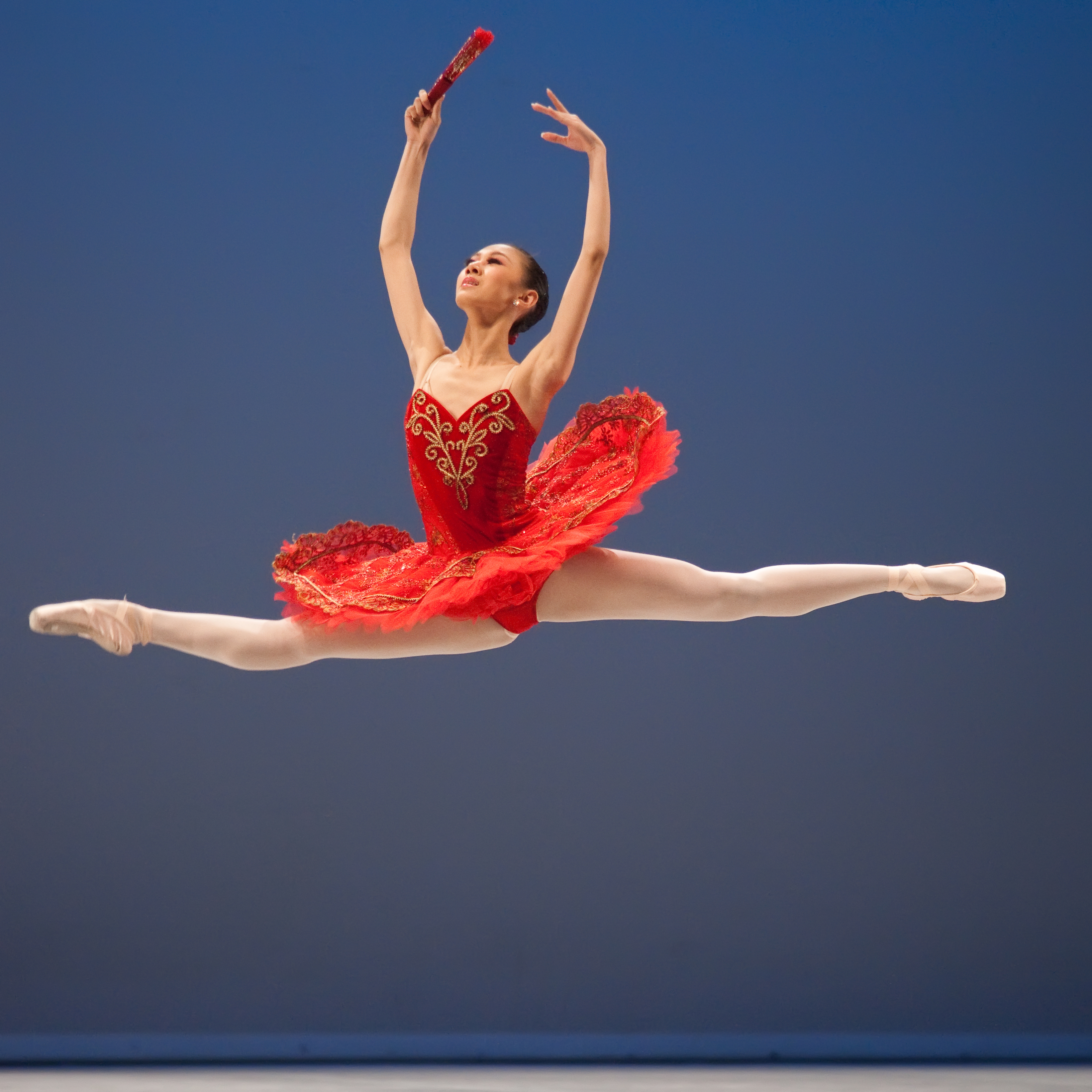
Record the performance title, credited people, date and legitimate source. Check whether it identifies ballet, tap or another form. A ballet photograph does not become a tap photograph because it is placed beside an article about tap steps.
Listen before assigning a cause
Choose a short passage and note the sounds you can actually hear. Use relative timestamps or a beat grid. If a sound could be accompaniment, a footstep or something else, mark it uncertain rather than deciding from the image.
Separate the tracks
Put accompaniment observations on one line and clearly identifiable footwork sounds on another. Note where they coincide or differ. The exercise is a listener’s record, not a claim to have transcribed every beat of a performance.
Describe one relationship
Attach the clip and time reference to one restrained conclusion. Keep credits separate from your interpretation. Do not publish a whole recording or teach a physical step from the unverified description in the earlier article.
Read the diagram as text
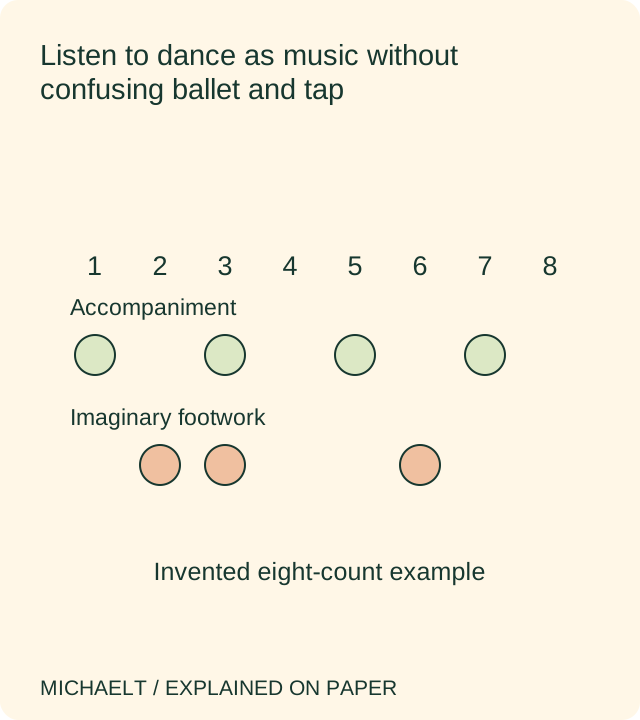
An invented eight-count grid separates accompaniment and footwork; it does not transcribe the photograph.
- Performance source
- Identify the dance form first
- Passage/time reference
- Use a short legitimate excerpt
- Two observation tracks
- Accompaniment / footwork
- Conclusion and uncertainty
- Describe one relationship; retain unknowns
A worked example
In an explicitly invented eight-count exercise, accompaniment marks counts 1, 3, 5 and 7; an imaginary footwork line marks 2, 3 and 6. Count 3 coincides, while 2 and 6 do not. This is a complete example of two observation tracks, not a transcription of the ballet photograph or a named performance.
Illustrative example, not a reported purchase, client project or product test.
The completed record
- Performance source
- Identify the dance form first
- Passage/time reference
- Use a short legitimate excerpt
- Two observation tracks
- Accompaniment / footwork
- Conclusion and uncertainty
- Describe one relationship; retain unknowns
Download blank record (.csv) ↗Download worked example (.csv) ↗
Your own record
- □ Performance source: ____________________
- □ Passage/time reference: ____________________
- □ Two observation tracks: ____________________
- □ Conclusion and uncertainty: ____________________
Keep the distinction clear
The Library of Congress supplies historical context for tap as a musical form. It does not verify an unidentified clip. The earlier source’s title said ballet while its body described tap; the mismatch is corrected here. A source photograph must retain the form it actually depicts. The imaginary grid illustrates the note-taking method and is not presented as measured performance data.
Where this guide stops
Listening exercise only: no choreography, physical training, therapeutic claim or invented performer quotation.
Continue with a related task
Sources and original context
The earlier topic was published 2022-04-05 under the Maria Baldwin byline. The present procedure and illustrative record are by MichaelT editorial.