A useful way through
- Choose a performance or an officially available excerpt. Record its production, date and source. Do not record or upload a live performance without permission.
- Divide a page into scene, audible event, movement or image, and interpretation. Describe the sound before guessing its dramatic meaning.
- Compare two transitions. Note whether pulse, instrumentation, silence or movement changes, and whether you can identify the moment reliably on a second viewing.
- Write one tentative interpretation, then test it against the passage. Use the programme for the composer and movement credits; your interpretation remains your own.
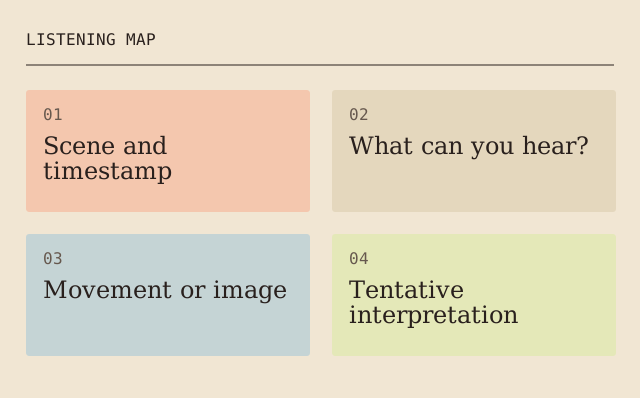
Read the map as text
LISTENING MAP · 01 · Scene and · timestamp · 02 · What can you hear? · 03 · Movement or image · 04 · Tentative · interpretation
- Scene and timestamp
- What can you hear?
- Movement or image
- Tentative interpretation
Put it into practice
An invented observation sheet might read: “Scene A to B: the repeated pulse stops; a performer crosses to the other side; I interpret this as a pause in the conflict.” That is a practice example, not a description or transcription of the 2013 production. A second viewing should confirm the audible event before the interpretation is retained.
Illustrative example, not a reported client project or test.
Your take-away checklist
How sound and movement help us follow a stage story
- □ Scene and timestamp: ____________________
- □ What can you hear?: ____________________
- □ Movement or image: ____________________
- □ Tentative interpretation: ____________________
Before you act
Use the linked artist, publisher or presenter for exact credits and current availability. These listening and planning exercises are editorial additions, not quotations from a lesson by Michael Thurber.
Sources & context
The RSC’s 17-page teacher pack for Tarell Alvin McCraney’s 2013 Antony and Cleopatra identifies Michael Thurber as composer and Gelan Lambert as movement director. Page 3 discusses how music and movement help define the production’s two contrasting worlds. The Swan Theatre run began on 7 November 2013. This notebook is a new editorial exercise, not a reproduction of the RSC’s teaching activities.