Follow the task
Name the item
Record the dated listing, item identifier and exact style code if supplied. A photograph of a brand label is not automatically evidence that the label belongs to the object offered. Keep the listing version you actually reviewed.
Ask for relevant information
Request the actual garment’s dimensions, condition and alterations. A stock image cannot show an individual used item’s wear. Ask a focused question without sending identity documents or unnecessary personal information.
Separate claims and evidence
Use columns for seller says, document supplied and still unknown. Designer, rare and excellent do not by themselves answer identity or condition questions. Do not turn a document photograph into an authenticity guarantee.
Decide whether to continue
Review unresolved questions and the actual transaction terms. Use suitable qualified help when authentication is necessary. Keep a missing fact as missing rather than choosing a favourable conclusion because you like the item.
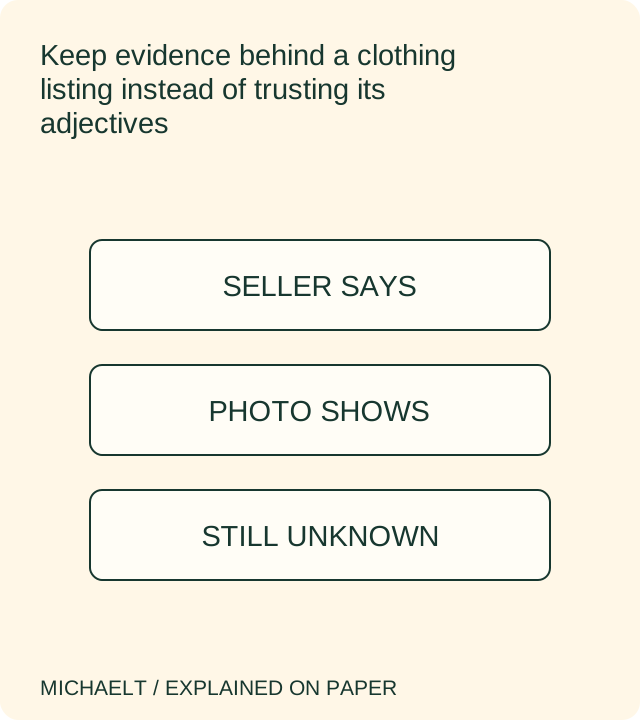
Read the diagram as text
A seller statement, an observed photograph and an unresolved question have different evidential roles.
- Listing/item code
- Dated reference
- Seller statement
- Designer / excellent
- Provided evidence
- Actual-item photos; repair visible
- Question still open
- Repair and identity need confirmation
A worked example
A fictional listing says “designer, excellent”. Actual-item photographs show a sleeve repair that the text does not describe. The worksheet asks for the repair details and garment measurements and keeps identity unconfirmed. It makes no accusation and does not promote the seller’s adjectives into verified facts.
Illustrative example, not a reported purchase, client project or product test.
The completed record
- Listing/item code
- Dated reference
- Seller statement
- Designer / excellent
- Provided evidence
- Actual-item photos; repair visible
- Question still open
- Repair and identity need confirmation
Download blank record (.csv) ↗Download worked example (.csv) ↗
Your own record
- □ Listing/item code: ____________________
- □ Seller statement: ____________________
- □ Provided evidence: ____________________
- □ Question still open: ____________________
Keep the distinction clear
An evidence record may legitimately end with “not established”. That is different from declaring an object fake or a seller dishonest. Preserve the exact observation and avoid reputational accusations based on an incomplete enquiry. The record should help a decision, not promise that a collection of screenshots replaces specialist authentication.
Where this guide stops
Not authentication, valuation, investment or legal advice. The example is fictional and accuses no actual seller.
Continue with a related task
- Read an embroidered garment listing without inventing its origin ↗
- Compare a sweatshirt by measurement rather than the size label ↗
Sources and original context
The earlier topic was published 2021-05-25 under the Maria Baldwin byline. The present procedure and illustrative record are by MichaelT editorial.