

A useful way through
- Decide what you are comparing and who is participating. Include an alcohol-free choice and make participation optional. Use a small, manageable selection. Do not turn a tasting into a challenge to finish every sample.
- Prepare comparable clean glasses, clear sample labels, water, a spittoon and a notebook. Keep the identity key separate if you want to record impressions before seeing labels. Consistency matters more to this exercise than buying an expensive aroma kit.
- Use the same observation order for each sample: appearance, aroma and, only if you choose to taste, your description of flavour and finish. Record serving conditions you know. Separate “I noticed…” from a factual claim about the product or its origin.
- Compare notes after writing them. Mark uncertainty and personal preference. If the conditions changed, record that limitation rather than presenting the exercise as a controlled test. Clean and store equipment according to its own care instructions.
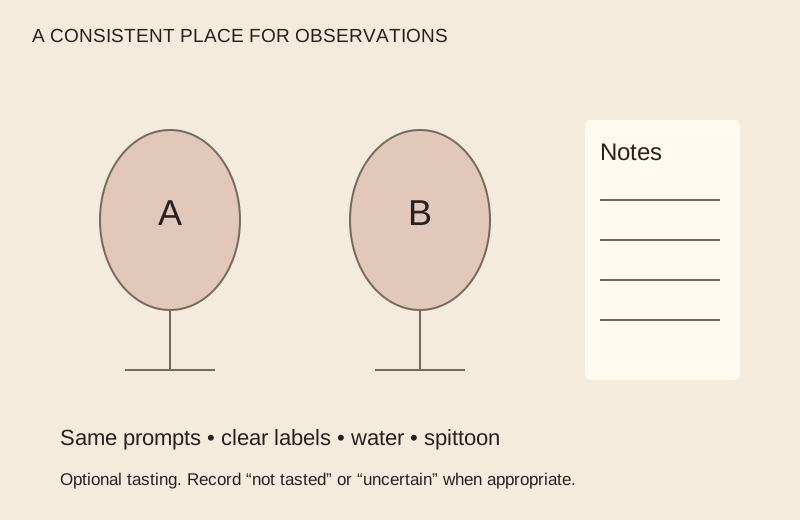
Read the map as text
A CONSISTENT PLACE FOR OBSERVATIONS · A · B · Notes · Same prompts • clear labels • water • spittoon · Optional tasting. Record “not tasted” or “uncertain” when appropriate.
- Consistent glasses and labels
- Water and a spittoon
- Observation sequence
- Notes without a ranking claim
Put it into practice
For a fictional two-sample exercise, label the glasses A and B, use a note sheet with the same prompts and keep the identity key aside. A participant records “citrus-like aroma” for A and “I cannot identify this aroma” for B. Both are valid observations; neither establishes a quality score or professional qualification.
Illustrative example, not a reported client project or test.
Your take-away checklist
A small tasting setup with a useful notebook
- □ Consistent glasses and labels: ____________________
- □ Water and a spittoon: ____________________
- □ Observation sequence: ____________________
- □ Notes without a ranking claim: ____________________
Before you act
This is a note-taking exercise for adults who choose to participate, not health advice or encouragement to drink. Spitting does not make an activity suitable before driving or remove all risks. Choose alcohol-free participation whenever appropriate.
The note sheet
Sample code; known serving conditions; appearance; aroma description; optional flavour observation; preference; uncertainty; context. Leave room for “not tasted”. Avoid inventing a numerical precision your observations cannot support.
What you do not need to buy first
A themed kit can be enjoyable, but it is not a prerequisite for a simple comparison. Start with the equipment you can use consistently and safely. This guide does not certify expertise or recommend a paid course.
Sources & context
The earlier The Basics of Wine Tasting Accessories page was dated 2021-09-06. Its subject is developed here as a new procedure, with the original byline retained separately. This edition does not carry forward the page’s supplier recommendations or unsupported outcome claims.