A useful way through
- Establish the event. The Greene Space programme describes the 18 March 2021 world-premiere event for a bilingual audio adaptation, presented with The Public Theater and WNYC Studios. It names Lupita Nyong’o as Julieta and Juan Castano as Romeo. This is a dated programme, not a current ticket offer.
- Keep adaptation and music credits separate. The programme names Saheem Ali as director, the adaptation by Ali and Ricardo Pérez González, and the translation by Alfredo Michel Modenessi. Its intermission lists two pieces by Michael Thurber, Ven Muerte and Alma Oscura. Those intermission credits alone do not establish authorship of every sound in the complete drama.
- Read the ensemble line. The intermission credits identify Alex Brown on piano, Lauren Henderson on vocals, Mark Dover on clarinet and Jon Lampley on trumpet, with Thurber as composer. Use those names when discussing the listed pieces; do not substitute the personnel of another release with a similar title.
- Make a cue sheet if you can access the audio. Mark a scene or timestamp, who is speaking, the language you can identify and the audible musical event. Describe an entrance, pause or transition before interpreting its dramatic effect. If audio is unavailable, keep the sheet as a reading plan.
Read the map as text
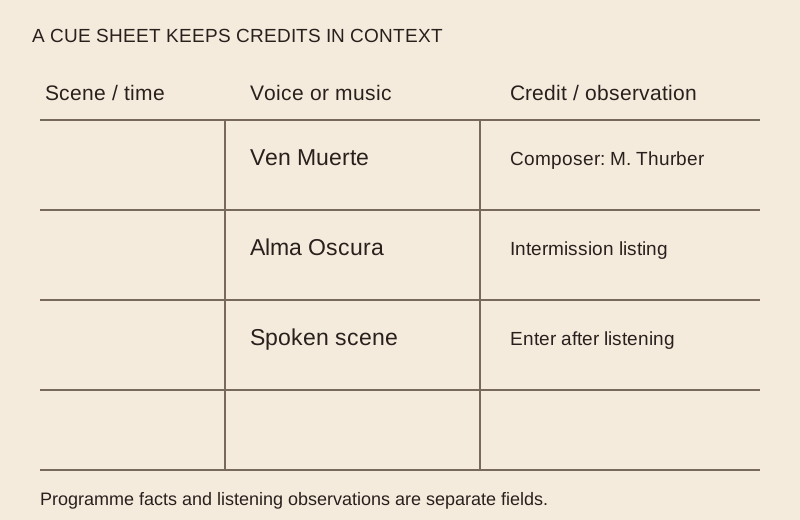
A CUE SHEET KEEPS CREDITS IN CONTEXT · Scene / time · Voice or music · Credit / observation · Ven Muerte · Composer: M. Thurber · Alma Oscura · Intermission listing · Spoken scene · Enter after listening · Programme facts and listening observations are separate fields.
- Programme and exact date
- Voice, language and scene
- Named musical contribution
- Observation with a time reference
Put it into practice
An illustrative cue-sheet row is: scene or timestamp—enter after listening; event—intermission piece listed as Alma Oscura; source credit—Michael Thurber, composer; observation—blank until heard. A second row can record a spoken-language transition. The programme establishes credits, while the listener supplies an actual observation only after listening.
Illustrative example, not a reported client project or test.
Your take-away checklist
Romeo y Julieta: voices, languages and an intermission score
- □ Programme and exact date: ____________________
- □ Voice, language and scene: ____________________
- □ Named musical contribution: ____________________
- □ Observation with a time reference: ____________________
Before you act
Availability can change. Follow the presenter or audio publisher for the actual recording. A preserved event page does not establish a current broadcast, ticket price or streaming entitlement.
Programme facts to retain
Premiere event: 18 March 2021. The archived page lists 7–10 pm ET and a discussion hosted by Rebeca Ibarra. Keep that event timing distinct from the running time of a recording or the duration of a later on-demand version.
A reusable cue sheet
Time or scene | voice or ensemble | spoken language, if known | musical event | programme credit | your observation | question. “Unidentified” is preferable to assigning an instrument, speaker or language by guesswork.
Sources & context
Presenter’s original address ↗ · Read the preserved programme or interview at Arquivo.pt ↗