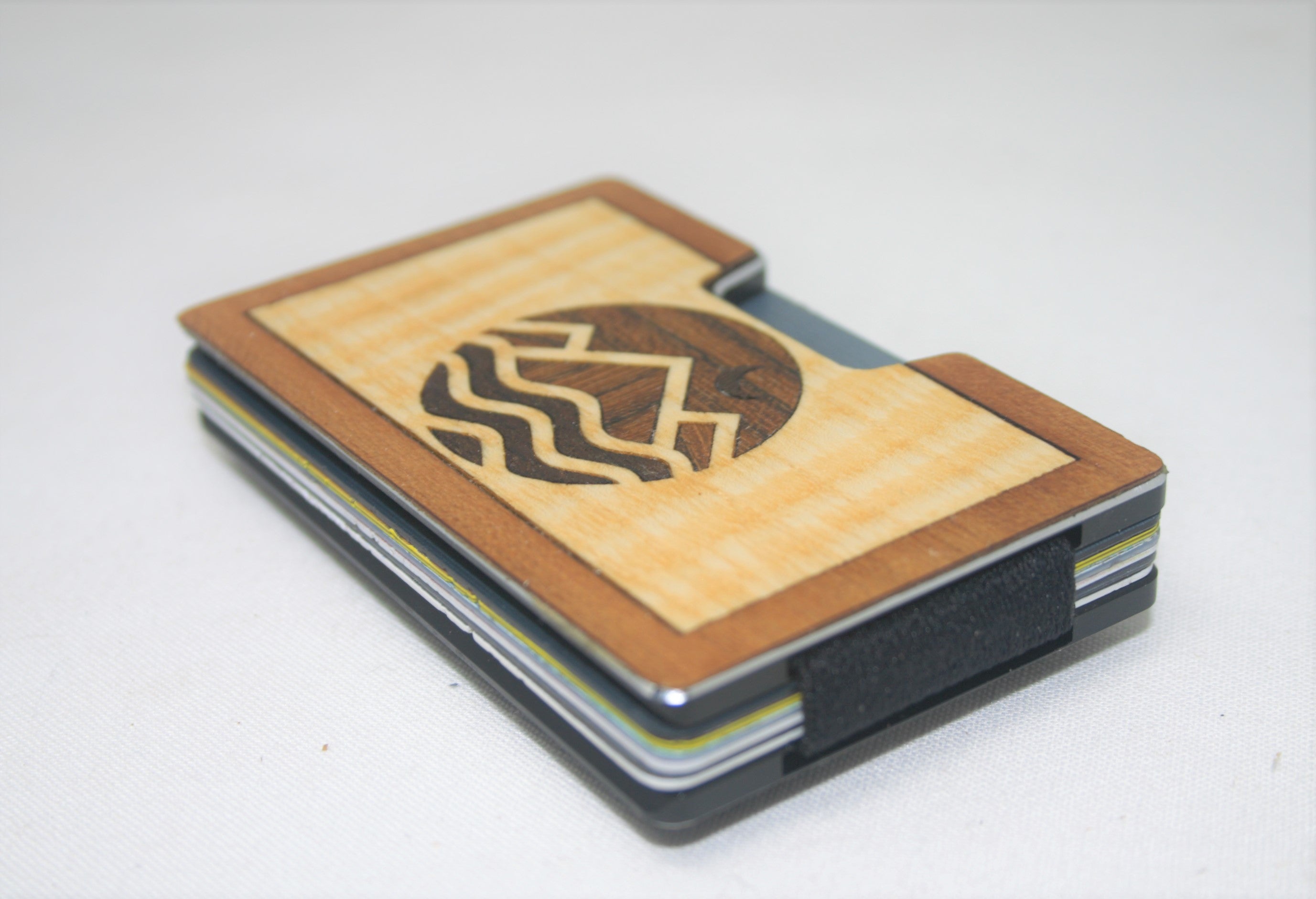

Follow the task
Describe the ordinary load
Count the kinds of cards, notes and coins you need. Do not copy real card numbers, identity or payment details into a shopping record. Use blank stand-ins for an appropriate physical fit comparison.
Check the loaded shape
Request usable dimensions and the way the item closes. Compare the intended load rather than an empty promotional image. Keep an access or closure question unresolved if no sample or confirmed information is available.
Try retrieval
With a sample you may safely handle, check selecting, removing and replacing the intended item. Keep preference distinct from a claim that the design prevents theft or loss. Do not use real financial credentials to test a security promise.
Keep material claims exact
Record the actual model’s material wording and care information. Ask about condition and the current transaction terms as needed. Leather, prestige and price do not by themselves establish durability or authenticity.
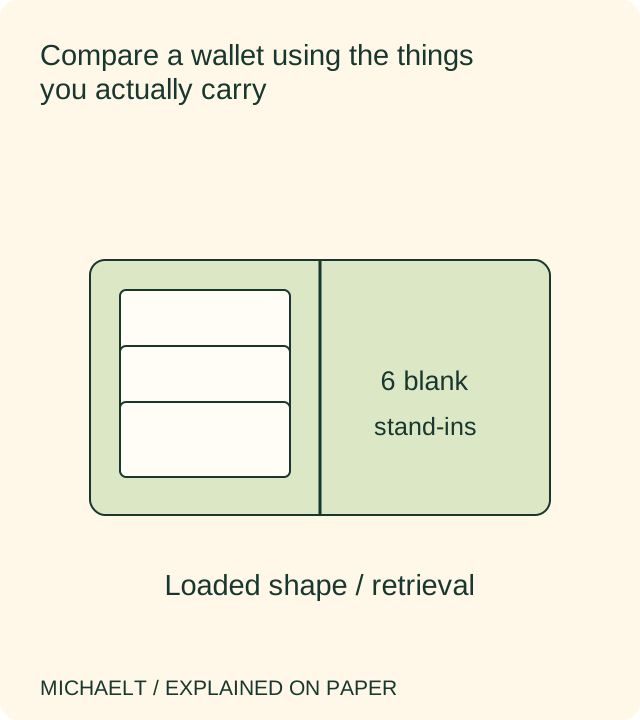
Read the diagram as text
Blank stand-ins let the carrying task be discussed without using real financial or identity details.
- Load without private details
- Six blank stand-ins plus paper note
- Loaded closure
- Do not infer from empty image
- Retrieval sequence
- Select, remove, replace
- Material/open questions
- Exact wording; security untested
A worked example
A fictional comparison uses six blank card stand-ins and a paper note. A closes empty but its loaded closure remains unverified. B’s sample allows the intended retrieval sequence. The record keeps that limited observation instead of declaring B theft-proof or tested with real bank cards.
Illustrative example, not a reported purchase, client project or product test.
The completed record
- Load without private details
- Six blank stand-ins plus paper note
- Loaded closure
- Do not infer from empty image
- Retrieval sequence
- Select, remove, replace
- Material/open questions
- Exact wording; security untested
Download blank record (.csv) ↗Download worked example (.csv) ↗
Your own record
- □ Load without private details: ____________________
- □ Loaded closure: ____________________
- □ Retrieval sequence: ____________________
- □ Material/open questions: ____________________
Keep the distinction clear
Keep an RFID-protection statement in a separate evidence column. A fit check cannot verify electronic shielding, and this guide does not attempt it. An ordinary carrying task can support a decision without repeating the earlier text’s gender stereotypes or blanket claims about superior materials. A smaller number of confirmed observations is more useful than an elaborate invented product test.
Where this guide stops
Not a payment, identity-security, RFID, authenticity or durability test. Never publish actual financial or identity details.
Continue with a related task
- Check a phone wallet case with the things you actually carry ↗
- Hand over files on a USB drive with a manifest and receipt ↗
Sources and original context
The earlier topic was published 2022-05-12 under the Maria Baldwin byline. The present procedure and illustrative record are by MichaelT editorial.