A useful way through
- Identify the reader, purpose and destination. Specify the language direction and the register needed for that audience. Supply the full source context rather than isolated phrases. For specialist or consequential material, identify the appropriate qualified reviewer.
- Freeze a source version and build a short terminology sheet. Mark names, product labels, numbers, units and terms that must stay consistent. Tell the translator which elements may be adapted and who can answer questions. Remove private information that is unnecessary for the assignment.
- Agree the workflow. Separate translation, queries, revision and approval. Ask how an independent linguistic review will be handled when needed; do not assume a particular nationality or place of residence guarantees suitability. Record decisions rather than letting competing versions circulate.
- Review the translation in its final destination. Check layout, line breaks, missing text, links, numbers and the agreed terminology with the relevant reviewers. Lock an approved version and keep the query log for future updates. A layout check alone does not establish linguistic accuracy.
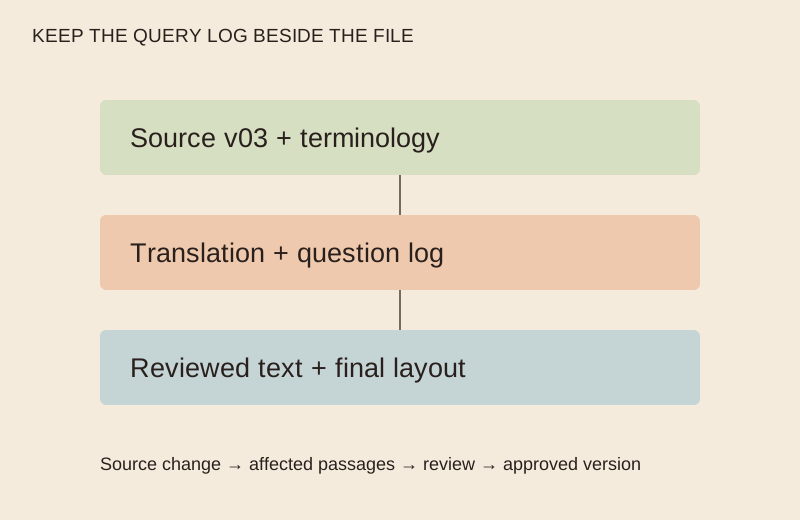
Read the map as text
KEEP THE QUERY LOG BESIDE THE FILE · Source v03 + terminology · Translation + question log · Reviewed text + final layout · Source change → affected passages → review → approved version
- Audience and purpose
- Source version and terminology
- Translation and review
- Final-layout approval
Put it into practice
A fictional exhibition label contains a work title, artist name, year and a short explanation. The brief provides the complete label, approved name spellings and space constraints. The translator flags an ambiguous source sentence; the editor clarifies it before approval. The final check compares the placed label with the approved translation and verifies that no line was dropped.
Illustrative example, not a reported client project or test.
Your take-away checklist
Brief a Japanese translation for its actual reader
- □ Audience and purpose: ____________________
- □ Source version and terminology: ____________________
- □ Translation and review: ____________________
- □ Final-layout approval: ____________________
Before you act
Legal, medical, certified or otherwise consequential translations need the appropriate specialist process. This project-management checklist does not certify a translation or replace a competent language review.
A query log that prevents repeat mistakes
Source location; question; context; proposed options; approved answer; decision maker; version affected. Keep the reasoning when a term changes so the next update is consistent.
When the source changes
Mark the changed source passages and provide the previous approved translation. Ask for an impact review of related headings, labels and references. Do not paste a new sentence into a locked layout without checking the surrounding text.
Sources & context
The earlier How To Ensure An Excellent Japanese Translation page was dated 2022-02-24. Its subject is developed here as a new procedure, with the original byline retained separately. This edition does not carry forward the page’s supplier recommendations or unsupported outcome claims.