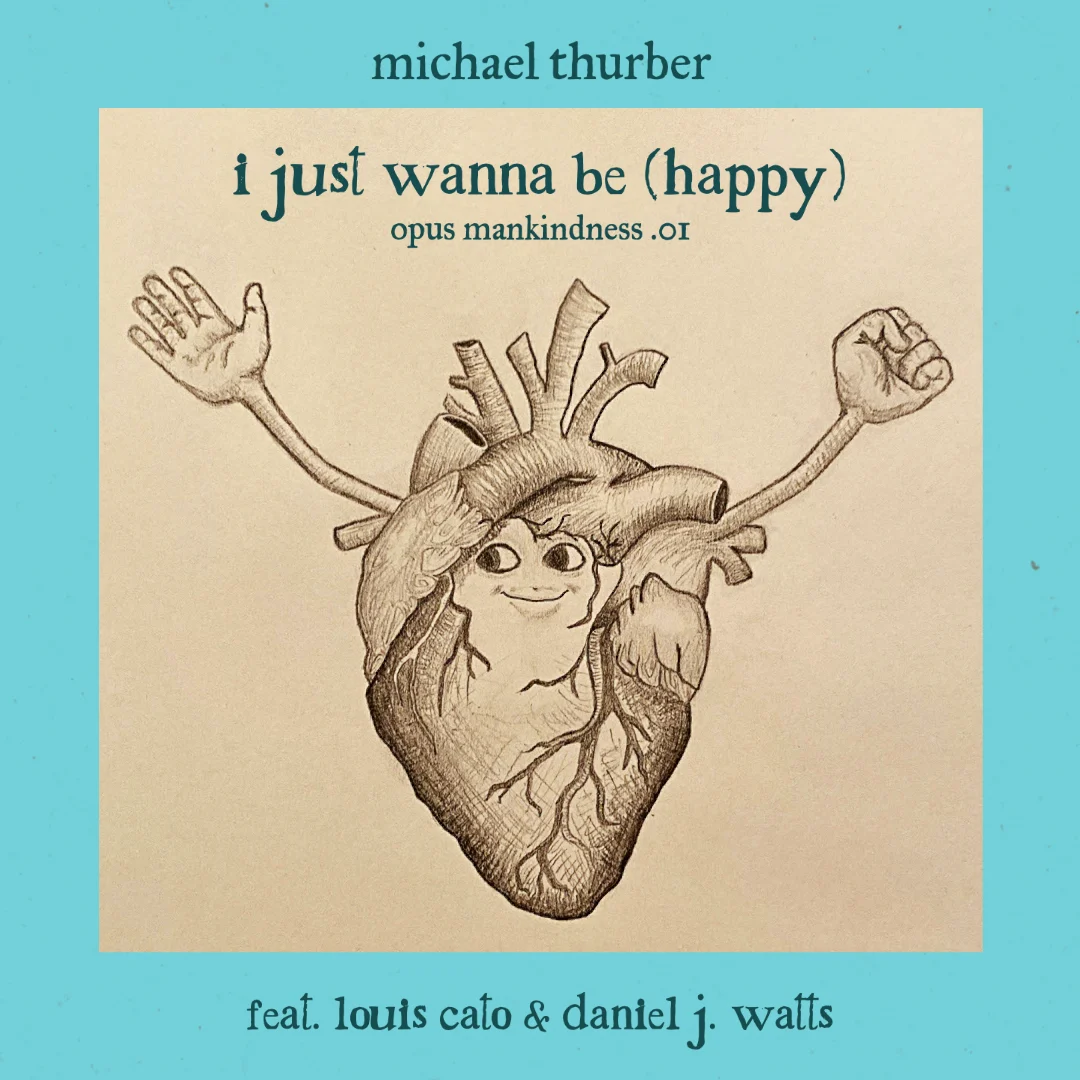
2021 / Single
I Just Wanna Be (Happy) [feat. Louis Cato & Daniel J. Watts]
Michael Thurber
Listen on Apple Music ↗The recording room
Recordings, collaborations and featured appearances — with the exact credits kept in view.
2021 / Single
Michael Thurber
Listen on Apple Music ↗
This index contains 48 track entries returned by Apple’s US artist catalogue on 17 October 2026. It includes collaborations and featured appearances. A song appearing on both a single and an album is kept with each release; 48 entries does not mean 48 distinct compositions.
The credited artist is reproduced for each track. Catalogue dates identify these editions, not necessarily a song’s first performance. This is a listening index, not a complete discography or a list of sole-composer credits.
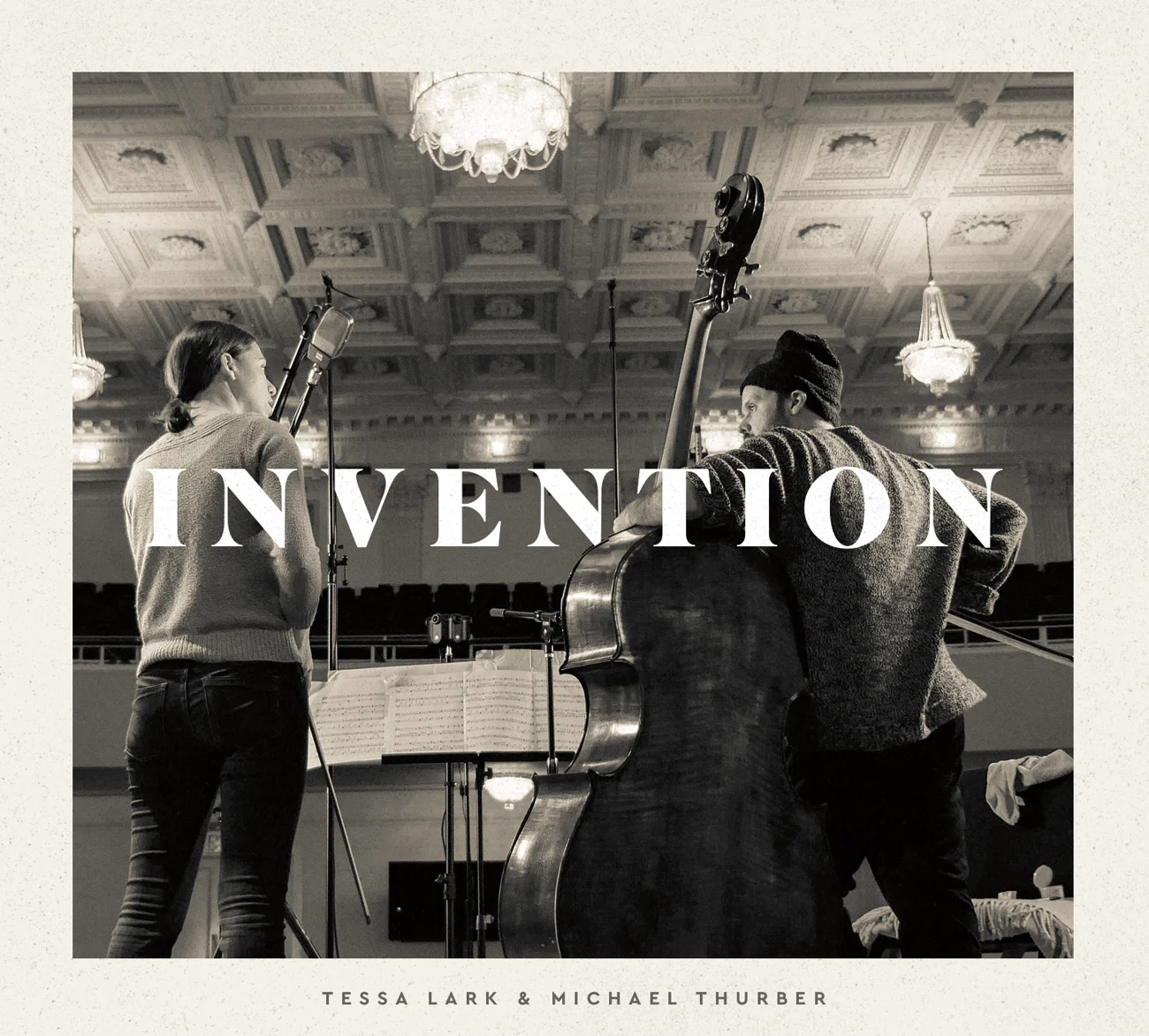
Each release opens to its track list. Follow a track to check current listening options with Apple Music.
Michael Thurber, Moses Sumney & Twelfth Night Cast
Michael Thurber, Moses Sumney & Twelfth Night Cast
Michael Thurber, Moses Sumney & Twelfth Night Cast
Michael Thurber, Moses Sumney, Lupita Nyong'o & Twelfth Night Cast
Michael Thurber, Moses Sumney & Twelfth Night Cast
Michael Thurber & Twelfth Night Cast
Goddess & Michael Thurber
Goddess & Michael Thurber
Michael Thurber
Michael Thurber
Michael Thurber
Michael Thurber
Michael Thurber
Michael Thurber
Michael Thurber
Michael Thurber
Michael Thurber
Michael Thurber
Michael Thurber
Michael Thurber
Michael Thurber
Michael Thurber
Michael Thurber
Michael Thurber
Tessa Lark & Michael Thurber
Tessa Lark & Michael Thurber
Tessa Lark & Michael Thurber
Tessa Lark & Michael Thurber
Tessa Lark & Michael Thurber
Tessa Lark & Michael Thurber
Tessa Lark & Michael Thurber
Tessa Lark & Michael Thurber
Tessa Lark & Michael Thurber
Tessa Lark & Michael Thurber
Tessa Lark & Michael Thurber
Tessa Lark & Michael Thurber
Tessa Lark & Michael Thurber
Lauren Henderson
Lauren Henderson
Lauren Henderson
Write one sentence about each listening experience. Separate something you hear from something the release credits tell you.
Meet Michael Thurber ↗ · Try the bass-listening notebook ↗
Source: Apple Music artist catalogue ↗. Catalogue read on 17 October 2026. No audio player is loaded on this page.
An instrument name, a musical role and a texture describe different things. “Bass” names an instrument or register; “repeated foundation” describes what a part does; “two distinct lines” describes a relationship. Keep three columns so that one description does not silently become another. Add a fourth field for evidence: what you heard, what a score shows, or what release metadata actually credits.
Filled check against the teaching score: passage A,0–5 seconds: identity—low and upper synthesised parts; role—low C2 repeats while the upper part moves through C4, E4, G4, E4; texture—two simultaneous parts with different pitch activity. Passage B,5–10 seconds: identity—same two parts; role—low pitches move while upper G4 is held for each bar; texture—the moving/held relationship changes. These are checkable teaching-score statements, not a transcription of either artist release.
The two artist links offer a next listening choice; preview availability may depend on region or account. If a preview is unavailable, record that limitation and use the local teaching study rather than inventing an observation. No artist audio is copied into this worksheet.
Notebook row: recording/source ___; passage ___; identity and evidence ___; role during this passage ___; texture and comparison ___; uncertainty ___; release credit actually stated ___; next listening question ___. End with one sentence describing a change. Keep that sentence separate from a claim about the artist’s intention or method: this exercise is not attributed to Thurber as its author.
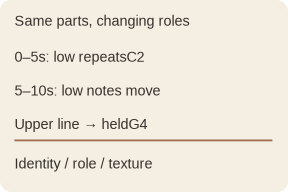
Apple Music · Invention; I Just Wanna Be(Happy); MichaelT original teaching score