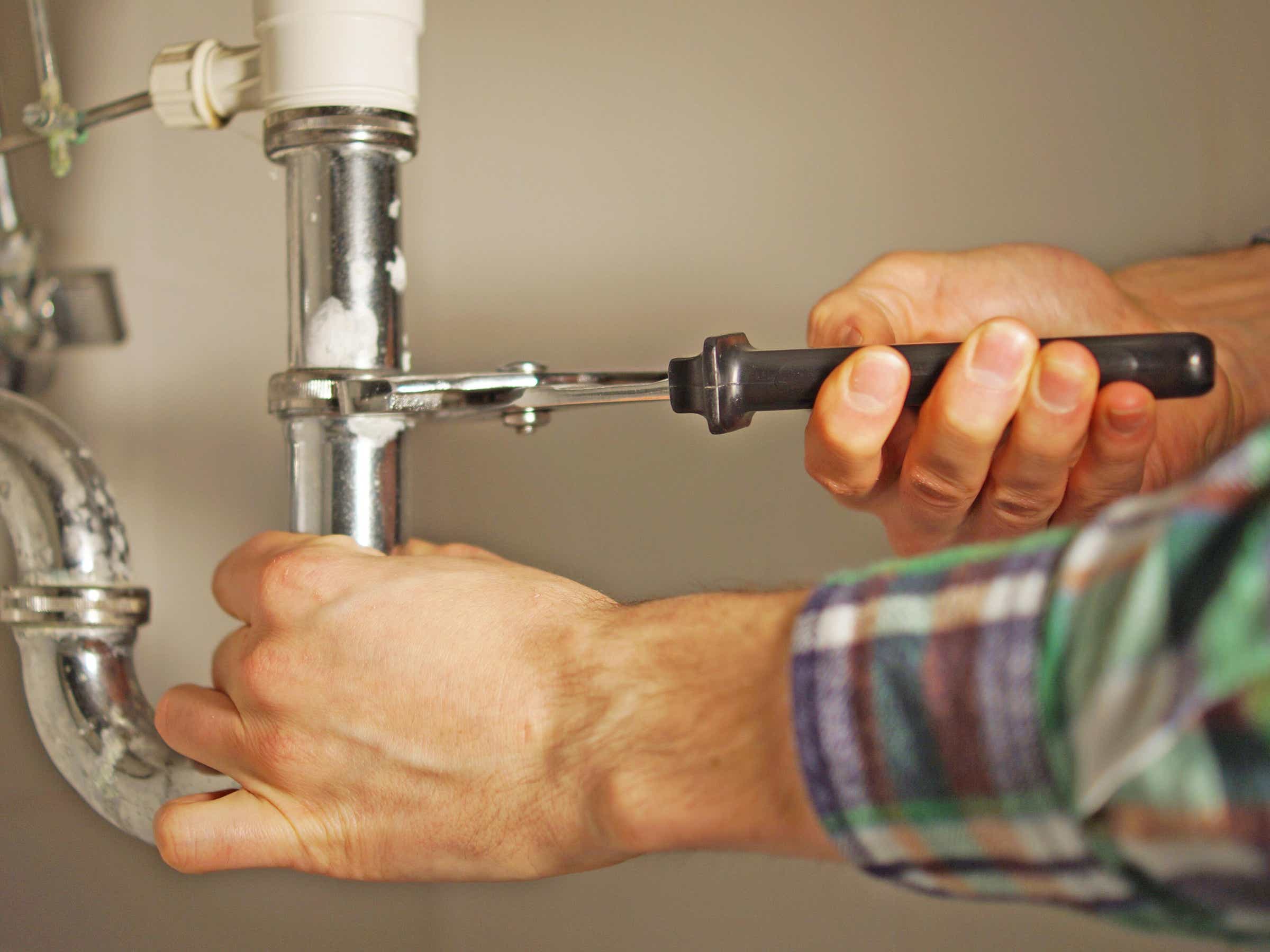

Describe the observation
Record the location and what you can observe safely: a visible leak, an affected fixture or an existing report. Keep observations separate from diagnoses such as a failed pipe or blocked underground line. State any immediate concern to the appropriate professional. Do not open equipment, disturb fittings or attempt gas, electrical or drainage work to complete a quotation request.
Identify the contracting party
Ask for the legal business name, the person or organisation carrying out the work and the applicable licence details. NSW separates plumbing, draining and gasfitting licensing categories; it is a named example, not a rule for every country. Use the relevant official local register and check the scope that matches the proposed work. A directory listing or familiar trading name is not that check.
Separate assessment from repair
Request written scope for the visit: assessment only, call-out terms, proposed work, materials, exclusions and how additional work will be authorised. Record whether a price is an estimate or an agreed quote under the actual terms. Ask how the contractor will explain a changed diagnosis. Keep insurance enquiries separate; neither a leak photograph nor this record proves that an insurer will pay.
Keep the completion evidence
Retain the agreed version, any approved change and the contractor’s actual completion record. Ask which certificates or notices apply to the work in that jurisdiction. Do not fill a missing document with a generic statement that the installation is compliant. Direct unresolved workmanship, payment or safety questions through the appropriate contractor, regulator or professional advice route.
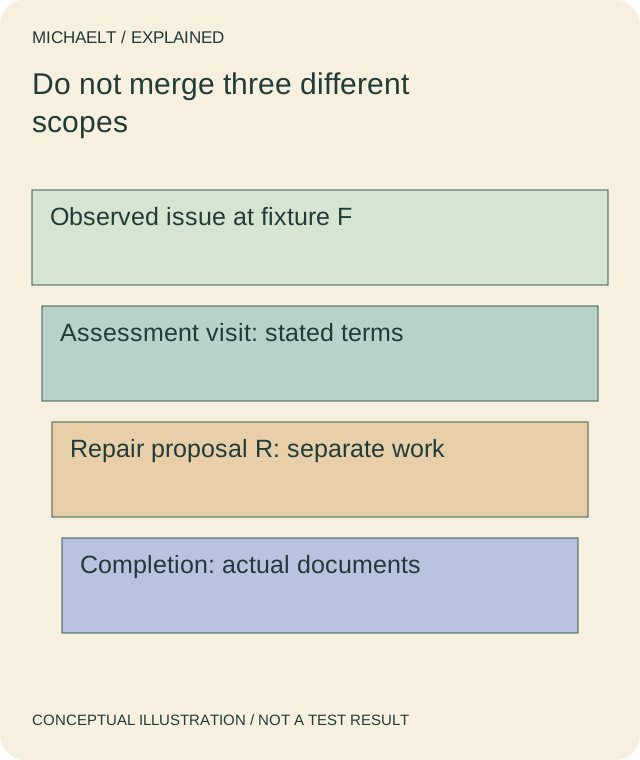
Read the drawing as text
An observation leads to an assessment enquiry. Repair authorisation and completion documents are separate records.
Work through an example
A fictional enquiry reports water visible near fixture F. The first offer covers assessment only; replacement parts and repair are excluded. A later proposal R identifies the repair and the relevant licence scope for checking. The customer keeps the two offers separate and asks about R before authorising it. No actual fault, cost, licence or insurance entitlement is established.
Illustrative example; figures, people and organisations in the worked record are fictional.
The example record
Observation
- Evidence
- Water visible near F
- Next question
- Cause not diagnosed
Identity
- Evidence
- Legal entity and licence requested
- Next question
- Correct local work class?
Offer
- Evidence
- Assessment only
- Next question
- What is excluded?
Change
- Evidence
- Repair proposal R
- Next question
- Written approval before extra work
Download blank worksheet (.csv) ↗Download worked example (.csv) ↗
Keep your own record
Use the result within its scope
Use the contractor’s verified details and the rules for your location. A clear enquiry helps compare scope; it is not a DIY repair instruction, technical inspection or guarantee of regulatory approval.
Reference sources
Earlier articles on this subject
- Bathroom Fixtures Services In Tulsa OK: What To Look For In Your Location ↗ — 2022-08-26, Maria Baldwin.
- Questions you Should Always Ask When Hiring a Plumber ↗ — 2021-12-29, Maria Baldwin.