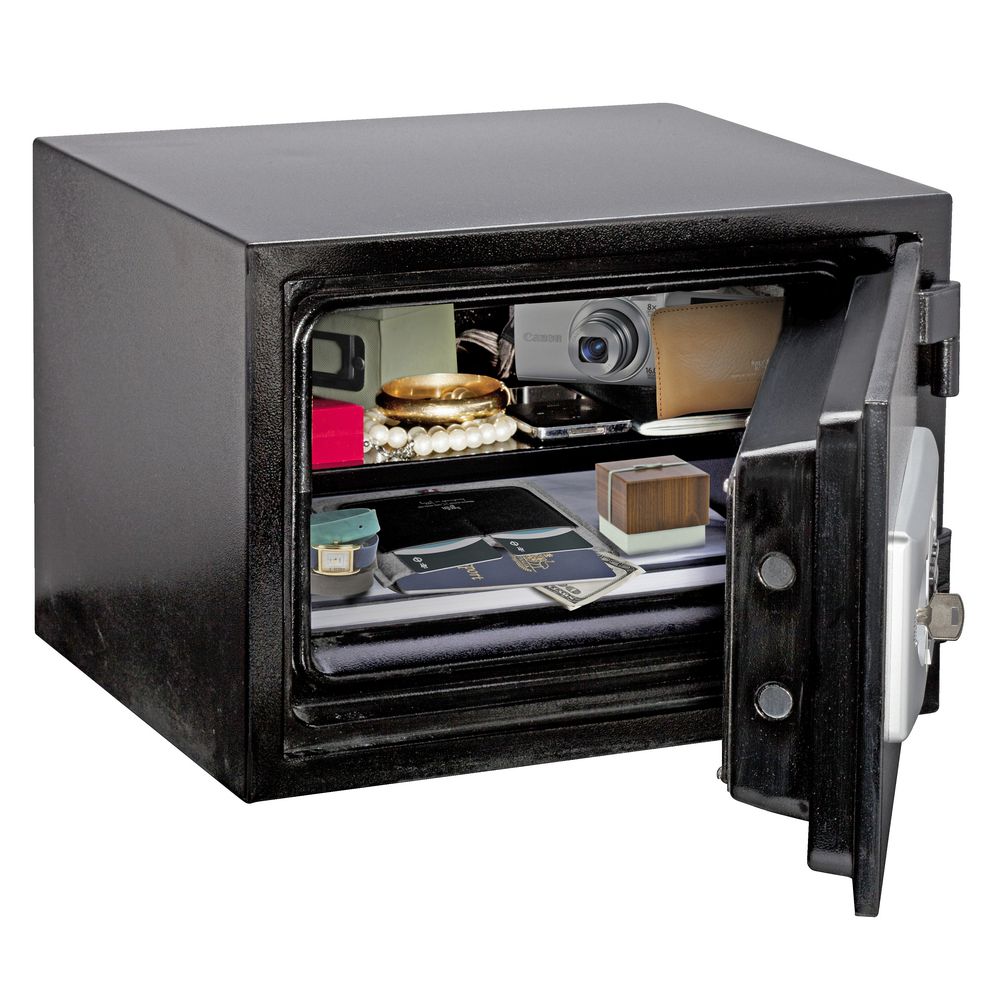

List what needs protection
Identify the kinds of items you intend to store and their actual requirements. Paper records and different forms of media are not interchangeable categories. Keep sensitive inventories, locations and access codes private. Ask the manufacturer which content types the exact model is rated for, rather than treating a product photograph or the word fireproof as a complete specification.
Find the actual model and rating record
Record the model identifier, label, stated class, time rating and the source explaining them. UL Solutions’ 2015 explanation describes labels that state a class relating to maximum internal test temperature and a time rating. Its discussion is about specified test conditions and content types. It is not a statement that every safe bearing a similar marketplace name has that certification or survives every real fire.
Separate claims with different evidence
Fire endurance, an optional impact test, burglary resistance and water-related claims need their own documentation. UL specifically distinguishes burglary testing from the fire tests discussed in the linked article. Do not infer that one icon proves all four. Ask the supplier for a traceable answer for the exact item and read the actual instructions and conditions before choosing an installation or storage arrangement.
Keep the purchase question complete
Record usable internal dimensions and the opening or container size needed for the intended contents, then ask about the actual delivery and installation scope. A quoted outer width does not show usable storage space. Keep approval open if the label, documentation and quoted model disagree. This article does not recommend a protection level, reveal lock procedures or give mounting, lifting or access instructions.
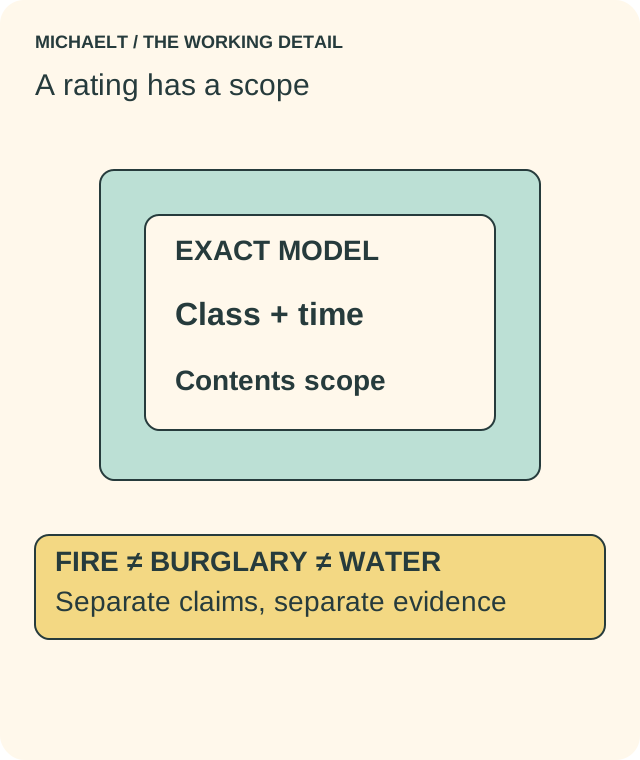
Read the drawing as text
Read the exact safe model, declared contents category, class and time rating. Fire, burglary and water claims need separate evidence; one does not establish the others.
Work through an example
A fictional listing describes safe S as fire and water protected, but the supplied document discusses only a specified paper fire rating. The buyer records the paper claim with its stated rating and asks separately for the water claim and exact model match. No actual safe is tested, certified, opened or endorsed.
Illustrative example; figures, people and organisations in the worked record are fictional.
The example record
Fire endurance
- Record to match
- Model + class + time + test context
- What stays separate
- Every possible fire
Contents category
- Record to match
- Declared paper or media scope
- What stays separate
- Other content types
Burglary / water
- Record to match
- Separate relevant evidence
- What stays separate
- Not inferred from fire label
Physical fit
- Record to match
- Usable dimensions and opening
- What stays separate
- Outer size alone
Download blank worksheet (.csv) ↗Download worked example (.csv) ↗
Keep your own record
Use the result within its scope
Use current certification and manufacturer records for the actual product. A dated explanatory article helps interpret a label; it does not certify a present listing or guarantee that contents survive an incident.
Reference sources
Earlier articles on this subject
- How To Buy Perfect Fire Proof Safe In Sydney? ↗ — 2021-01-05, Maria Baldwin.