Retain the actual offer
Record the seller, exact product, location, policy date and the wording supplied before purchase. A home-trial headline may have conditions not shown on a product card. Keep the actual return or trial policy distinct from advertising about comfort. A mattress article’s promise about spinal health cannot establish personal suitability or the terms of a particular sale.
Map the return route
Ask when the period starts, how notice must be given, which conditions apply and how collection or return is arranged. Retain any stated costs and exceptions. Do not assume every product can be tried, returned unpackaged or collected at no charge. Where a term is unclear, ask the actual seller through verified details and keep the written answer with the policy version.
Read the warranty separately
FTC consumer guidance explains why it matters to read warranty coverage and conditions. A defect warranty and a discretionary trial or return policy answer different questions. Record the warrantor, covered issue, period, remedy process and exclusions from the actual document. Do not substitute a trial advertisement for the warranty or assume a warranty guarantees a refund for a change of preference.
Keep evidence of the request
If making a legitimate request, keep the order reference, relevant dates, policy version and actual receipt or response privately. Distinguish a submitted request from an accepted return and completed refund. Use appropriate consumer advice for your location if the matter is unresolved. This worksheet does not establish universal cancellation rights or decide whether a particular product is defective.
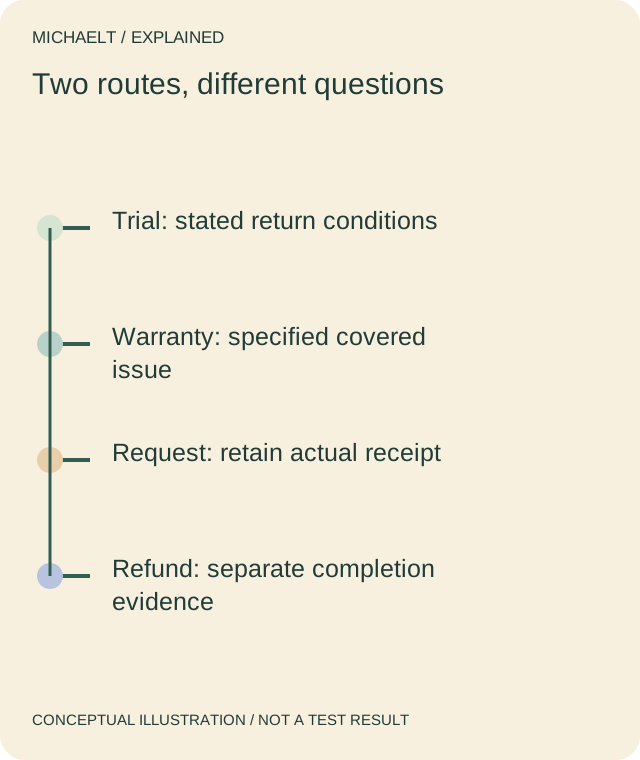
Read the drawing as text
Trial conditions and warranty coverage are separate routes. A request receipt does not establish a completed refund.
Work through an example
A fictional seller advertises a trial but its written terms require a request through route R and specify collection conditions. The separate warranty concerns specified defects. The buyer asks about the trial’s collection cost before purchase and keeps that answer beside the policy. No trial length, refund, actual defect or medical benefit is assumed.
Illustrative example; figures, people and organisations in the worked record are fictional.
The example record
Offer
- Evidence
- Exact policy version
- Next question
- Which product and location?
Trial/return
- Evidence
- Route R and conditions
- Next question
- Collection cost unanswered
Warranty
- Evidence
- Separate defect document
- Next question
- Coverage and remedy?
Outcome
- Evidence
- Request / acceptance / refund
- Next question
- Different events
Download blank worksheet (.csv) ↗Download worked example (.csv) ↗
Keep your own record
Use the result within its scope
Use the real terms and applicable consumer rights with appropriate advice. A comparison cannot promise comfort, clinical benefit, free collection or a refund; it helps identify which document answers which question.