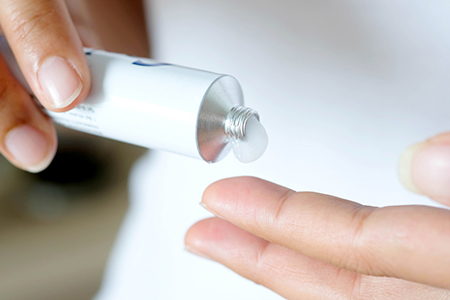

Extract the specific claim
Keep the exact product name, formulation if identified, publisher, date and a short statement of the claimed purpose. Distinguish appearance or cleansing claims from claims about treating disease or changing body structure or function. Do not assume every skin product has the same regulatory category, or that a herbal ingredient establishes safety and effectiveness for a particular person.
Read intended use in its jurisdiction
FDA explains that intended use helps determine whether a product is a cosmetic, a drug, both or another category under US rules. Keep that named context clear rather than presenting it as every country’s classification system. A retailer’s cosmetic heading does not by itself settle the status of a therapeutic claim. Ask the appropriate regulator or qualified professional about an unclear product.
Match evidence to the product and use
Keep a study about an ingredient separate from evidence about the exact marketed product and claimed use. Record the actual regulator record supplied, if any, and whether it matches. A scientific reference, customer testimonial or natural label is not a substitute for that match. Do not describe an unverified product as approved because a different formulation or ingredient appears elsewhere.
Take the personal question to a professional
For a treatment decision, symptoms, interactions or adverse effects, use an appropriate clinician or pharmacist rather than a marketing comparison. Retain the real label and relevant questions privately. This guide supplies no skin application schedule, medicinal dose, injection technique or procedure. If a claim cannot be traced, record evidence not located rather than turning uncertainty into a recommendation.
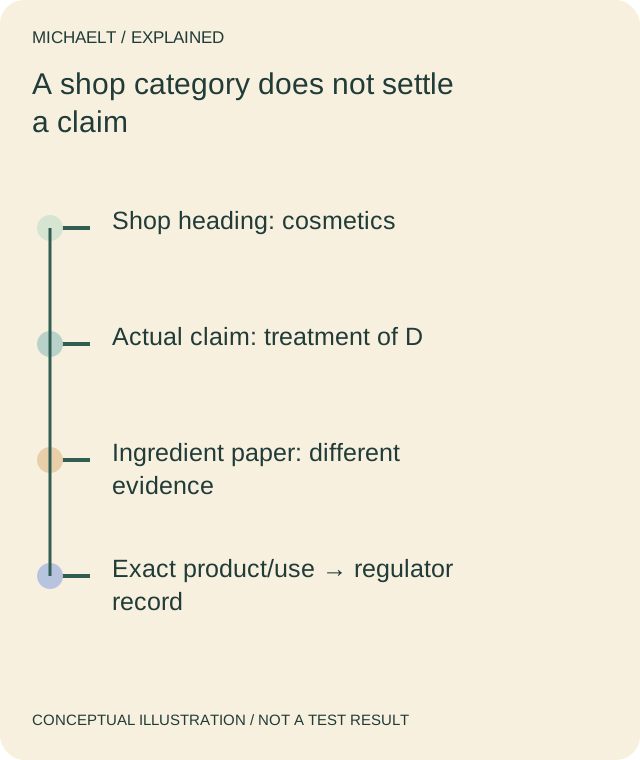
Read the drawing as text
A cosmetics heading, therapeutic claim and ingredient paper are different evidence. Match the exact product and use to the relevant regulatory record.
Work through an example
A fictional cream C is presented under a cosmetics heading but its advertisement claims to treat condition D. The reader records the therapeutic claim separately and asks for the exact applicable regulator record. A paper about ingredient I does not fill that missing link. No real product is classified, approved, rejected or recommended, and no treatment is demonstrated.
Illustrative example; figures, people and organisations in the worked record are fictional.
The example record
Product
- Evidence
- C / exact label requested
- Next question
- Which formulation?
Intended use
- Evidence
- Treatment of D claimed
- Next question
- Not just a shop category
Evidence
- Evidence
- Paper about ingredient I
- Next question
- Matches C and claimed use?
Regulator
- Evidence
- No matching record supplied
- Next question
- Status remains unverified
Download blank worksheet (.csv) ↗Download worked example (.csv) ↗
Keep your own record
Use the result within its scope
Use the actual regulator and qualified advice for the product and jurisdiction. This record clarifies a claim’s scope; it cannot determine clinical suitability or turn an ingredient citation into product approval.
Reference sources
Earlier articles on this subject
- Best Pain Relief Herbal Products With Multiple Benefits ↗ — 2022-07-26, Maria Baldwin.
- Important Information About Tattoos in San Jose ↗ — 2021-06-24, Maria Baldwin.
- Eyebrow Extensions Handle It Well To Enjoy The Advantages! ↗ — 2022-01-19, Maria Baldwin.
Continue with a related task
Keep an organic claim separate from a treatment approval
Add the claimed certification and its scope without treating ingredient origin as proof of safety or clinical benefit.
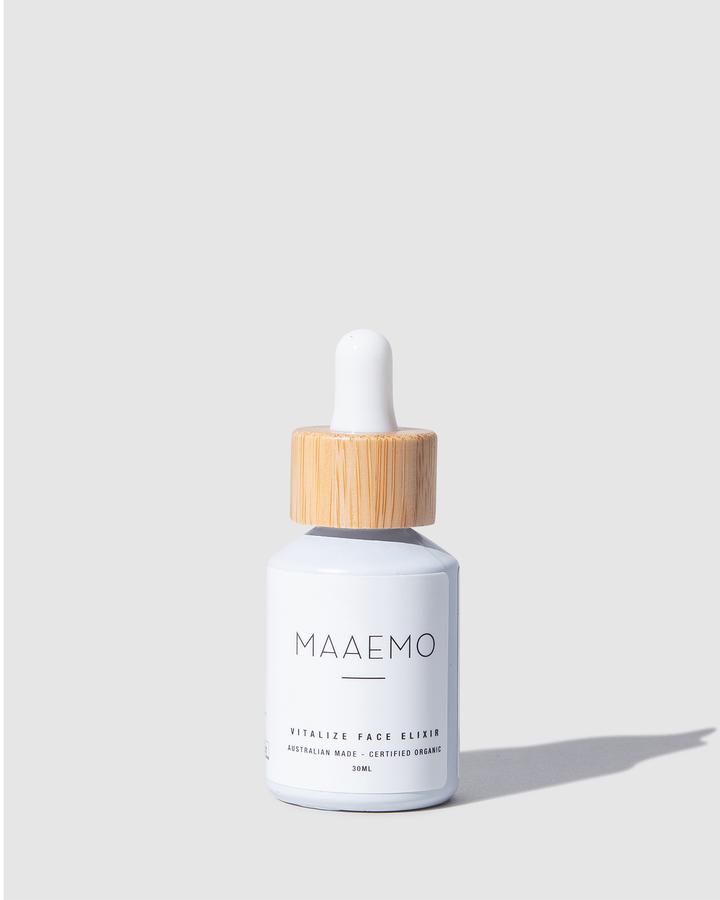

Identify the exact organic statement
Record whether the actual label refers to the whole product, particular ingredients or a certification. Keep the product identifier and current label with the statement. Natural and organic are not interchangeable descriptions of every substance. An attractive bottle or a botanical photograph cannot establish a certified composition or an individual’s suitability to use it.
Read the separate US roles
FDA’s organic-cosmetics explanation distinguishes USDA’s National Organic Program requirements from the laws FDA enforces for cosmetic safety and labelling. It also explains that an ingredient’s source does not determine safety. Keep the actual certifier and certification scope separate from an FDA drug-approval question. Do not transfer this US explanation unchanged into another country’s rules.
Ask the question the document can answer
Request clarification of the actual claim through the appropriate manufacturer, certifier or regulator. Retain the response and what remains unknown. An organic certificate does not by itself establish that a cream treats a condition or has no possible adverse effects. For health concerns, use appropriate professional advice rather than choosing ingredients, concentrations or a treatment from the certificate.
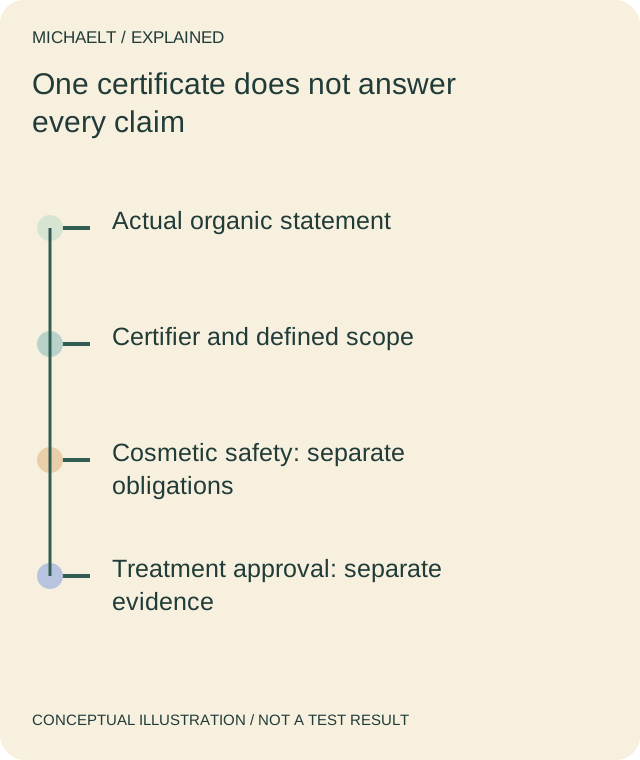
Read the drawing as text
An organic claim and its certification scope do not automatically establish individual safety or approval of a therapeutic use.
Work through an example
A fictional cream C claims organic ingredients and supplies a certification reference. Its advertisement also claims to treat condition D. The reader checks the certification scope separately and leaves the treatment-status field unanswered until matching evidence is found. No real product, ingredient list, certificate or medical use is authenticated.
Illustrative example; figures, people and organisations in the worked record are fictional.
The example record
Label
- Illustrative evidence
- Organic ingredients claimed
- Meaning or next step
- Exact product and version?
Certification
- Illustrative evidence
- Reference supplied
- Meaning or next step
- Whole product or named ingredients?
Treatment claim
- Illustrative evidence
- Treats D in advertisement
- Meaning or next step
- Separate regulator evidence
Individual use
- Illustrative evidence
- Not assessed
- Meaning or next step
- Qualified advice if needed
Download blank worksheet (.csv) ↗Download worked example (.csv) ↗
Keep your own record
Use the result within its scope
A claim can have a legitimate limited scope without answering every safety or treatment question. Keep those boundaries visible; this addition endorses no product and determines no certification or clinical status.